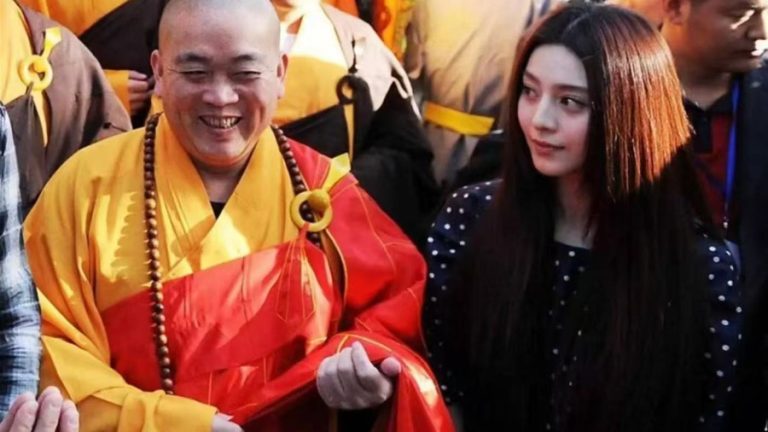
According to Reuters, on May 29, 2026, a court in Xinxiang, Henan province, sentenced Shi Yongxin, the celebrity abbot of Shaolin Temple, to 24 years in prison and fined him 3.5 million yuan (roughly US$480,000). The charges included embezzlement, misappropriation of funds, bribery, and soliciting bribes.
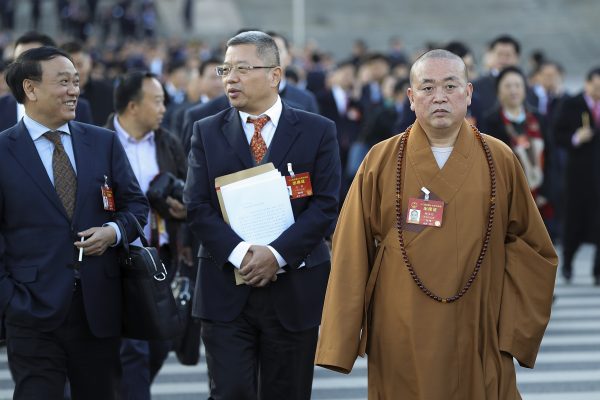
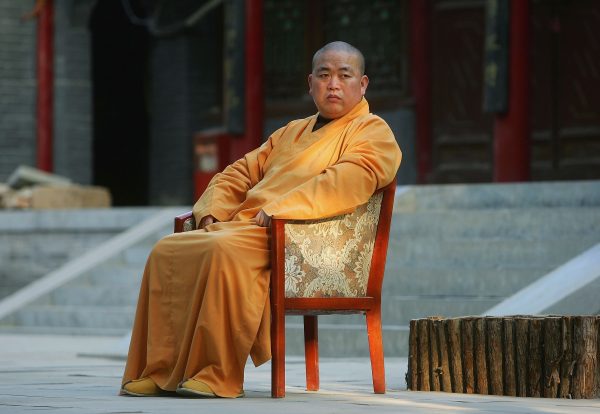
Shi had not lived as a monk in any traditional sense for a long time. He presided over the Shaolin Martial Arts Performance Group, Shaolin Industrial Development Co. Ltd., and Shaolin Film and Television Company. He held a seat in China’s rubber-stamp legislature, the National People’s Congress, and ranked among the senior leadership of the Chinese Buddhist Association, the state body that administers Buddhism across China. In the framing of Chinese internet culture, he was a businessman who wore robes. The nickname that stuck was “the Shaolin CEO.”
Three successive Party leaders shielded the abbot for over a decade
The sentencing came more than a decade after the first credible allegations against Shi became public. According to the BBC, those early accusations covered the same financial crimes that ultimately brought him down, and went further: multiple women kept as concubines, children born outside any disclosed relationship. The official response was denial and continued protection.
Li Changchun, who served as Henan provincial Party secretary before rising to the Politburo Standing Committee as one of Jiang Zemin’s senior lieutenants, was Shi’s earliest and most consequential patron. Shi cultivated that relationship during the 1995 celebrations marking 1,500 years since Shaolin Temple’s founding, and the rewards came quickly: his seat in the rubber-stamp legislature and his chairmanship of the Henan provincial Buddhist association both date to the Jiang era.
Under Hu Jintao, Shi accumulated further titles: designated inheritor of Shaolin kung fu as a national intangible cultural heritage, honorary chairman of the Henan Youth Federation, and president of the Henan Buddhist Academy. Under Xi Jinping, China’s top leader and CCP general secretary, he was elevated to the Henan Political Consultative Conference, the Party’s provincial advisory body, first as a member and then as a standing committee member, and to vice chairman of the Chinese Buddhist Association’s council.
Success
You are now signed up for our newsletter
Success
Check your email to complete sign up
Under CCP organizational logic, a monk is assigned to the consultative body, one of the Party’s “united front” mechanisms for managing non-Party constituencies, rather than to the legislature itself. Shi held a seat in the legislature. Xi’s administration, which built much of its public legitimacy on what it called anti-corruption drives, not only left Shi untouched for years but promoted him further. The protection was policy.
The Party commercialized Shaolin Temple to serve its own political needs
The CCP’s formal religious program carries the label “Sinicization of religion.” Buddhism arrived in China from India more than two millennia ago and underwent centuries of genuine adaptation; an organically developed Chinese Buddhism exists, with its own traditions, texts, and ritual forms. The Party’s program has little to do with that history. Its actual purpose is to bring religious organizations under Party control, aligning their loyalties, personnel decisions, and public messaging with CCP priorities.
Shi ran Shaolin’s commercial operations like any other for-profit company, because that is what they were. The construction projects that generated his bribery income were enormous, and the financial flows involved were indistinguishable from those of a mid-sized state enterprise. He received bribes because he controlled contracts.
When a religious institution is required to generate revenue, maintain political relationships, hold administrative titles, and service the demands of Party-affiliated officials, its leadership must become an administrator and a deal-maker. A monk who takes seriously the Buddhist injunction to withdraw from worldly attachment has no place in that structure. A monk who functions as a networker and fixer does.
The CCP remade Buddhist governance to mirror Party bureaucracy
Shi held political titles, but so did the institution he served. The Chinese Buddhist Association operates under the State Administration for Religious Affairs, which reports to the CCP’s United Front Work Department, the Party organ responsible for managing non-CCP social groups. Buddhism is one of five religions the Party officially recognizes; membership in one of seven state-sanctioned religious organizations is a legal requirement for practicing believers. Underground house churches that refuse to register with the official Protestant body remain illegal and face periodic suppression.
The bureaucratization reaches all the way to temple governance. The Chinese Buddhist Association mandates that an abbot’s selection requires nominations from the temple management committee or the outgoing abbot, followed by community review, followed by submission to the local Buddhist association for approval. Tenure mirrors CCP administrative practice: five-year terms, maximum two consecutive terms. This is the procedure for appointing Party officials applied to religious succession; it has no connection to how any religious community actually chooses spiritual leadership.
Shi was reportedly expelled from the monastic order twice before being installed as Shaolin’s 30th abbot. He could not have secured that position through any internal process of community discernment. The CCP placed him there because he was useful.
Shaolin’s international debut coincided with the Tiananmen massacre
The Shaolin Martial Arts Performance Group made its debut in June 1989 in Hainan, nominally to support a government investment promotion event. That same month, the CCP’s security forces killed hundreds of protesters in and around Tiananmen Square in Beijing. The troupe then traveled to South Korea for its first international performance.
The CCP was, at that moment, internationally isolated following the massacre. A cultural tour by Shaolin monks served an obvious function: it projected an image of ancient tradition and peaceful Chinese civilization at a moment when the regime needed exactly that kind of cover.
The next major turning point came in August 1999, when the State Administration for Religious Affairs and the Chinese Buddhist Association formally installed Shi as abbot, during the second month of the CCP’s mass persecution of Falun Gong, the meditation and qigong practice the Party had banned the previous month. The regime was mobilizing its official religious organizations to participate in the public campaign against Falun Gong, and Shi’s installation came with the role that implied.

The Party used official Buddhist institutions to persecute Falun Gong practitioners
State-sanctioned Buddhist institutions’ complicity in the CCP’s persecution of Falun Gong is documented in those institutions’ own public statements and actions.
The model was established by Zhao Puchu, who served as chairman of the Chinese Buddhist Association from 1980 until his death in 2000. Zhao had been a Buddhist activist and social welfare worker in his earlier career before being recruited by the CCP for underground Party work. He became a Party member while continuing to operate publicly as a Buddhist figure, and was a founding member of the Chinese Buddhist Association in 1952. A card-carrying CCP member chairing the country’s main Buddhist body was not an anomaly. It was the intended design.
Zhao began writing internal criticisms of Falun Gong as early as 1996, producing at least one formal criticism and five letters in that year alone. The timing is instructive: June 1996 was when the Party-controlled newspaper Guangming Daily published an anti-Falun Gong article under the pen name “Xin Ping,” a pseudonym standing for “commentator for the State Press and Publication Administration.” The real author was Pan Guoyan, deputy director of that administration’s book division. In the same year, the State Press and Publication Administration confiscated and suppressed five Falun Gong books on instructions from the CCP’s Central Propaganda Department.
In August 2000, leaders of all five officially recognized religions traveled together to the United States, nominally to promote China’s record on religious freedom, functionally to run an international influence operation against Falun Gong. In March 2001, the chairman of the Chinese Catholic Patriotic Association and the chairman of the Chinese Buddhist Association joined the Chinese delegation to the United Nations Human Rights Commission in Geneva, where they defended the persecution.
At a January 2001 forum organized by the Chinese Academy of Sciences to attack Falun Gong, a Buddhist monk and vice chairman of the Chinese Buddhist Association named Jue Xing opened his remarks by crediting the Party and relevant government departments for recommending him to serve as a member of the Party’s political advisory body. He then submitted a proposal calling for the “transformation” of Falun Gong practitioners. “Transformation” is the CCP’s term for forced renunciation extracted under detention.

Local Party officials treated temples as personal cash reserves
The writer Liao Yiwu, in his oral history collection “The Corpse Walker,” recorded a conversation with Deng Kuan, the eighth-generation abbot of an ancient temple in the Qingcheng Mountain area of Sichuan province. Deng Kuan’s account covered the destruction of his community during the land reform campaigns and the Cultural Revolution, then turned to what came after: systematic financial extraction by local Religious Affairs Bureau officials during the reform era.
Temples were subject to standard taxation, but that was the floor of extraction, not the ceiling. Local officials at every level demanded cuts. The county Religious Affairs Bureau chief arrived in person to demand 100,000 yuan to cover funds he and his colleagues had already diverted from central government road construction accounts. Officials came directly to the temple to gamble and, when they lost, borrowed money from Deng Kuan and never repaid it. The bureau chief described himself, without apparent embarrassment, as the supervising official of all the gods and immortals. Deng Kuan observed that in every prior dynasty he had studied, no matter how corrupt the officials or how incompetent the ruler, he had never encountered officials skimming money from the heads of monks. The CCP managed it.
Shi Yongxin operated at a higher altitude than the temple in Sichuan, with national titles and patrons reaching to the Politburo Standing Committee. Under CCP governance, a religious institution becomes a revenue source and a political asset, and the abbots who thrive are those who understand that and act accordingly. Shi held his positions for more than twenty years before his patrons decided he had become a liability.