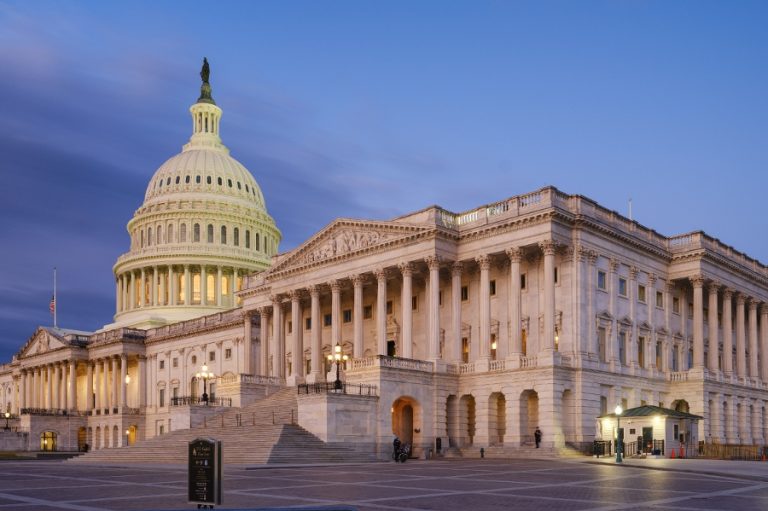
According to the New York Post, on June 5, the U.S. Senate passed a roughly $70 billion immigration enforcement bill after more than 18 consecutive hours of voting. The legislation cleared the chamber by a 52-47 vote and provides major new funding for U.S. Immigration and Customs Enforcement (ICE) and Border Patrol operations over the coming years. The bill is widely viewed as a significant victory for the Trump administration’s border security agenda and now heads to the House of Representatives for consideration.
The vote took place during an overnight Senate “Vote-a-Rama,” a special phase of the budget reconciliation process in which senators may introduce amendments and participate in marathon voting sessions. Because of the large number of amendments and procedural votes involved, the session continued from June 4 into the early hours of June 5.
The bill ultimately passed with 52 votes in favor and 47 opposed.
Nearly all Republican senators supported the legislation. However, Republican Senator Lisa Murkowski of Alaska voted against the bill, making her the only Republican to oppose it.
Democrats were largely united in opposition. Democratic Senator Michael Bennet of Colorado did not participate in the vote, making him the only senator absent. As a result, the final tally was 52 votes in favor, 47 against, and one absent.
Success
You are now signed up for our newsletter
Success
Check your email to complete sign up
Funding priorities and political divisions
Under the legislation, the new funding would primarily be allocated to agencies within the Department of Homeland Security (DHS), including ICE, U.S. Customs and Border Protection (CBP), and the U.S. Border Patrol.
The funds would be used to hire additional enforcement personnel, expand immigration detention capacity, strengthen deportation operations, upgrade border surveillance systems, and improve border infrastructure. Supporters argue that the U.S. southern border has faced sustained pressure from illegal crossings in recent years and that enforcement agencies have long suffered from shortages of personnel and resources, making additional funding necessary.
Republican lawmakers said the bill would help the federal government more effectively enforce existing immigration laws and strengthen border security capabilities. They argued that American voters have repeatedly expressed concern about border security in recent elections and that Congress has a responsibility to provide law enforcement agencies with the resources they need.
Democratic lawmakers, however, criticized the bill for focusing too heavily on enforcement and deportation. They warned that a major expansion of detention and removal operations could create humanitarian concerns. Democrats argued that efforts to strengthen border management should be accompanied by broader immigration reforms, including addressing long-standing backlogs in legal immigration applications and improving the asylum process.
During Senate consideration of the bill, controversy emerged over a proposed $1.776 billion “Anti-Weaponization Fund,” making it one of the most debated issues during the marathon voting session.

Republican concerns over funding
According to ABC News, a small group of Republican senators introduced amendments seeking to limit or eliminate the fund, citing concerns about how it could be used in the future. Senators involved in those efforts included Bill Cassidy, Thom Tillis, Susan Collins, Dan Sullivan, and Jon Husted.
These lawmakers argued that the fund could potentially be used to compensate individuals who were subjected to improper federal investigations or politically motivated government actions. They contended that Congress should either place clear restrictions on the fund’s use or redirect the money elsewhere. However, the proposed amendments failed to receive sufficient support during multiple rounds of voting and were ultimately rejected.
Democrats, meanwhile, opposed the immigration enforcement bill as a whole, arguing that it placed excessive emphasis on enforcement and deportation while failing to adequately address immigration reform and humanitarian concerns. During the amendment process, Democratic senators did not join Republicans in efforts to modify the fund, instead focusing on blocking passage of the overall legislation.
If approved by the House and signed into law by the president, the measure would become one of the largest dedicated funding packages for immigration enforcement and border security in recent U.S. history. It would also provide ICE and other border enforcement agencies with some of the most substantial financial resources they have received in years.