By Pei Rong, Vision Times
As the 37th anniversary of the 1989 Tiananmen Square crackdown comes and goes, a growing number of Chinese citizens have publicly reflected on the events that shaped their views of the Chinese Communist Party (CCP), citing personal experiences with political persecution, censorship, and government abuses.
The statements, submitted as declarations renouncing membership in CCP-affiliated organizations, including the Communist Party, Communist Youth League, and Young Pioneers, come from a wide range of individuals, including retired teachers, university students, veterans, and scholars. Many describe a gradual loss of faith in the political system after witnessing or learning about major historical events that remain highly sensitive in mainland China.
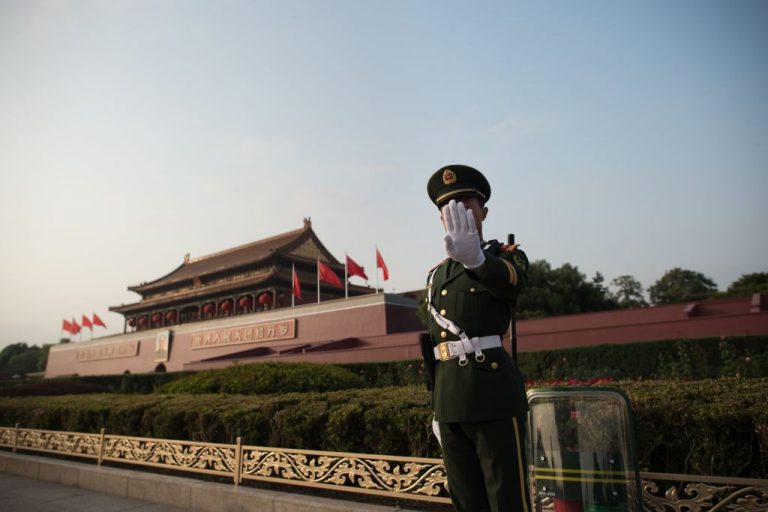
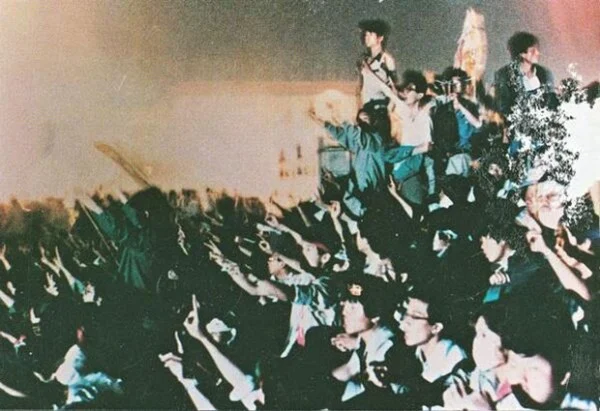
On June 4, 1989, the CCP deployed troops and tanks to crush a nationwide pro-democracy movement led largely by students. Though publicly-available information is scarce, the military assault ended weeks of peaceful demonstrations centered in Beijing’s Tiananmen Square and resulted in the deaths of many civilians.
RELATED: US Lawmakers Spotlight China’s Transnational Repression on Tiananmen Anniversary
Family tragedies and historical trauma
Success
You are now signed up for our newsletter
Success
Check your email to complete sign up
Several individuals linked their decisions to family histories spanning decades of political turmoil. One statement, attributed to Hebei resident Zhou Zhanpeng, describes how his father was injured during the 1989 Tiananmen Square crackdown.
“My father’s shriveled and disabled legs are the scars left behind by that summer night in 1989,” Zhou wrote. According to his account, his father was permanently disabled after attempting to protect students during the military operation.
Zhou said the experience shaped his family’s life for decades. He also recounted a more recent dispute involving land expropriation, alleging that local authorities seized farmland without compensation.
“When officials wearing Party badges casually told us to prioritize the ‘greater good,’ I felt as though I was hearing the gunfire from Tiananmen once again,” he wrote. “My father’s legs were broken, and my heart was shattered.”
Another declaration, submitted by Shandong resident Zhan Shijie, traces his family’s suffering across several political campaigns. He wrote that his mother died during the Great Chinese Famine, his father was persecuted during the Cultural Revolution after criticizing political conditions, and an uncle later died after supporting the 1989 student movement.
“My mother died from starvation, my father died from political persecution, and my uncle died in pursuit of democracy,” he wrote. “These three generations of suffering revealed the true nature of this regime to me.”
93-year-old Han Chengyou from Tangshan, Hebei, said he decided to distance himself from the Party following the events of 1989. “So many people died,” he recalled. “I thought it was disgraceful; truly disgraceful. People opposed it back then.”
Intellectuals and students revisit June 4
Many of the statements came from intellectuals, students, and retirees who said they reassessed official narratives after gaining access to alternative sources of information.
87-year-old Meng Fu wrote that he had lived through numerous political campaigns. “The Communist Party killed many students during the 1989 protests and still refuses to acknowledge it,” he wrote. “I voluntarily withdraw from the organizations I once joined and draw a clear line between myself and the Party.”
A university student identified as Wang Zhaowei said his worldview changed after accessing information about Tiananmen through overseas websites. “Those blurred but powerful photographs, survivors’ testimonies, and the hidden details of history completely shattered the worldview I had built since childhood,” he wrote. “What I saw was fear, bloodshed, and the ruthless suppression of ordinary people by the state.”
A retired Beijing teacher using the name Xiaoyuan wrote that he had once joined the Communist Party because of his professional achievements. Over time, however, he said his perspective changed. “Having lived through the Cultural Revolution, the suppression of Falun Gong, and especially June 4th, I witnessed firsthand how this Party, while claiming to serve the people, committed acts that harmed innocent citizens.”
Others described broader disillusionment with nationalism and official ideology. “I was once a ‘Little Pink,'” wrote one former Youth League member, using a popular term for young nationalist internet users. “After entering society, I finally woke up.” They added, “Ignorance is dangerous, but blind loyalty is even more dangerous. A nation that refuses to face its history and reflect on its mistakes risks heading toward disaster.”
The legacy of June 4
The Tiananmen Square protests began in the spring of 1989 as student-led demonstrations calling for political reform, government accountability, and greater freedoms. The movement spread to cities across China and attracted broad public support.
On the night of June 3 and the early hours of June 4, Chinese troops moved into central Beijing to clear protesters from Tiananmen Square and surrounding areas. The exact death toll remains disputed. Chinese authorities have never released a full accounting of those killed, while estimates from independent researchers, witnesses, and foreign diplomatic sources range from hundreds to several thousand deaths.
37 years later, discussion of the crackdown remains heavily restricted inside China. References to June 4 are routinely censored online, and the subject is largely absent from official historical narratives. Yet the anniversary continues to resonate with many Chinese citizens, particularly those who view the event as a symbol of unresolved questions about political accountability, historical memory, and individual freedoms.
Editorial note: The views expressed in the original statements are those of the individuals quoted and do not necessarily reflect the views of this publication.