As the Chinese Communist Party (CCP) begins laying the groundwork for its 21st National Congress expected in 2027, an unusual omission from Beijing’s tightly-choreographed and scrutinized political calendar has drawn attention from outside observers.
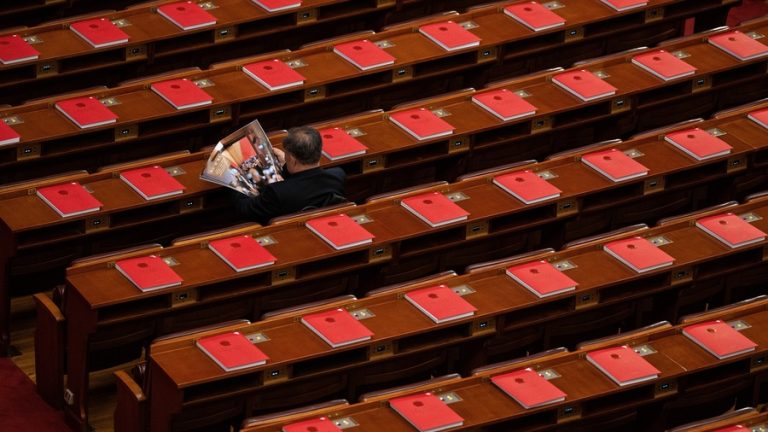
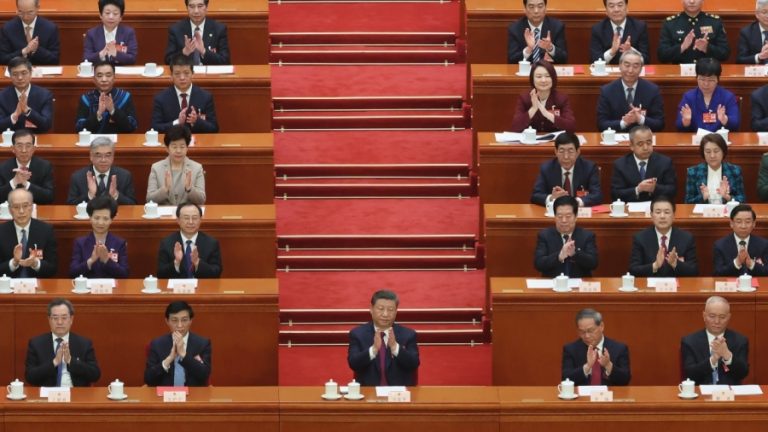
In a departure from long-established practice, state media did not publish a readout of a Politburo meeting in May 2026. The absence of any official announcement has fueled speculation among China watchers over whether the meeting took place, what was discussed, and why authorities chose not to publicize it. The Politburo serves as the CCP’s top ruling body.
Under normal circumstances, the Politburo convenes near the end of each month, with state outlets such as Xinhua News Agency, People’s Daily, and China Central Television releasing summaries of the agenda and major decisions. These reports typically highlight broad policy priorities while concluding with the formulaic phrase that the meeting “also studied other matters,” often interpreted as a reference to personnel issues.
RELATED: Former Inner Mongolia Chair Indicted on Bribery Charges Amid Political Fallout
An unusual omission
This time, however, there was no public readout. The silence coincided with a series of personnel appointments and dismissals involving provincial and ministerial officials, leading some analysts to conclude that senior leaders likely met behind closed doors to approve the changes.
Success
You are now signed up for our newsletter
Success
Check your email to complete sign up
On May 29, authorities announced several appointments involving senior officials. Ding Xiangqun was named Party secretary of the National Financial Regulatory Administration, while Zhang Yuzhuo became Party secretary of the Chinese Academy of Engineering. Other adjustments included appointments and resignations involving vice governors and provincial officials.
The following day, Guan Zhigou was appointed Party secretary of Hubei Province, replacing Wang Zhonglin, who was said to be assigned to another position. Guan subsequently became one of China’s youngest provincial Party chiefs. Additional reshuffles involving provincial capitals, disciplinary bodies, and provincial standing committees then followed in early June.
Behind closed doors
Commentator Zhang Tianliang argued that the timing and scope of these appointments suggest that a Politburo meeting likely took place in late May. Under the CCP’s personnel system, appointments involving officials at the provincial and ministerial level generally require approval from the central leadership. Major appointments, such as provincial Party secretaries, typically receive Politburo authorization.
“If Hubei’s Party secretary appointment was announced on May 30, then it would ordinarily indicate that the relevant approval process had already taken place,” Zhang said in commentary published on his self-media platform.
Hong Kong newspaper Ming Pao also noted the unusual absence of a public announcement and suggested that leadership discussions may have focused primarily on personnel matters. The paper reported that if a meeting occurred, it may have involved the Politburo Standing Committee rather than the full Politburo, proceedings that are not always disclosed publicly.
More purges on the horizon?
The episode underscores the inherently opaque nature of elite politics in China. Leadership meetings, personnel deliberations, and succession planning remain largely hidden from public view, leaving outside observers to piece together developments through official appointments, state media patterns, and indirect signals.
What is less disputed is that personnel maneuvering is likely to intensify as preparations gradually begin for the 21st Party Congress, where a new Central Committee will be selected and the next generation of national leadership appointments will take shape.
Provincial Party secretaries, governors, ministers, and other senior officials often form the pool from which future Central Committee members and Politburo candidates emerge. As a result, appointments at the provincial and ministerial levels are closely watched not only as administrative decisions but also as indicators of the party’s longer-term political trajectory.
Editorial note: This article is based on publicly circulating reports and commentary from independent analysts. The claims described have not been independently verified by Vision Times, and relevant authorities have not publicly confirmed the allegations.