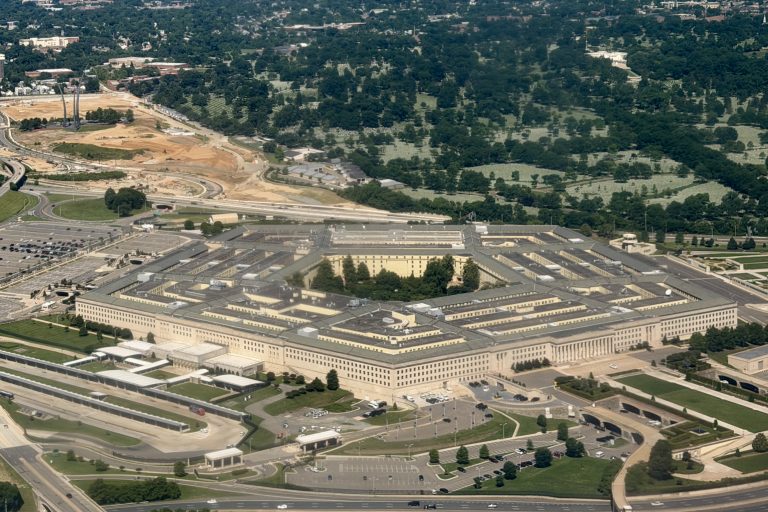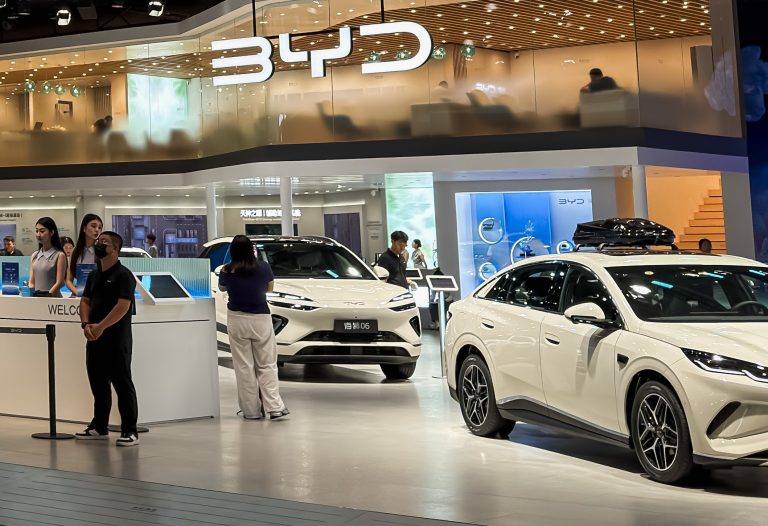
The U.S. Department of Defense has added major Chinese companies including electric vehicle maker BYD, technology firm Baidu, and e-commerce giant Alibaba to its latest list of companies allegedly linked to China’s military.
The DOD, now also called the Department of War, identified 54 entities as “Chinese military companies operating in the United States” under Section 1260H of the William M. (Mac) Thornberry National Defense Authorization Act for Fiscal Year 2021. According to the department, the companies are “engaged in providing commercial services, manufacturing, producing, or exporting” while operating directly or indirectly in the United States.
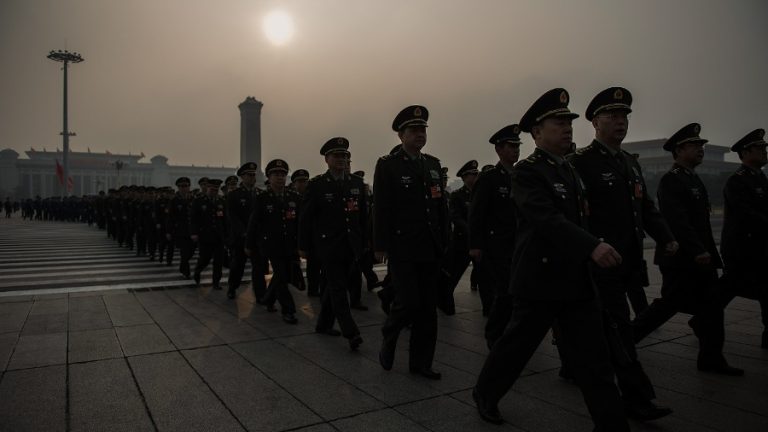
The latest designations, made on June 9 (Tuesday), build on a list of 134 companies released on Jan. 7, 2025. The Pentagon said the effort is intended to identify and counter China’s military-civil fusion strategy, through which civilian companies, universities, and research institutions contribute to military modernization. The updated list now includes 188 companies.
“The PRC’s Military-Civil Fusion strategy supports the modernization goals of the People’s Liberation Army (PLA) by ensuring it can acquire advanced technologies and expertise developed by PRC companies, universities, and research programs that appear to be civilian entities,” the Department of Defense said in last year’s announcement.
The department said Section 1260H provides the authority to identify entities that contribute to China’s military-civil fusion efforts while operating directly or indirectly in the United States.
Success
You are now signed up for our newsletter
Success
Check your email to complete sign up
People’s Republic of China Foreign Ministry spokesman Lin Jian criticized the latest designations during a press briefing on Tuesday.
“China firmly opposes the U.S. overstretching the concept of national security and formulating various types of discriminatory lists to go after Chinese businesses,” Lin said.
“We urge the U.S. to correct its wrongdoings, and stop the unwarranted suppression of Chinese businesses. China will do what is necessary to firmly protect their legitimate and lawful rights and interests.”
RECENT COVERAGE
- EU Fears China’s Growing EV Sector Infrastructure in Morocco Could Circumvent Trade Restrictions
- Trump Concludes China Trip as Xi Outlines ‘Four Stabilities’ in Bilateral Ties
- US-China Rivalry Intensifies Inside UN Amid Funding Dispute
Expert sees emergence of new ‘strategic grammar in international relations’
The expanded blacklist comes weeks after the Trump-Xi summit in Beijing and amid intensifying strategic competition between the world’s two largest economies.
According to Reuters, a similar version of the list was released in February while President Donald Trump’s trip to China was still being planned, but it was subsequently withdrawn without detailed explanation.
Ram Singh, professor and head of the Indian Institute of Foreign Trade, told Vision Times the latest designations reflect an effort by Washington to address strategic vulnerabilities while maintaining economic engagement with China.
“The decision to designate some of China’s leading technology champions as entities linked to military modernization reflects neither simple confrontation nor complete separation,” said Ram Singh, professor and head of the Indian Institute of Foreign Trade.
“Rather, it signals the emergence of a new strategic grammar in international relations, the one where economic interdependence coexists with geopolitical caution.”
Reuters reported that the June list largely mirrors the version released in February but includes several additions, most notably China’s leading memory-chip manufacturers, ChangXin Memory Technologies (CXMT) and Yangtze Memory Technologies Co. (YMTC).
Both companies play central roles in Beijing’s efforts to achieve greater self-sufficiency in semiconductors and artificial intelligence amid expanding U.S. export controls. The latter were put in place to advance U.S. leadership in advanced chips and semiconductor supply chains while also trying to build competitiveness in semiconductor and AI, according to a Congressional report released last year.
YMTC was previously added to the U.S. Commerce Department’s Entity List in 2022, restricting the export of certain U.S. technologies and equipment without a license.
According to the Federal Register, the “Entity list” pertains to those “entities for which there is reasonable cause to believe, based on specific and articulable facts, that the entities have been involved, are involved, or pose a significant risk of being or becoming involved in, activities contrary to the national security or foreign policy interests of the United States.”
The United States has increasingly added Chinese firms, including YMTC, Huawei, and Naura Technology Group, to the Entity List as part of broader efforts to limit China’s access to advanced semiconductor and AI technologies, according to a report published last year by the Center for Strategic and International Studies.
Singh said the US has lost significant ground to China in critical minerals and critical technology and the recent move shows its strategic caution.
“Contextually, it is less a story of love and hate than of proximity and prudence. The closer the economic embrace, the greater the concern over strategic vulnerability,” he said.
Singh noted that the US list has come just a few weeks after China restricted oversea travel for top AI researchers working for private companies such as Alibaba and DeepSeek. According to a Bloomberg report of May 26, Beijing had earlier applied this policy to only military and state affiliated scientists.
“Thus, Washington’s message is not necessarily to decouple, but rather to engage selectively, trust cautiously, and verify continuously,” Singh said.