Outrage over allegations of animal abuse linked to a controversial Chinese internet figure escalated into street demonstrations in Chongqing this week, prompting a large-scale police response and renewed scrutiny of how authorities handle sensitive incidents that gain traction online.
The man at the center of the controversy, 39-year-old Li Meng from Zibo, Shandong Province, became known on Chinese social media by the nickname “Sam’s Club Pack-Up Brother” because of videos showing him collecting large quantities of free food samples at Sam’s Club stores. Now, however, animal welfare advocates are accusing Li of obtaining cats and dogs through adoption channels and then abusing or killing them for his own pleasure.
RELATED: Casino Raid Finds Starved Predators Used for Debt Enforcement Along Thai-Cambodian Border
A pattern of abuse
According to accounts shared by activists, the latest wave of public anger was triggered after a woman who had reportedly given Li a puppy for adoption claimed the animal later died from abuse. The incident allegedly left the woman emotionally devastated and fueled calls for police intervention.
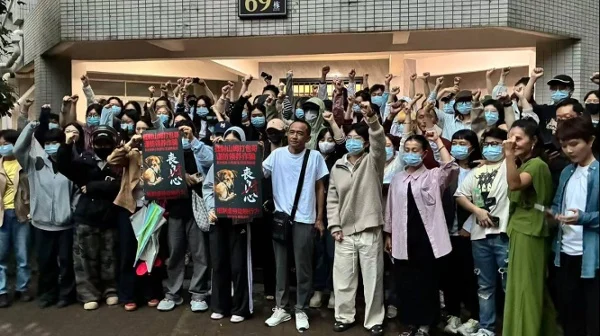
Between June 7 and June 10, residents and animal rescue volunteers gathered outside Li’s residential complex in Chongqing, carrying photographs of animals and signs condemning acts of abuse and cruelty. Demonstrators demanded that authorities investigate the case and provide an explanation.
Success
You are now signed up for our newsletter
Success
Check your email to complete sign up
Videos circulating on social media appeared to show confrontations between police and protesters during overnight clearance operations on June 10. In one widely-shared clip, an unidentified protester can be heard shouting: “If you beat 100 people today, there will be 500 people here tonight. If you dare beat 500 people today, there will be 5,000 people here tomorrow.”
A scam network
Animal volunteer Xiao Wan told Hong Kong media outlet HK01 that many participants initially hoped only to stop what they described as “adoption fraud” and rescue any remaining animals kept in Li’s residence.
“People’s demands were actually very simple at the beginning,” she said. “They wanted to prevent this kind of adoption scam and rescue the other adopted animals still inside. But their anger was never addressed. The Chongqing police pushed them, step by step, into the streets.”
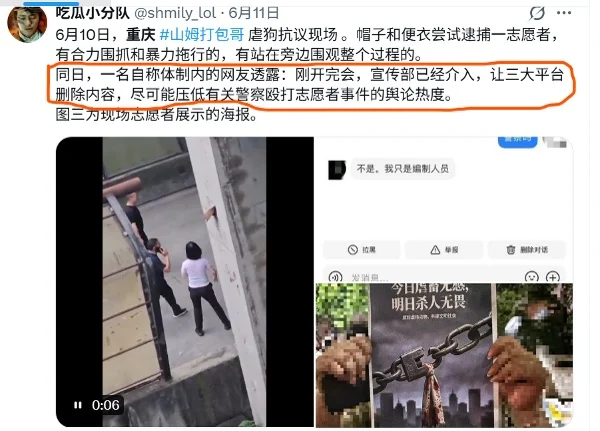
At the same time, reports emerged suggesting authorities were attempting to limit online discussion and potential dissent tied to the incident. An individual claiming to work within the system wrote online on June 10: “We just finished a meeting. The propaganda department has already stepped in and instructed the three major platforms to delete content and suppress public attention surrounding the reports of police beating volunteers as much as possible.”
Some social media users also alleged that searches related to Chongqing on major Chinese platforms had been restricted or removed altogether, though no official explanation was provided.
Clashes with police
By June 11, photographs and videos posted online showed metal barricades erected along sections of Dashiba Street in Chongqing. A prominently displayed construction notice stated that the area would undergo safety inspections following residents’ complaints about unpleasant odors.
Despite the apparent dispersal of protesters, witnesses reported continued heavy security in the area, including uniformed police officers and plainclothes personnel conducting patrols and questioning passersby. Videos shared online early on June 12 appeared to show sidewalks cordoned off and police stationed at regular intervals, while numerous buses were parked nearby.
The incident has prompted broader debate online about animal welfare protections, public assembly, and the state’s response to spontaneous civic mobilization. “At least 150 countries around the world have enacted anti-animal cruelty laws,” one commenter wrote. “China still has a long way to go.”
Others suggested authorities were less concerned with the specific allegations than with preventing citizens from organizing independently.
Editorial note: This article is based on publicly circulating reports and commentary from independent analysts. The claims described have not been independently verified by Vision Times, and relevant authorities have not publicly confirmed the allegations.