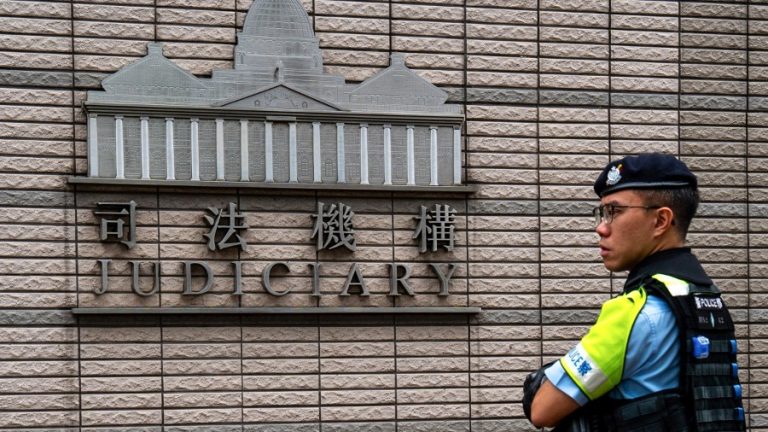
The Hong Kong government on Monday, June 8 proposed introducing subsidiary legislation under the Safeguarding National Security Ordinance. The proposal would authorize the Chief Executive of Hong Kong to issue certificates under either the Hong Kong National Security Law or the Safeguarding National Security Ordinance, determining that a particular criminal offense constitutes an “offense endangering national security.”
Analysts argue that the move highlights further efforts by both the Chinese and Hong Kong governments to use legal mechanisms to restrict freedoms in Hong Kong and represents another setback for the territory’s judicial system.
At a press conference that day, Hong Kong Secretary for Justice Paul Lam Ting-kwok said the purpose of the measure was to provide greater clarity regarding how authorities determine whether a particular offense endangers national security.
Lam stated that both the Hong Kong National Security Law and the Safeguarding National Security Ordinance clearly establish a mechanism involving certificates issued by the Chief Executive. Under that mechanism, the Chief Executive has the authority to issue a certificate determining whether certain matters involve national security, and such certificates are binding on the courts.
Hong Kong Secretary for Security Chris Tang Ping-keung said the subsidiary legislation would provide greater certainty in the implementation of provisions relating to national security offenses. He emphasized that it does not alter the existing provisions of the Hong Kong National Security Law or the Safeguarding National Security Ordinance that apply to offenses endangering national security.
Success
You are now signed up for our newsletter
Success
Check your email to complete sign up
Tang further stated that the subsidiary legislation creates no new criminal offenses; Does not change any penalties; Establishes no new legal regime; and will not affect the daily lives of ordinary residents or the normal operations of institutions and organizations.
According to Tang, “law-abiding citizens” would not be affected by the subsidiary legislation.
Rights advocate: ‘The existence of rights will depend entirely on the CCP’s will’
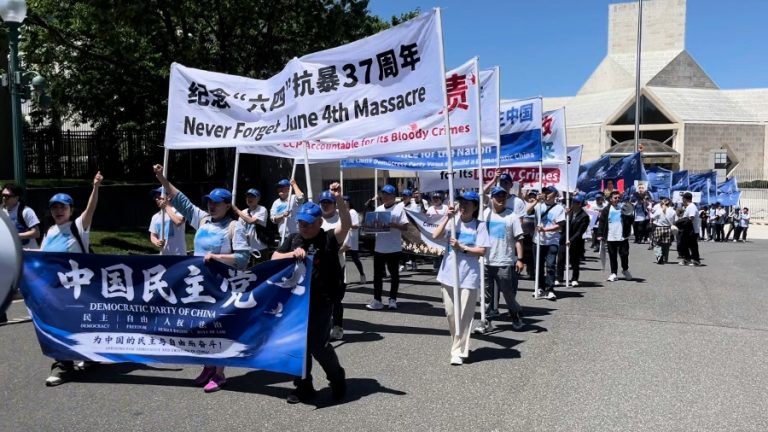
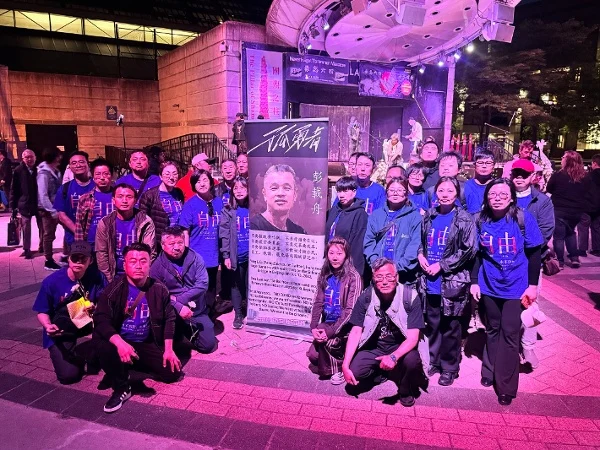
June 2026 marks the seventh anniversary of Hong Kong’s 2019 anti-extradition protests. Various commemorative events have been organized around the world to mark the occasion. Human rights organizations view the Hong Kong government’s announcement of amendments to subsidiary legislation under the National Security Law during this anniversary period as further evidence that Hong Kong’s rule of law is being subordinated to an unconstrained system of governance under the Chinese Communist Party that can arbitrarily curtail individual rights.
Elaine Pearson, Asia Director of Human Rights Watch, said in an email response to a request for comment from Voice of America: “The Hong Kong government has granted itself the power to characterize almost any act or speech as a ‘national security’ crime, further undermining the rule of law in Hong Kong. In its place is unconstrained CCP rule, under which the existence of rights will depend entirely on the will of the Chinese Communist Party.”
Currently residing in the United Kingdom, Hong Kong pro-democracy activist and former Wan Chai District Council member Clara Cheung posted on X that Hong Kong “is no longer a society governed by the rule of law.”
She wrote: “HK-CCP government further tightening Hong Kongers’ freedom by providing the chief executive the power certify which criminal case is a national security threat. In a sense, a single ruler now has the power to interpret who endangers ‘national security.’ HK isn’t ruled by law”
Cheung argued that the amendment further concentrates authority in the executive branch and expands the government’s discretion in determining what constitutes a national security matter.
Hong Kong’s judicial system has long been regarded by the international community, the legal profession, and Hong Kong residents as the last line of defense safeguarding the city’s high degree of autonomy and core values, including the rule of law, human rights, and civil liberties.
When Hong Kong was returned to China in 1997, the Chinese government promised that the territory would continue to enjoy a high degree of autonomy under the principle of “One Country, Two Systems.” However, following the implementation of the Hong Kong National Security Law in 2020 and the passage of the Safeguarding National Security Ordinance (Article 23 legislation) in 2024, Hong Kong’s democratic development, freedom of speech, and press freedom have, according to critics, been significantly curtailed.
In a post on X, she wrote: “It could mean stricter bail test, broader investigation power, trial with no jury, no sentence remission, and generally more pressure on defendants; most importantly chilling effect on society. This is another step away from judicial independence for Hong Kong.”
Hui currently serves as Policy and Advocacy Coordinator for the Committee for Freedom in Hong Kong Foundation. On June 4, she received the 2026 Dissident Human Rights Award from the Victims of Communism Memorial Foundation.
Hui emphasized that the most significant concern is that the subsidiary legislation would create a “chilling effect” throughout Hong Kong society.
Recent court rulings have undermined confidence in Hong Kong’s judiciary
Over the past two years, court rulings involving democracy advocates and media figures have, according to critics, weakened confidence in Hong Kong’s judicial system both locally and internationally.
One recent example occurred on May 29, when former chairman of the Hong Kong Journalists Association (HKJA), Ronson Chan, began serving a five-day prison sentence after the High Court of Hong Kong dismissed his appeal.
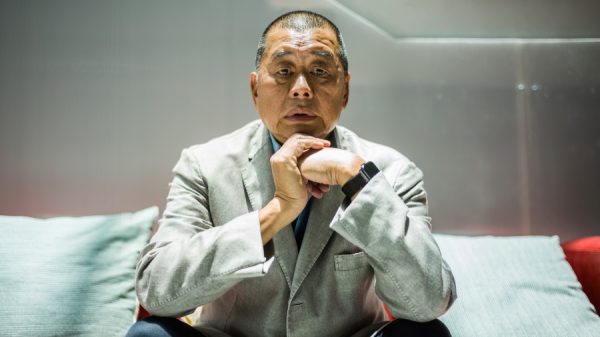
Another prominent case involved Jimmy Lai, founder of the now-defunct Apple Daily. On Feb. 9, he was sentenced to 20 years in prison, including convictions on charges of “conspiracy to collude with foreign or external forces” and “conspiracy to publish seditious publications.”
Eight co-defendants in the case, including six former senior executives of Apple Daily, received prison sentences ranging from more than six years to ten years.
Since late last year, Jimmy Lai’s case has drawn sustained attention from U.S. political leaders. Multiple members of Congress have publicly advocated on his behalf. Ahead of President Donald Trump’s visit to China, both chambers of the U.S. Congress unanimously passed resolutions on May 13 urging the president to raise the issue of political prisoners and religious detainees during his trip, including calls for the release of Jimmy Lai.
The views expressed in this article are solely those of the author and do not necessarily reflect the views of Vision Times.