To the Party that still venerates him, Mao Zedong was an infallible titan who stood astride history. The private record tells a different story: a man who refused medicine because he feared it was poison, slept next to a swimming pool because he was convinced his bedroom ceiling hid surveillance devices, and spent his final years in a state of clinical paranoia that his own physician documented in detail. The system Mao built to terrorize hundreds of millions ultimately terrorized him most of all.
The portrait of Mao Zedong that emerges from his physician’s notes, his bodyguards’ memoirs, and a declassified assassination planning document bears little resemblance to the heroic icon still plastered across Tiananmen Square. It is the portrait of a man who, by the final decade of his rule, could not trust a single person around him.
Li Zhisui served as Mao’s personal doctor from 1954 until Mao’s death. After emigrating to the United States, he published his memoir in 1994. The Party immediately banned the book on the mainland and has worked to suppress it ever since. The reason is plain: Li’s account describes a man shackled by severe paranoia, convinced that his doctors, his guards, and his closest comrades were plotting to kill him.
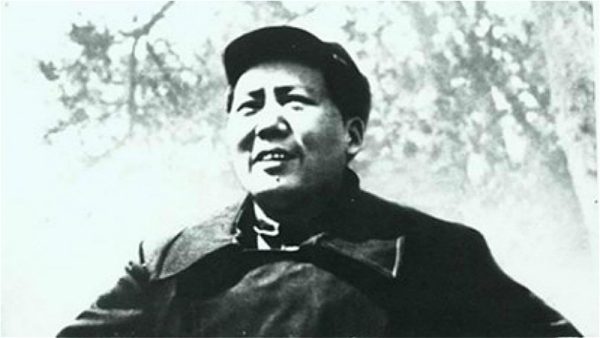
Mao refused his doctors’ medicine and slept beside a pool to avoid assassination
Mao’s teeth rotted away entirely. He suffered from cor pulmonale, a serious heart condition caused by chronic lung disease. Yet he resisted virtually all conventional treatment, including routine physical examinations, because he was convinced the drugs his doctors prescribed were poisons administered with ulterior motives. He refused injections. He would not submit to standard procedures.
What Mao trusted instead was a folk belief, rooted in Taoist sexual practice, that sexual contact with young women could restore his vital energy. According to Li’s account, the 8341 Unit, the elite Central Garrison Corps that served as Mao’s personal security force, did far more than guard his physical person. During the Cultural Revolution, the political campaign Mao launched in 1966 that killed hundreds of thousands and upended the lives of tens of millions, the unit also screened and supplied young women from military performance troupes for the private gatherings Mao held at the Spring Lotus Chamber in Zhongnanhai, the walled compound in central Beijing where the Party’s top leaders lived and worked. These women were subjected to political background checks before being admitted. The arrangement was an open secret among Mao’s inner circle.
Success
You are now signed up for our newsletter
Success
Check your email to complete sign up
Mao’s sleeping arrangements were governed entirely by fear. The ceilings of his residence in Fengze Garden, inside the Zhongnanhai compound, struck him as ideal hiding places for listening devices. The air conditioning vents, he believed, could be used to pipe in poison gas. He eventually relocated to a room beside the indoor swimming pool, a structurally bare space that offered him, at least in his own estimation, a margin of safety his regular bedroom did not.
Even heavily sedated with Quaalude, a barbiturate sedative he consumed in large quantities to manage chronic insomnia, Mao would wake in the night screaming that someone was trying to kill him. He would demand that Wang Dongxing, the director of the Party’s General Office who functioned as a kind of palace chamberlain, immediately mobilize the 8341 Unit to reinforce his protection.
Zhang Yaoci, the first commanding officer of the 8341 Unit, confirmed this picture in his own memoir, Recollections of Mao Zedong. In the period before Mao’s death, Zhang wrote, Mao had become mentally unstable. He slept poorly, ate less and less, and would cry out in his sleep: “Call Zhang Yaoci immediately!” and “Where is Dongxing?” He grew volatile, enraged without cause, consumed by suspicion and dread. Wang Dongxing and the 8341 Unit had long since ceased to function simply as security personnel; they had become the mechanism through which Mao isolated himself from the outside world and kept watch over everyone around him.

A bugged bedroom and a secret letter showed how deep Mao’s fear ran
In 1961, Mao discovered that Yang Shangkun, then director of the Party’s General Office, had installed recording equipment on Mao’s private rail carriage and in his bedroom. The stated purpose was to capture Mao’s “supreme directives” for the official record. Mao responded with volcanic fury. The revelation that even his innermost sanctum had been wired for sound shattered whatever residual trust he placed in the apparatus around him. From that point forward, Mao’s movements became deliberately unpredictable. When traveling by rail, he refused to remain at any single location longer than a prescribed interval. He varied his routes. He trusted no fixed pattern.
In 1966, in the early weeks of the Cultural Revolution, Mao retreated to Dishui Cave, a fortified air-raid shelter built into the hills of Shaoshan, his birthplace in Hunan province. He stayed there for eleven days. In a private letter to his wife, Jiang Qing, written during that period, Mao set down in unusually direct language his terror of a coup. He wrote that he believed he might be “smashed to pieces.” For a man who had spent decades projecting invincibility, the letter was an extraordinary admission of private dread.
READ MORE:
- Zhou Enlai Helped Mao Destroy China. A New 1,200-Page Biography Explains How.
- Mao Set Kill Quotas by City: 700,000 Executed in 1951
- Why Mao Zedong Really Launched the Cultural Revolution
The Lin Biao assassination plot confirmed every fear Mao had ever harbored
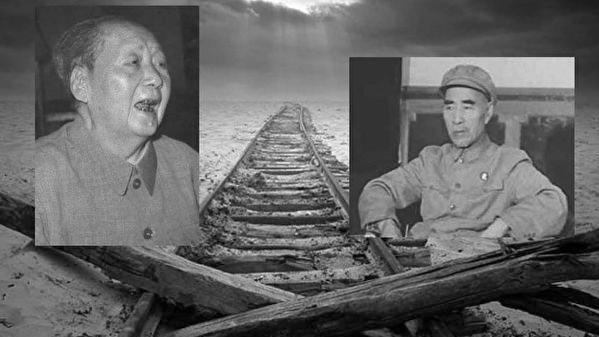
Lin Biao had been Mao’s chosen successor, his loyalty so publicly celebrated that Lin’s name had been written directly into the Party constitution during the Cultural Revolution. When Lin’s son, Lin Liguo, a senior officer in China’s air force, organized a plot to assassinate Mao, the methods he proposed were not subtle. According to the “Project 571 Outline,” a planning document later discovered by investigators, the conspirators discussed using flamethrowers and bombing Mao’s private train. The code name for Mao in the document was B-52, after the American strategic bomber.
The “Project 571 Outline” also contained a psychological portrait of Mao that was, for its time and origin, startlingly precise. The document described him as “a paranoid and a sadist.” Lin Liguo and his circle had seen Mao clearly enough; they simply wanted to remove him by force before he removed them. The coup attempt collapsed. Lin Biao died, along with his wife and son, when the plane carrying them toward the Soviet Union crashed in Mongolia under circumstances that remain disputed.

The design of one-party dictatorship guaranteed Mao could never feel safe
Ming Juzheng, an emeritus professor of political science at National Taiwan University who has written extensively on CCP internal politics, frames the Party’s elite power struggles as operating according to gangland rules: loyalty enforced through violence, betrayal met with extermination, and no mechanism for peaceful succession or honorable exit.
Mao’s hands were soaked in blood. He had destroyed Gao Gang, one of the founding generation of CCP leaders; driven Peng Dehuai, his most decorated general, to death in prison; and orchestrated the persecution of Liu Shaoqi, his predecessor as head of state, who died in detention in 1969. The more people Mao killed, the more people had cause to kill him back.
Cheng Xiaonong, a US-based scholar who served as a policy adviser to former CCP general secretary Zhao Ziyang before leaving China, draws a structural distinction that cuts to the heart of Mao’s predicament. In democratic systems, heads of government can leave office, accept their reduced status, and live out their remaining years in reasonable security. The CCP’s internal logic allows no such exit. A leader who loses power does not retire; he becomes a target for retribution, subject to political destruction and historical defamation. Mao knew what awaited any CCP leader who loosened his grip, because he had done it to others. The institutional design of the Leninist party-state made it impossible for him to stop. His pathological clinging to power, and the paranoia that accompanied it, were the rational responses of a man who had eliminated every alternative.
The system Mao built to terrorize China locked him inside it
The man who commanded the worship of hundreds of millions could not sleep through the night. Every aide was a potential assassin. Every physician was a potential poisoner. Every ceiling hid a microphone. The most powerful man in China spent his last years huddled beside a swimming pool, dependent on a rotating supply of young women and industrial quantities of sedatives, screaming into the dark for his bodyguards.