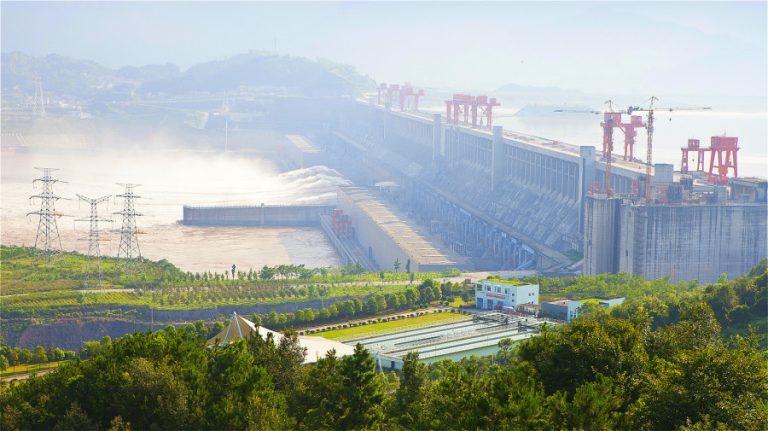
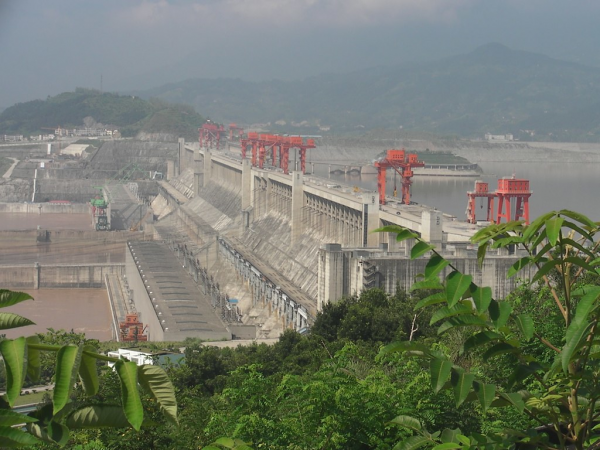
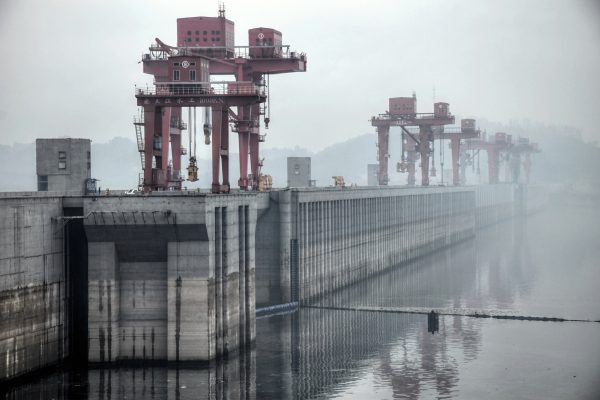
The Three Gorges Dam, completed in 2006 after more than a decade of construction on the Yangtze River in central China, was presented by the Chinese Communist Party as one of its supreme engineering achievements: a structure that would tame seasonal floods, generate clean electricity, and demonstrate the superiority of centralized planning over the hand-wringing of critics. What the Party suppressed was the testimony of the engineers who had studied the project most carefully and concluded that it should never be built.
The applied mathematician who read the Gulf War as a warning about China’s Three Gorges Dam
In early 1991, as the U.S.-led coalition dismantled Saddam Hussein’s military with a precision air campaign, Qian Weichang, a renowned applied mathematician and mechanics scholar who later served as vice chairman of the Chinese People’s Political Consultative Conference, the Party’s political advisory body, saw something in the television footage that alarmed him. He published an essay, “Lessons of the Gulf War Viewed Through the Three Gorges Project,” in which he argued that the same precision-strike technology used to destroy Iraqi military infrastructure could be turned against China’s most consequential piece of civilian engineering: the Three Gorges Dam, then under active planning.
The dam, once built, would become the largest single point of failure in China’s geography. A successful strike would send a catastrophic flood wave down the Yangtze, submerging the six provinces and municipalities along the river’s lower reaches and placing hundreds of millions of people in mortal danger. Against modern missile technology, he wrote, the dam offered no viable defense. He called the project something that should never have been approved and described proceeding with it as equivalent to hanging a Sword of Damocles over China’s own people.
Shortly after the essay appeared, Qian retracted his conclusions, declared his support for the project, and traveled in person to the dam site to apologize. Whatever private calculation drove that reversal, the public record shows a scientist of the highest rank forced to disown his own engineering judgment. Construction began in 1994.
The hydraulics professor who itemized every failure in advance
Huang Wanli, a hydraulic engineer and professor at Tsinghua University in Beijing, mounted the most technically detailed opposition to the Three Gorges Dam before construction began. His objections covered hydrology, geology, economics, and the social cost of forced relocation.
Success
You are now signed up for our newsletter
Success
Check your email to complete sign up
On sedimentation, Huang warned that the upper Yangtze carries not just fine silt but large cobblestones, which a dam cannot flush downstream. Once the reservoir filled, those cobblestones would accumulate behind the structure and begin migrating upstream, eventually choking the river channel approaching Chongqing and triggering flooding throughout Sichuan. The feasibility studies projected minimal water-level variation across the reservoir’s length. When engineers measured actual conditions after filling began, they found differentials far exceeding those projections, serious enough to raise questions about whether parts of Chongqing could eventually be submerged at full reservoir capacity.
On geology, Huang warned that sustained water pressure against the slopes along both banks would saturate the rock and accelerate landslides, collapses, and mudslides. Since the reservoir began filling in 2003, the Chongqing section of the reservoir zone has recorded more than 10,000 identified geological hazard sites. A single period of 175-meter trial impoundment produced 132 deformation or geological disaster incidents, collapsed 97 bank segments totaling roughly 3.3 kilometers, and forced the emergency evacuation of nearly 2,000 residents. Two newly built county seats, constructed specifically to house residents displaced by the rising reservoir, subsequently required further relocation after landslides rendered them uninhabitable. By early 2010, the Chinese government had spent, by official accounts, 12 billion yuan attempting to manage geological hazards in the reservoir zone alone.
On displacement, Huang warned that official resettlement figures were drastically underestimated. The 15 counties and districts absorbed into the expanded Chongqing municipality in 1997 to accommodate Three Gorges reservoir-zone administration arrived carrying mass unemployment and persistent poverty. The project forced the closure of more than 2,000 enterprises in the reservoir zone. In Wanzhou, the largest reservoir-zone city, urban unemployment reached 8.1 percent, and nearly 22 percent of displaced urban residents depended on minimum-income assistance. Relocation compensation payments were frequently delayed or diverted.
He warned Chinese leaders directly: build this dam on the main channel between two major cities, and it will eventually have to be demolished by explosives. “If the high dam is built,” he stated, “it will in the end be forced to be blown up.” He was not invited to participate in the project’s official feasibility assessment.
The 2015 security decree that confirmed what the Party refused to say
Whatever the Party’s public position on the dam’s safety, its actions told a different story. China’s top military command authorized deployment of a full army regiment to guard the structure: four surface-to-air missile batteries, an attack helicopter battalion, eight fast-patrol vessels, and 24 rapid-response mobile squads, totaling 4,600 troops.
In September 2015, then-prime minister Li Keqiang signed a State Council decree establishing formal security regulations for the dam, creating a four-tier protection framework spanning the central government, Hubei Province, the city of Yichang, and the dam’s own operating management entity. The decree covered land, water, and airspace. It ran to seven chapters and 41 articles.
Luo Changping, former deputy editor of Caijing, China’s leading financial magazine, noticed what the decree did not cover. The Three Gorges project spans the Yangtze from Chongqing downstream to Yichang in Hubei. Chongqing, the largest city in the dam’s shadow and the municipality most directly exposed to the hazards Huang and Qian described, does not appear in the security framework at any tier.
What suppressing the engineers cost
The Party excluded Qian and Huang from the feasibility process and arranged a review that would produce the answer it wanted.
The cost is now distributed across hundreds of thousands of reservoir-zone residents living in active geological hazard zones, across the Chongqing communities that received no legal protection under the 2015 security decree, and across a downstream population of hundreds of millions for whom the dam represents an unquantifiable contingent liability.