Nestled between India and China, Nepal has increasingly emerged as a strategically significant player in regional and global geopolitics. Over the past decade, intensifying competition among major powers, combined with Nepal’s unique location in the Himalayas, has elevated the country’s geopolitical importance not only for its immediate neighbors but also for the United States.
Following the abolition of the traditional monarchy in 2008, Nepal experienced prolonged political instability, with frequent changes in government and several administrations led by communist parties. The country’s political landscape shifted dramatically after the Gen Z-led anti-government and anti-corruption protests that erupted in September 2025. At the time, Nepal was governed by Prime Minister Khadga Prasad Sharma Oli, a veteran leader of the Communist Party of Nepal (Unified Marxist–Leninist).
The protests escalated rapidly, culminating in violent clashes between demonstrators and security forces near Parliament that Sept. 8. The ensuing unrest spread nationwide, resulting in dozens of deaths and thousands of injuries before the army imposed a curfew. Prime Minister Oli subsequently resigned, paving the way for an interim administration headed by Nepal’s first female chief justice, Sushila Karki.
Fresh elections held on March 5 produced a historic outcome. Voters elected Balendra “Balen” Shah — a rapper, structural engineer, and supporter of the Gen Z protest movement — as prime minister. Shah’s decision to appoint a notably young cabinet generated optimism among Nepal’s youth while drawing renewed international attention to the country’s future direction and geopolitical significance.
Against this backdrop, Vision Times senior journalist Venus Upadhayaya spoke exclusively with Dr. Pramod Jaiswal, Research Director at the Kathmandu-based Nepal Institute for International Cooperation and Engagement, on June 12, 2026.
Success
You are now signed up for our newsletter
Success
Check your email to complete sign up
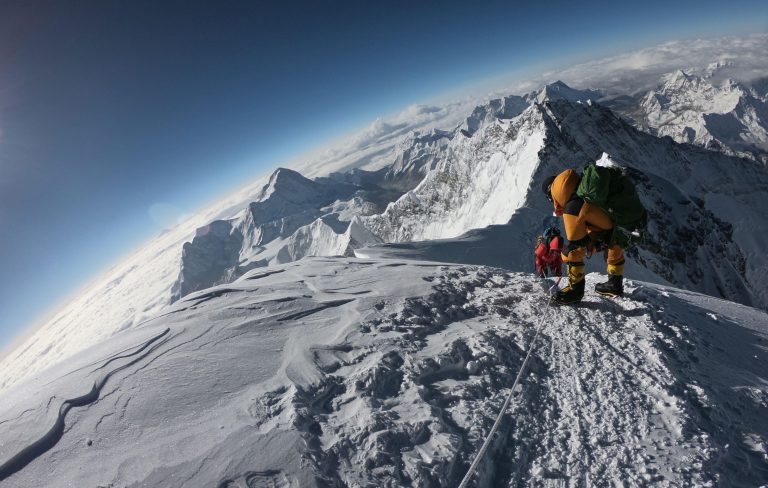
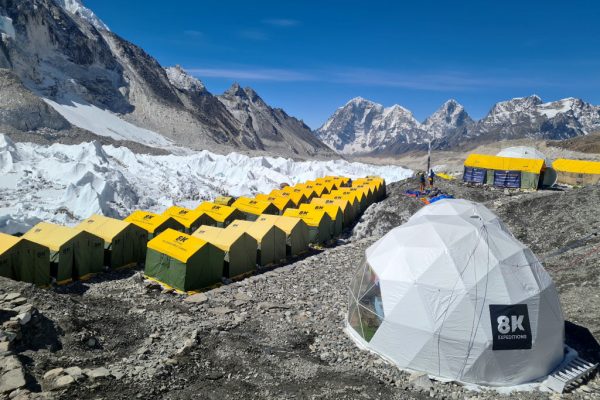
The interview was prompted by a recent controversy at the Everest Base Camp. An American delegation led by Sergio Gor, President Donald Trump’s Special Envoy for South and Central Asia, sought to test a U.S.-made Alta X Gen 2 drone designed for high-altitude logistical support. Nepal’s Ministry of Home Affairs declined to grant flight permission, citing security concerns. The incident drew particular attention because Chinese-made DJI FlyCart 30 drones have reportedly been operating in the region since 2024 for similar purposes.
The episode prompted broader questions about the strategic significance of the Himalayas. Al Jazeera described the dispute as indication that Mount Everest is becoming a “new theatre of tech war” between Washington and Beijing.
In this interview, Dr. Jaiswal discusses the Everest drone controversy, Nepal’s foreign policy priorities, infrastructure diplomacy, youth engagement initiatives by global powers, and the country’s evolving role amid growing competition between the United States and China.
RECENT COVERAGE
- US Targets Chinese Tech Giants, Adding BYD, Alibaba, Baidu to Pentagon List
- Media Battle Erupts Over Alleged Israeli Espionage Threat to US Amid Iran Talks
- Exclusive: Analyst Says Taiwan Must Confront Limits of US Support as $14 Billion Arms Package Remains in Limbo
Vision Times: How has Nepal become increasingly important to the United States in today’s geopolitical environment?
Dr. Pramod Jaiswal: Nepal is important for the United States in today’s geopolitical context because it lies strategically between two rising Asian giants — India and China. As the U.S. seeks to contain China’s growing influence and simultaneously keep India within its strategic sphere while encouraging India to maintain some distance from Russia, Nepal becomes an important observation point in South Asia.
Nepal also holds significance for the U.S. because of its commitment to democracy and democratic institutions. Historically, Nepal and the U.S. have maintained close relations, with the United States being the second country after Britain to establish diplomatic ties with Nepal. Furthermore, Nepal occupies an important place in the U.S. Indo-Pacific Strategy, particularly in terms of regional stability, connectivity, governance, and balancing growing Chinese influence in the Himalayan region.
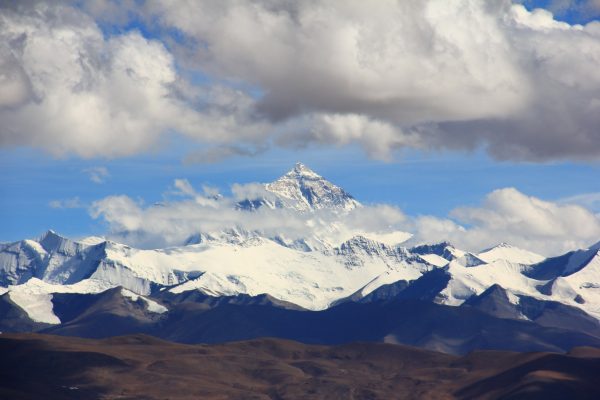
Vision Times: What is the geo-strategic significance of Mount Everest and the Himalayan region more broadly in the context of US–China competition?
Dr. Jaiswal: The geo-strategic significance of Everest and the broader Himalayan heights has increasingly gained attention in the context of U.S.-China competition. As the world’s highest mountain range, the Himalayas provide unique opportunities for scientific, environmental, and technological research. High-altitude locations such as the Pyramid International Laboratory/Observatory near Everest are already used for climate studies, atmospheric monitoring, and testing equipment that can later be used in extreme conditions, including space-related technologies. The testing of Freefly Systems Alta X Gen 2 American drone by Sergio Gor can be seen as an example.
At the geopolitical level, Himalayan heights also carry strategic importance. In a long-term perspective, any sustained international scientific or technological presence in the region could potentially provide advantages in monitoring developments across the Tibetan plateau and western China. Given the intensifying U.S.-China rivalry, some analysts argue that American engagement in Nepal’s Himalayan region is not only about science and climate research, but may also indirectly contribute to strategic observation and regional influence.
Moreover, the Himalayas are central to issues of water security, border security, climate change, and connectivity in Asia, making the region strategically important for both China and external powers such as the United States.
Vision Times: Why do you believe China objected to the proposed U.S. drone test near Everest?
Dr. Jaiswal: China likely objected to the U.S. testing of a drone at such a high altitude because of the strategic sensitivity of the Himalayan region, particularly near the Nepal-China border. Although the stated purpose of the drone testing may have been scientific or technological, China may perceive such activities through a security lens, especially in the context of growing U.S.-China rivalry.
Nepal also has strict no-flying regulations near its international borders. Under Nepal’s rules, drones are generally not allowed to fly within 5 kilometers of the borders with India and China without special permission. Since the Everest region lies close to the Tibetan side of China, Beijing may have been concerned that high-altitude drone operations could potentially be used for surveillance, mapping, data collection, or monitoring activities near sensitive areas in Tibet.
From China’s perspective, even scientific experiments conducted by U.S.-linked institutions in the Himalayas could carry dual-use strategic implications. Therefore, China’s objection was likely driven not only by concerns over Nepal’s aviation regulations, but also by broader geopolitical mistrust and fears of increased American strategic presence in the Himalayan frontier.
Vision Times: What are India’s strategic interests and concerns in this situation?
Dr. Jaiswal: India’s stakes in this situation are significant because Nepal lies within India’s immediate strategic neighborhood and directly affects its security environment in the Himalayas. India has traditionally viewed Nepal as an important buffer space between itself and China, and therefore closely watches any increase in external strategic activities in Nepal.
At the same time, India may not want Nepal to become an arena of intense US-China rivalry. While India has strengthened strategic cooperation with the United States in the broader Indo-Pacific context, it also prefers stability in Nepal and the Himalayan region. Excessive geopolitical competition between Washington and Beijing inside Nepal could complicate India’s own regional interests and potentially reduce its traditional influence in Kathmandu.
India’s primary concerns are likely related to border security, regional stability, connectivity, and preventing any security-sensitive activities near the Himalayan frontier that could alter the regional balance. Therefore, India may prefer Nepal to maintain a balanced foreign policy and avoid becoming overly aligned with either China or the United States.
Vision Times: Nepal launched key electricity infrastructure projects on June 9, including the Ratmate and New Damauli substations and a 297-kilometer transmission line network under the Millennium Challenge Corporation (MCC) Nepal Compact.
This project is jointly financed through a US$550 million grant from the United States and a US$197 million contribution from the Nepali government. Nepal also has significant infrastructure development projects supported by both India and China including the latter’s Belt and Road Project (BRI). How has foreign-funded infrastructure development become an instrument of Nepal’s foreign policy?
Dr. Jaiswal: Infrastructure development through foreign aid has become a central pillar of Nepal’s foreign policy, primarily because of the country’s structural constraints and its strategic geography between two major Asian economies — India and China.
Till now, no BRI project has been implemented in Nepal, though Nepal has signed a MoU on the Belt and Road Initiative (BRI) in 2017 and also a Framework Agreement on its implementation in 2025. This reflects Nepal’s broader approach: engagement with major powers and development partners, but with careful prioritization based on national capacity and strategic balance rather than automatic project execution.
Nepal’s core challenge remains connectivity. Despite its location between two large economic giants, Nepal has not been able to fully translate this advantage into economic growth due to weak internal and cross-border infrastructure. As a result, improving connectivity, roads, transmission lines, rail links, and energy infrastructure such as cross-border power transmission lines, has become a foreign policy priority, not just a development goal. The logic is straightforward: without connectivity, trade, tourism, and investment cannot expand meaningfully.
At the same time, Nepal’s small economic size and limited fiscal space restrict its ability to take on large commercial loans, especially for mega infrastructure projects. This makes debt sustainability a key concern in foreign-funded development. Therefore, Nepal has increasingly preferred grants and concessional financing, along with selective loans from multilateral institutions such as the Asian Development Bank (ADB) and the World Bank, rather than heavy borrowing on non-concessional terms.
In this context, projects like the Millennium Challenge Corporation (MCC) Nepal Compact — supporting major electricity transmission infrastructure such as the Ratmate and New Damauli substations and a 297-kilometre transmission line network — illustrate Nepal’s pragmatic approach. The US$550 million grant from the United States, combined with Nepal’s US$197 million contribution, reflects how infrastructure aid is being used as a foreign policy instrument to strengthen connectivity without excessive debt burden.
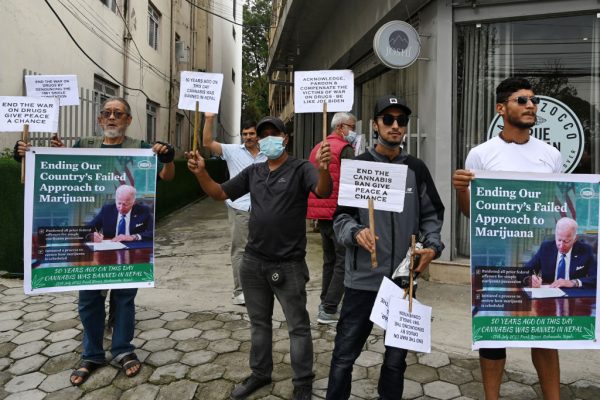
Vision Times: Following the Gen Z protests and the emergence of a new political leadership, both China and the United States have expanded youth-focused engagement programs in Nepal, including the Chinese Embassy Youth Pioneer Program by the Chinese Embassy in Nepal, and the U.S. Embassy’s opening of applications for the United States Embassy Youth Council (USYC) 2026 cohort for students and young professionals. How do you assess these initiatives from a geopolitical perspective?
Dr. Jaiswal: The recent expansion of youth-focused programs by both China and the United States in Nepal should be seen in the context of Nepal’s changing domestic politics and the rising influence of youth after the Gen Z–led protests and the formation of a new government with significant youth representation.
The USYC is not a new initiative; it has existed for several years as part of US public diplomacy and youth engagement in Nepal, focusing on leadership, employability, and civic skills. On the other hand, the Chinese Embassy’s “Youth Pioneer Program” is a relatively new initiative, reflecting China’s increasing effort to expand its soft power outreach among Nepali youth.
The timing is significant. The Gen Z protests highlighted the political agency of young people, and the new government, with a larger presence of young leaders in parliament and cabinet, has reinforced this shift. As a result, not only the U.S. and China, but also countries like India and European partners, are increasingly focusing on youth-centered engagement programs.
Geopolitically, this is often interpreted as growing U.S.–China competition in Nepal. While that dimension exists, it is more accurate to say that Nepal is witnessing a broader convergence of external actors engaging youth as a strategic constituency. All major powers are trying to build long-term influence by investing in skills, leadership development, and professional capacity-building.
So rather than being only a rivalry, this reflects a shared recognition that Nepal’s youth are now a key driver of its political and developmental future, and therefore a central focus of foreign policy engagement.
Vision Times: How does Nepal’s new government view the opportunities and challenges created by growing competition between the United States and China? More broadly, how does Nepal’s younger generation understand the country’s place in an increasingly polarized global order?
Dr. Jaiswal: The new government in Kathmandu is approaching geopolitics primarily through the lens of “development diplomacy.” Its central priority is to mobilize external resources for infrastructure, connectivity, and job creation, especially for a rapidly growing youth population that is placing strong pressure on the state to deliver economic opportunities.
In this context, Nepal is actively seeking economic engagement with multiple partners, including the United States, India, Europe, and West Asia. At the same time, it does not want to miss the development and investment opportunities that China can offer. So, rather than choosing between partners, Nepal is trying to maximize benefits from all available sources.
Although there is an intensifying U.S.–China rivalry globally, Nepal does not want to be drawn into this competition. Its geographical proximity to China and its open border and long-standing ties with India make it structurally sensitive to regional power dynamics. At the same time, Nepal is aware that China’s major trading partners include the U.S., Europe, Japan, Australia, and India itself, which further reinforces the idea that economic engagement is globally interconnected rather than binary.
Therefore, Nepal’s strategy is to remain flexible and non-aligned in economic terms, ensuring that geopolitical competition does not block development opportunities. There is no strategic rationale for Nepal to exclude China from its development partnerships, just as there is no reason to limit engagement with Western partners.
However, politically, Nepal is careful to maintain a clear distinction. As a democratic country, its political system is fundamentally different from China’s one-party system. Nepal does not seek deep political alignment or institutional influence from any external power, particularly China, and remains cautious about external involvement in its domestic political processes. China, on its part, has repeatedly stated its commitment to non-interference in Nepal’s internal affairs. In return, Nepal has also committed to the “One China Policy.”