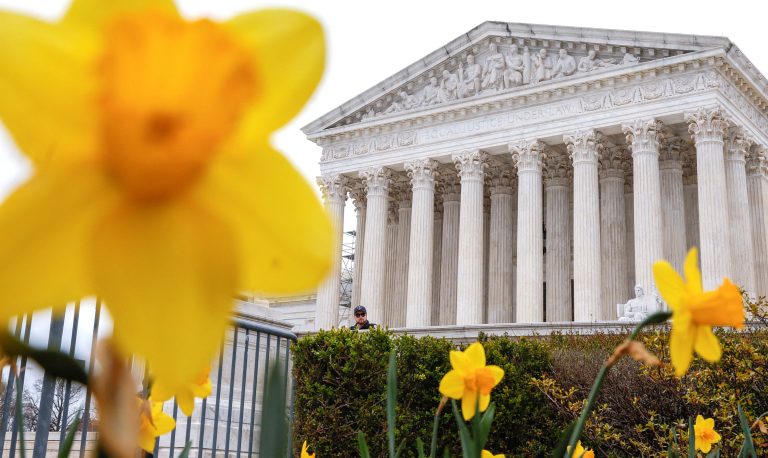
The U.S. Supreme Court concluded its nine-month term on Tuesday, June 30, issuing several closely watched rulings on its final day. The decisions addressed major issues including birthright citizenship, transgender athletes’ participation in women’s sports, and campaign finance restrictions.
The Court currently consists of six conservative and three liberal justices, three of whom were appointed by President Donald Trump.
Supreme Court rejects Trump’s attempt to restrict birthright citizenship
In the birthright citizenship case, the Supreme Court ruled 6-3 that an executive order signed by the Trump administration last year violated the Fourteenth Amendment to the U.S. Constitution, thereby preserving the existing system of birthright citizenship.
The executive order would have ended automatic U.S. citizenship for children born in the United States if neither parent was a U.S. citizen nor a lawful permanent resident.
Writing for the majority, Chief Justice John Roberts stated that the Fourteenth Amendment clearly guarantees automatic citizenship to nearly everyone born in the United States, with only a few narrow exceptions, such as children of foreign diplomats or members of an occupying enemy military force.
Success
You are now signed up for our newsletter
Success
Check your email to complete sign up
Justice Samuel Alito strongly dissented from the ruling.
In his dissent, he wrote: “This is one of the most important decisions in the history of the Court, and in my judgment, the Court has made a serious mistake.”
No other justice joined his dissent.
Alito argued that the majority’s decision preserves a powerful incentive for more people to enter or remain in the United States illegally.
He added that if the Fourteenth Amendment truly required such a result, the nation could either accept it or amend the Constitution accordingly. However, he argued that the amendment does not contain the rule the Court has now attributed to it.
He concluded: “In my judgment, the Court has made a mistake that will seriously affect the country’s future.”
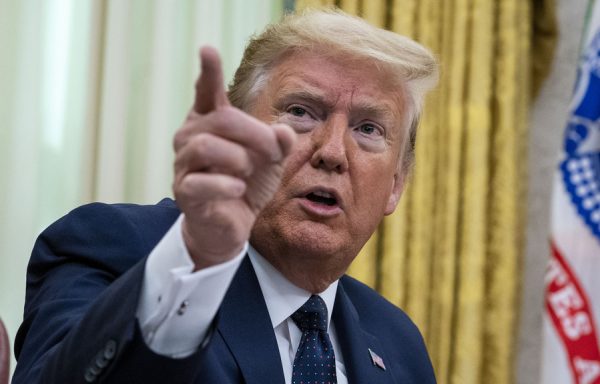
Trump calls on Congress to end birthright citizenship
Following the Court’s decision, President Trump said he would seek legislation through Congress to change the policy.
Posting on Truth Social, Trump said Congress still has the authority to address the issue through legislation.
He wrote: “The Supreme Court upheld Birthright Citizenship, which is too bad for our Country, but we can easily make it up in Congress through Legislation, with the support of the President, that has now been determined during this process.”
Trump argued that there is no need to pursue the lengthy and difficult process of amending the Constitution.
He urged Congress to begin work immediately.
“Congress should start TODAY to work on ending expensive and unfair to our Country, Birthright Citizenship. They will have my Complete and Total Support!”
Observers estimate that if the executive order had taken effect, it could have affected the legal status of approximately 250,000 newborns each year while significantly increasing paperwork for families seeking citizenship documentation.
The ruling also focused attention on birth tourism, whereby pregnant women from foreign countries travel to the United States with the intent of giving birth on U.S. soil and thus granting their children automatic status as Americans.
Supreme Court rules states may ban transgender athletes from women’s sports
The Supreme Court also ruled Tuesday that states may restrict transgender students from participating in girls’ and women’s sports, clearing the way for state laws banning transgender athletes from competing on female teams.
According to Reuters, the Court reviewed cases from West Virginia and Idaho. Both states require public school and university athletic teams to be organized according to biological sex, preventing biological males from competing on girls’ or women’s teams. Similar laws have now been enacted in 27 states.
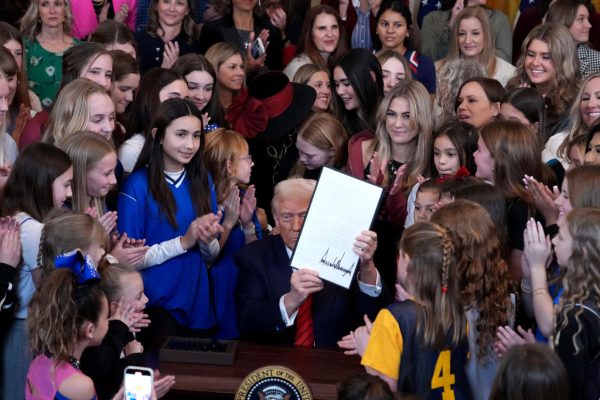
Lower courts had previously blocked enforcement of the laws, finding they may violate both the Fourteenth Amendment’s Equal Protection Clause and Title IX, the federal law prohibiting sex discrimination in education. The Supreme Court overturned those rulings.
Regarding Title IX, all nine justices unanimously agreed that the state laws do not violate federal law.
On the constitutional question, however, the Court ruled 6-3 that the laws also comply with the Equal Protection Clause, with the six conservative justices forming the majority.
Justice Brett Kavanaugh wrote the majority opinion.
Justice Brett Kavanaugh, writing for the majority, held that both the U.S. Constitution’s Equal Protection Clause and Title IX allow states to base eligibility for women’s and girls’ sports teams on biological sex. As a result, states may continue designating athletic opportunities exclusively for biological females—without the need to overhaul or fundamentally restructure women’s and girls’ sports programs nationwide.
Kavanaugh emphasized that athletic competition differs from general educational or employment opportunities. Because males and females have objective physical differences, maintaining separate athletic teams based on biological sex is both reasonable and longstanding.
He also noted that since Title IX was enacted in 1972, it has dramatically expanded athletic opportunities for female students and contributed to the rapid growth of women’s sports over the past 54 years. According to the Court, the term “sex” in Title IX refers to biological sex.
Kavanaugh further concluded that excluding transgender girls from girls’ sports promotes athlete safety and competitive fairness, serving important state interests.
Following the ruling, President Trump posted on Truth Social:
“BIG WIN: The United States Supreme Court just RULED AGAINST MEN PLAYING IN WOMEN’S SPORTS. Wow! That takes that ridiculous situation off the table!!!”
According to The Wall Street Journal, both the two states and the Trump administration argued that allowing transgender girls and women to compete in female sports could undermine safety and fair competition for biological female athletes.
West Virginia Attorney General John McCuskey called Tuesday’s ruling “common sense.”
He said: “The opportunity to compete in fair and safe athletic competition carries immeasurable value for athletes.”
Supreme Court relaxes campaign finance restrictions
The Court also issued another major ruling on campaign finance.
In a 6-3 decision, the Supreme Court sided with Republican plaintiffs, including Vice President JD Vance, holding that federal restrictions on coordinated campaign spending between political parties and candidates violate the First Amendment’s protection of free speech.
The Court concluded that existing laws improperly restrict political parties from coordinating campaign expenditures with candidates, amounting to an unconstitutional limitation on political expression.