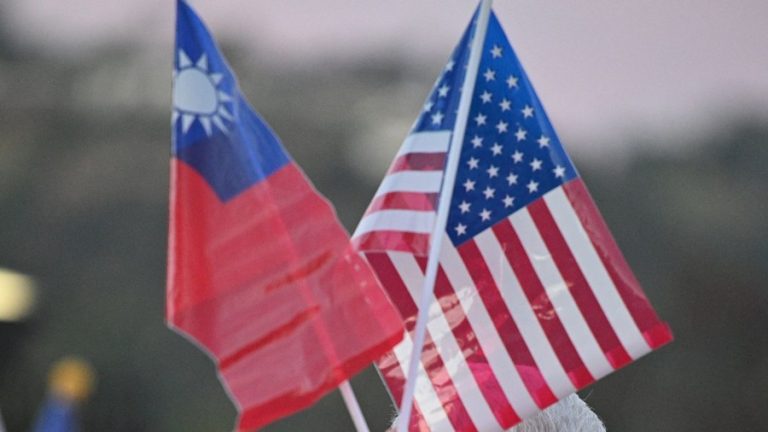
Taiwan’s Legislative Speaker Han Kuo-yu led a delegation on a visit to the United States, where it received a high-level bipartisan welcome from members of the U.S. Congress. Some commentators have compared the trip with KMT lawmaker Cheng Li-wen’s recent visit to the United States, but the two visits differ in substantive ways.
Han’s visit was not a personal trip. Rather, it followed a joint invitation from bipartisan members of the U.S. Senate for Taiwan’s Legislative Yuan to send an official delegation. In substance, this was a visit by a delegation representing Taiwan’s legislature, not Han himself. Han simply headed the delegation in his capacity as Speaker of the Legislative Yuan.
During the visit, the delegation traveled to Capitol Hill and met with more than 40 senators and representatives, including former House Speaker Nancy Pelosi and former House Foreign Affairs Committee Chairman Michael McCaul. Although the United States and Taiwan do not maintain formal diplomatic relations, the U.S. Congress officially invited a delegation from Taiwan’s legislature to visit. Since Taiwan is regarded by Beijing as a matter of “grave concern,” the U.S. Congress deliberately chose to “play dumb” and proceed with the invitation anyway, thereby putting Xi Jinping in an awkward position.
The U.S. Congress’s decision to accord the delegation a high-level reception openly crossed what Beijing considers a red line. First, it elevated unofficial U.S.-Taiwan exchanges and reinforced the foundation of mutual trust between the two sides. Second, it brought the two legislatures closer together, paving the way for closer coordination on future arms sales and other areas of cooperation. Finally, by giving a cool reception to Cheng Li-wun while warmly welcoming Han Kuo-yu, it sought to deepen divisions within the Kuomintang between its pro-Beijing and anti-Beijing factions.
Before President Donald Trump visited China, he deliberately projected a friendly attitude toward Beijing, including by putting sensitive issues such as arms sales on hold, leading many to believe that U.S.-China relations were improving. Beijing likely shared that expectation. In reality, however, the article argues that hostility toward the Chinese Communist Party is deeply embedded in the overall U.S. strategic outlook. Friendliness is merely superficial, while hostility is fundamental; goodwill is temporary, whereas strategic rivalry is enduring.
Success
You are now signed up for our newsletter
Success
Check your email to complete sign up
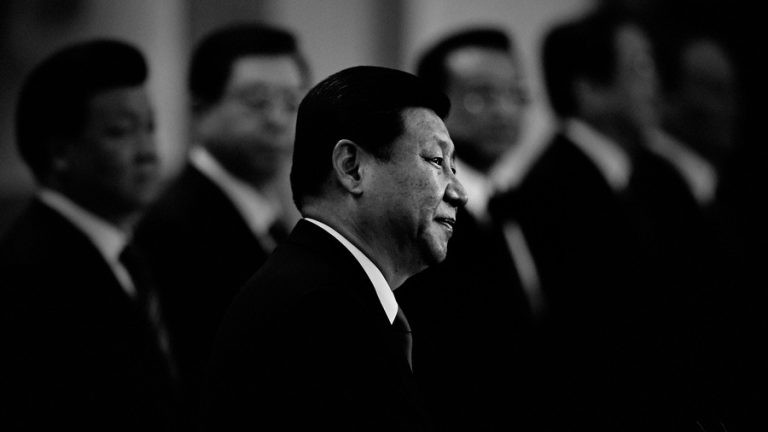
Earlier, on the day after Xi Jinping’s birthday, the U.S. Senate unanimously passed a special resolution listing what it described as Xi’s “15 offenses.” According to the article, this amounted to the Senate issuing a public denunciation of Xi Jinping to the world, prominently displaying it at America’s doorstep to make clear the United States’ anti-CCP stance and to signal the future direction of U.S.-China relations.
The Senate’s anti-CCP declaration effectively sets the lower bound for U.S. government policy toward China. In other words, regardless of how U.S.-China relations evolve or whether Beijing adjusts its policies toward Washington, the United States will continue to regard the Chinese Communist Party as its greatest—and perhaps ultimate—adversary. In the author’s view, this overarching strategic orientation will not change; the only variables are the timing and degree of deterioration in U.S.-China relations.
On the eve of the signing of the U.S.-Iran ceasefire memorandum, Trump went out of his way to thank both Vladimir Putin and Xi Jinping for their assistance in securing the ceasefire, making every effort to strike a conciliatory tone. Yet almost immediately afterward, the U.S. Departments of State, Commerce, and Agriculture jointly issued a letter to state governments and corporate executives urging them to expand exchanges with Taiwan in areas including trade, investment, education, tourism, and disaster preparedness (including the resilience of critical infrastructure).
The letter stated that the Chinese Embassy in Washington and Chinese consulates across the United States had recently stepped up contacts with local U.S. officials and private companies in an effort to obstruct U.S.-Taiwan exchanges and misrepresent the U.S. “One China” policy. It also drew a clear political line, instructing local officials and business leaders that if they faced pressure or warnings from Chinese authorities because of their interactions with Taiwan, they should contact the State Department directly. The implication was that the State Department would back them up.
The document was jointly signed by multiple U.S. government departments, it represents the official position of the administration and aligns with Congress’s emphasis on strengthening U.S.-Taiwan relations. At the same time, it appears to contradict Trump’s conciliatory rhetoric toward Xi Jinping. What reflects America’s true intentions? Trump’s goodwill or Congress’s “hostility”! The answer is self-evident.
Taken together—the Senate’s unanimous passage of an anti-Xi resolution, the high-profile reception for Han Kuo-yu and Taiwan’s Legislative Yuan delegation, and the joint letter from multiple U.S. agencies pushing back against what they describe as Beijing’s distortion of U.S. Taiwan policy—the United States is openly challenging what Beijing regards as its diplomatic red lines. On cross-strait issues, Washington is effectively disregarding Beijing’s stated concerns while actively safeguarding Taiwan’s interests. This represents a significant policy shift that foreshadows a further deterioration in the U.S.-China relations.
Beijing’s official response to these three developments has been limited to routine diplomatic statements rather than reciprocal retaliation, suggesting that China’s leadership finds itself in a strategic dilemma. Escalating the confrontation would further worsen U.S.-China tensions, while refraining from doing so could be seen as acquiescence. Confrontation carries risks, but restraint requires swallowing perceived provocations. Neither option is attractive, yet ignoring the situation is also not viable.
In the long run, the U.S.-China relations are unlikely to improve because both major political camps in the United States have come to regard the Chinese Communist Party as their principal adversary. Once the situation in the Middle East has been dealt with, Washington will turn its attention back to the Asia-Pacific to challenge Beijing’s influence. This direction of U.S. policy is plainly evident. Xi Jinping’s greatest concern is preventing the U.S.-China relations from deteriorating further, yet making concessions to preserve stability is itself politically painful.
Regardless of how Beijing responds, the United States will continue advancing its Taiwan policy step by step, seeking to ensure Taiwan’s security and maintain the upper hand in the U.S.-China relations. Beijing cannot simply accept this outcome, meaning future U.S.-China confrontations are likely to emerge in a variety of forms. Pro-U.S.-skeptic factions within the Kuomintang should abandon their position, while those viewed as accommodating Beijing will ultimately be rejected by the Taiwanese public.
By Yan Chungou
This article is reprinted with the author’s permission from Yen Chun-kou’s Facebook page. The views expressed in the article are solely those of the author and do not necessarily reflect those of Vision Times.