On June 26, China’s National Administration for Letters and Calls (国家信访局) — the central agency that handles citizen complaints and petitions nationwide — published new measures on its website governing how the public can register in-person visits.
The rules, which took effect on July 1, require petitioners to first submit their grievances through letters or online channels. Anyone who insists on visiting in person must go to a designated reception site specified by the local government or the next-higher authority with jurisdiction over the issue.
Under the new measures, a petitioner who wants to bypass that local or provincial authority and appeal directly to the national bureau or a central government ministry in Beijing must first produce a written notice or reply from the relevant provincial agency documenting that the complaint was already raised there. Without that paperwork, officials are instructed to send the petitioner back to their home province.
The rules also bar repeat registration of a complaint already under review. Petitioners who keep returning to Beijing anyway are to be “educated and persuaded” to leave by police, and anyone accused of causing disturbances or repeatedly interfering with public order is to be handled directly by police rather than the complaints system.
Within days of the new measures being implemented, videos emerged showing police clearing petitioners from complaint offices in Beijing and riverside encampments, sparking widespread criticism and mockery online.
Success
You are now signed up for our newsletter
Success
Check your email to complete sign up
Singapore’s Lianhe Zaobao newspaper reported that Xi Jinping has repeatedly promoted a revived version of the Fengqiao model, a grassroots dispute-resolution approach that originated in a Zhejiang town in the 1960s and was relaunched after the Communist Party’s 18th National Congress in 2012. The model calls for mobilizing local residents to settle disputes among themselves, on the principle that minor problems should never leave the village, larger ones should never leave the township, and conflicts should never move up the chain to higher authorities.
Beijing police clear petitioners from complaint offices and riverside camps
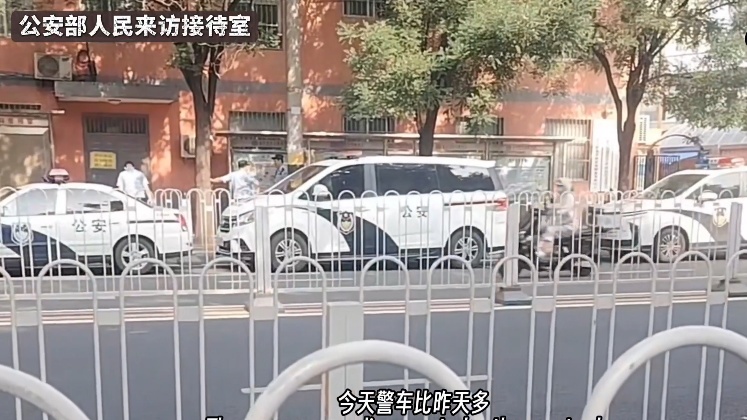
An X user who goes by the handle “YesterdayBigcat”and who has documented mass incidents and collective protests in China for years, posted video on July 3 showing days of police action outside two of Beijing’s main complaint offices: the Ministry of Public Security’s public visits reception room and the national letters and calls bureau. The footage, the account said, covered July 1 through July 3, immediately after the new rule came into force.
The account also reported that petitioners sleeping under a bridge and along the banks of the Yongding River in Beijing were forced out during the sweep, and that more than 10 petitioners from Dalian, a port city in northeastern China, were “collectively abducted” by plainclothes police and forced onto a minibus.
Video shared alongside the post showed rows of police vehicles and what appeared to be buses intended to remove petitioners, parked outside the Ministry of Public Security’s reception room. “There are more police cars today than yesterday. There are 14 buses and about 10 patrol cars, even the 120s are all headed to the complaints bureau,” a man filming the scene said, using the common shorthand for ambulances, dispatched through China’s 120 emergency medical line.
Police also cleared petitioners out of a bridge underpass where they had been living, according to separate footage of the same sweep. “They won’t let us stay under the bridge anymore, and they cleared out the riverside too. They’re forecasting heavy rain later, and they still want us out in it,” one petitioner said.