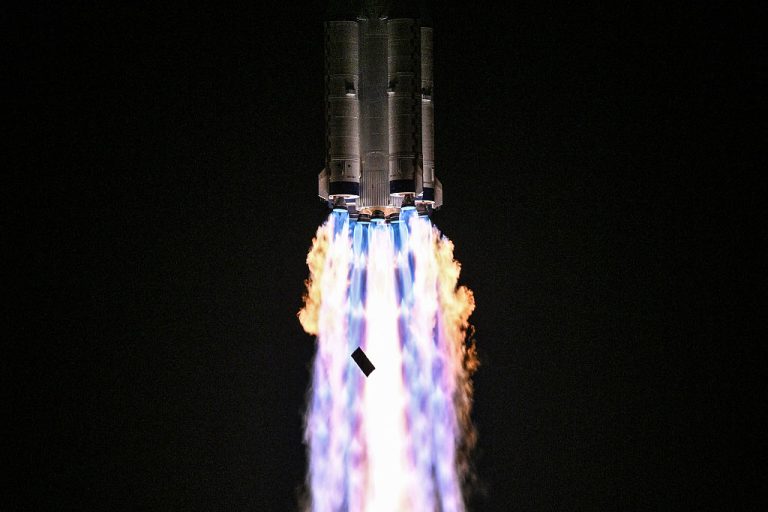

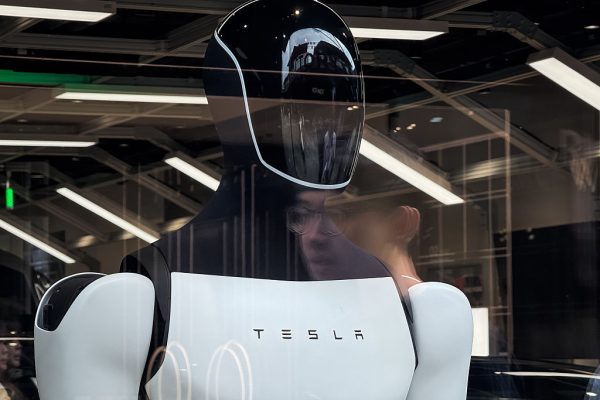
Elon Musk, the world’s first trillionaire, has announced that his space colonization program will officially begin this year. By the end of 2026, he plans to launch rockets carrying the first construction equipment and infrastructure to the Moon and Mars. The first “residents,” however, will not be humans—they will be Tesla’s Optimus humanoid robots, which are expected to prepare the foundations for future human settlements.
According to the New York Post, Musk said the robots will be the first to arrive on the Moon and Mars, where they will build the infrastructure needed to support future human settlements.
Musk said SpaceX has now shifted its primary focus to the Moon.
Because the Moon is only about three days away from Earth, construction can proceed much faster than on Mars. He hopes to establish the first lunar city within the next decade and begin transporting construction materials to Mars within seven years.
His long-term goal is to see the first self-sustaining cities on Mars emerge between 2045 and 2055.
Success
You are now signed up for our newsletter
Success
Check your email to complete sign up
Proposal for 100,000 satellites to power AI and Optimus robots
To support the space colonization effort, Musk this week filed an application with the U.S. Federal Communications Commission (FCC) seeking approval to deploy a massive satellite constellation of up to 100,000 satellites, designed to provide the communications infrastructure needed for AI, robotics, and future settlements on the Moon and Mars.
SpaceX said the network would not only provide communications between Earth and space but also supply computing power to billions of artificial intelligence (AI) devices, including robots operating on the Moon.
Jim Cantrell, a member of SpaceX’s founding team, said the satellites would effectively serve as the robots’ “central brain.”
Rather than equipping every robot with extremely powerful onboard AI, he said, it would be more efficient to centralize computing in the satellite network, allowing robots to access it whenever needed.
Cantrell believes robots will construct the colonies first, with humans moving in only after everything is ready.
Starship still faces major technical challenges
Despite the ambitious plans, significant technical hurdles remain.
SpaceX’s Starship has successfully demonstrated launches, returns, and stage separation, but the critical technology of orbital refueling has yet to be fully proven.
Former NASA Chief Technologist Les Johnson said the real challenge is developing a transportation system that is inexpensive enough and capable of operating frequent round-trip missions on a large scale.
Even so, Musk remains optimistic, saying he hopes rockets will eventually launch every few days.
Experts say that long-term human survival on the Moon and Mars will require reliable power generation, water supplies, oxygen production, fuel manufacturing, and habitable living spaces.
Most of these tasks are expected to be carried out by Tesla’s Optimus robots.
The robots could build habitats, drill beneath the surface to extract ice for water, produce rocket fuel from the Martian atmosphere, and recycle oxygen through electrolysis, laying the groundwork for permanent human settlements.
Expert: Life on Mars will be exciting—and terrifying
Experts caution that even if humans successfully reach Mars, daily life there will be far from easy.
Johnson said living on Mars would be exciting, but also monotonous and dangerous.
“I think it will be simultaneously exciting, boring and terrifying,” Johnson said according to the New York Post. “Exciting because you’re living on Mars, boring because you’re stuck inside your habitat all the time and terrifying because on the other side of your aluminum skinned building is instant death.”