By Chang Yin, Commentary
Australian journalist Cheng Lei, a former television anchor for China’s state broadcaster CGTN, recently traveled to Taiwan after regaining her freedom following more than three years of detention in a Chinese prison. But rather than dwelling on the hardships of life behind bars, Cheng used the occasion to reflect on a broader concern: While the Chinese Communist Party (CCP) exports its narratives abroad, it also exports something less visible: Fear.
Cheng, an Australian citizen who was born in China and later emigrated to Australia as a child, was first detained by Chinese authorities in 2020 while working as a business anchor for CGTN in Beijing. Her remarks since being released offer a starting point for a broader discussion about how fear, self-censorship, and social pressure can gradually erode freedom, even beyond China’s borders.
Cheng’s message also reaches beyond her own experience. It raises a question that many democratic societies increasingly face: How does freedom disappear, not through dramatic events, but through gradual acts of silence.
RELATED: Taiwan Officials Warn CCP’s New Ethnic Unity Law ‘Legalizes Transnational Repression’
Fear doesn’t always require force
Success
You are now signed up for our newsletter
Success
Check your email to complete sign up
Before her detention, Cheng believed that working within China’s state media system while maintaining an international perspective might allow her to encourage incremental change. Her experience ultimately convinced her otherwise.
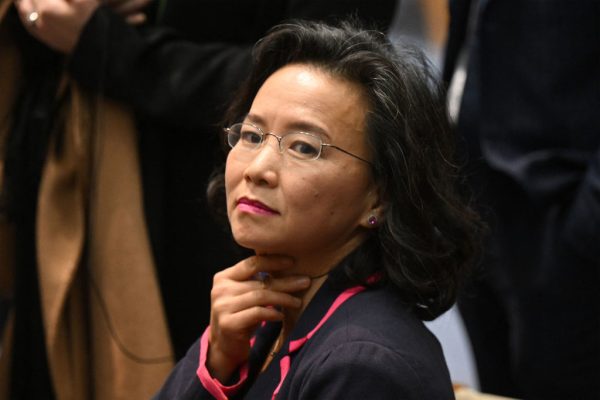
After being arrested in August 2020, Cheng was later charged on suspicion of “illegally supplying state secrets overseas,” a national security charge that was tried behind closed doors. Chinese authorities disclosed few details about the allegations, and the case drew widespread criticism from press freedom organizations and the Australian government, which repeatedly called for her release. After spending more than three years in detention, Cheng was released and returned to Australia in October 2023.
In systems where judicial independence is limited and national security laws can be interpreted broadly, she suggested, no professional status or previous service offers lasting protection. Political boundaries can shift quickly, and today’s loyal insider may become tomorrow’s target.
Yet the most striking part of Cheng’s interview was not her description of detention, but her explanation of how fear operates. She compared it to domestic abuse.
At first, victims often believe that if they become more accommodating or avoid conflict, the abuse will stop. Over time, they begin questioning themselves. Eventually, many become so accustomed to living cautiously that they lose sight of who they once were. The comparison, she suggested, extends beyond individuals to entire societies.
The psychology of self-censorship
Authoritarian systems do not necessarily rely on constant punishment. Instead, one of their most powerful tools is uncertainty, says Cheng. When people believe punishment is always possible, many begin adjusting their own behavior without being directly compelled to do so.
In recent years, similar concerns have surfaced well beyond China’s borders. Some overseas Chinese have said they avoid public criticism of Beijing out of concern for relatives still living in China. Others worry about losing the ability to visit family, maintain business relationships, or continue academic collaborations.
Companies sometimes avoid politically sensitive subjects to protect market access. Universities and researchers may hesitate before pursuing controversial topics. Journalists occasionally weigh whether certain reporting could jeopardize future access. In many cases, formal punishment never occurs. The possibility alone becomes enough.
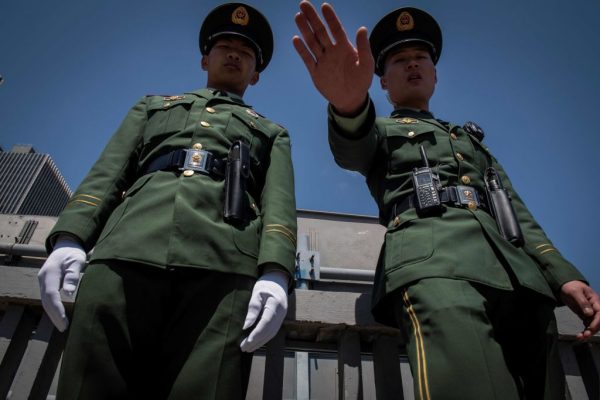
This is how self-censorship spreads–not necessarily through widespread arrests, but through thousands of individual decisions to remain silent.
Freedom shrinks gradually
Freedom rarely disappears overnight. More often, it contracts gradually as people conclude that remaining silent is simply easier than speaking openly, says Cheng. Each individual decision may appear insignificant, but collectively, those decisions can reshape public discourse.
When phrases such as “It’s better not to get involved,” “Don’t cause trouble,” or “Let’s not talk about that” become common responses, public space for open discussion begins to narrow, even when legal protections remain intact. That process deserves attention because it often unfolds quietly, she warns.
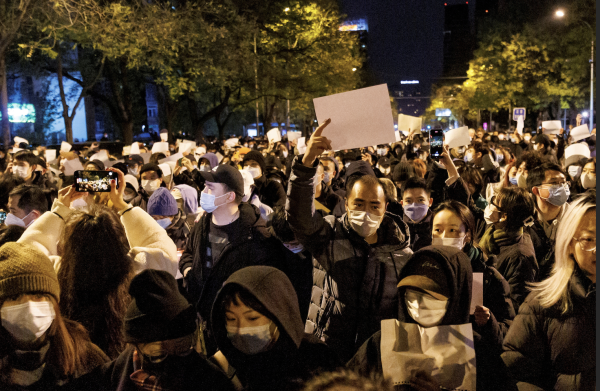
Cheng also offered a counterpoint to fear. “If fear can cross borders,” she argued, “then courage should cross borders too.” The statement carries particular significance at a time when governments and human rights organizations have raised growing concerns about transnational repression, including efforts by authoritarian governments to pressure critics living overseas through intimidation, surveillance, or threats directed at family members.
Responding to that pressure does not require everyone to become a political activist. People face different personal risks, family responsibilities, and professional obligations. But democratic societies, Cheng suggested, should avoid isolating those who choose to speak publicly despite those risks.
Supporting principled voices helps preserve something larger than any one individual’s rights; it helps protect the broader space for free expression itself.
A quiet warning
Cheng’s reflections carry unusual weight because they come from someone who has experienced both life inside China’s state media system and prolonged detention by Chinese authorities. Rather than focusing solely on what happened to her, she warned of something more subtle. Freedom is not lost only when governments imprison critics or censor newspapers. It can also erode when fear becomes habitual and silence begins to feel normal.
The freedoms most worth protecting are not only those written into constitutions or safeguarded by courts, but also those sustained by ordinary people willing to speak honestly, and by communities willing to stand beside them when they do.
If fear can travel across borders, as Cheng argues, then solidarity, trust, and courage must be just as willing to cross them. Only then can freedom resist disappearing one silence at a time.
Editorial note: Views expressed in this article are the opinions of the author and do not necessarily reflect the views of Vision Times.