A childhood moment that inspired a mission
For speech-language pathologist and Inclusive Minds co-founder Stephanie Harrigan, one word changed the direction of her life: “bird.”
As a teenager, Harrigan volunteered at a therapeutic horseback riding camp for children with autism. There, she witnessed a seven-year-old boy say his first word while riding a horse.
“He pointed at it and said bird, and his mom burst into tears,” Harrigan recalled. “It was a moment I still think about to this day.”
That experience inspired her to pursue speech pathology and focus on supporting autistic individuals, especially those who are non-speaking or use communication devices.
After graduate school at SUNY New Paltz, Harrigan completed an internship at The Center for Discovery in Monticello, where she developed her career working with individuals with autism and complex needs.
Success
You are now signed up for our newsletter
Success
Check your email to complete sign up
“I’ve been really focused and excited and humbled to be able to work with really high-needs individuals,” she said.
Supporting children and families
With more than 15 years in the field, Harrigan has seen a shift toward greater inclusion of autistic individuals.
“Past practice was to send a lot of these individuals to institutions or residential-based programming or specialty schools,” she said. “That’s really changing, and we’re seeing a lot more of these individuals integrated with their community.”
Today, Harrigan works as a speech-language pathologist at New Paltz Central School District. She believes professionals should support the whole person, not just focus on a diagnosis.
“I don’t look at my role with children with autism as just the 30 minutes I have them in my session,” she said. “It’s how to make them well-rounded individuals that are able to communicate and connect with the world around them.”
She also believes parents should feel empowered to advocate.
“When parents are questioning, asking questions, or being strong advocates, that is absolutely within their right,” Harrigan said. “No question, no comment is ever challenging.”
Inclusive Minds: Building inclusive communities through communication
Harrigan and special education teacher Brian Majestic founded Inclusive Minds LLC to promote communication access, inclusion and autism awareness.
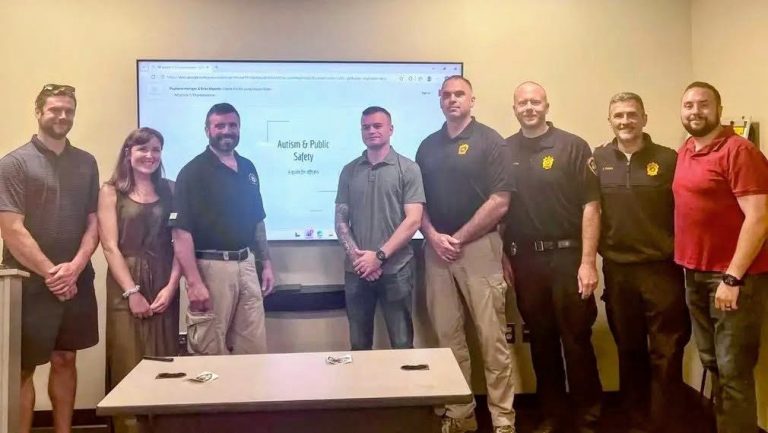
The organization partners with local groups to provide communication and support training, including helping first responders better understand how to interact with autistic individuals and people with speech differences.
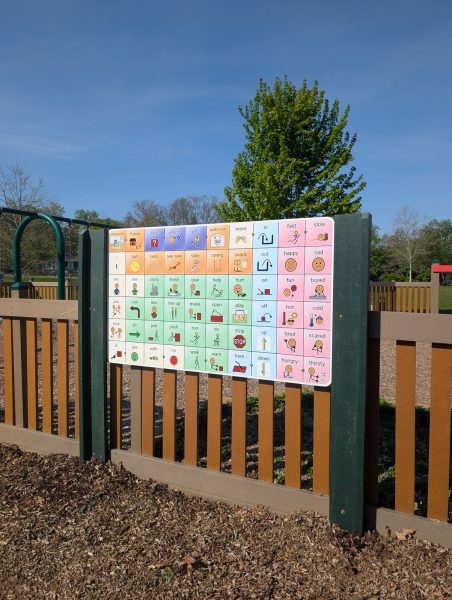
The idea began with a community communication board at Hasbrouck Park in New Paltz.
“I started thinking about how much more I want to see my students integrated in the community,” Harrigan said.
The Core Communication Boards use pictures, symbols and words to help individuals express their needs. The tools can be used by caregivers, educators and first responders, including police officers responding to people who may have difficulty speaking.
“For neurodivergent individuals, where speech or verbal language can be difficult or is not present, these individuals usually respond really well to using visual communication options,” she explained.
Training communities and giving children a voice
Inclusive Minds also provides training for organizations such as the New Paltz Police Department and New Paltz Rescue Squad.
Harrigan said the training helps first responders understand how autistic individuals may respond differently during stressful situations.
“We talked about the neurology behind stress in neurodivergent individuals and how their brains operate and handle stress in a different manner,” she said.
Majestic, who teaches a self-contained kindergarten and first-grade classroom at Valley Central School District, said communication challenges are often misunderstood.
“A big misconception is that if a child struggles with communication, they struggle cognitively,” he said. “That’s not always the case.”
“Giving these children a voice is a really rewarding part,” Majestic said. “Once they learn a communication system, whether it’s an AAC device, an iPad program, sign language or verbal speech, their quality of life greatly increases.”
Creating a more inclusive future
Both Harrigan and Majestic hope to create communities where autistic individuals can participate more fully.
“I would like to see communication opportunities more readily available,” Harrigan said. “More core boards, more visuals, more environmental supports.”
Majestic said awareness and education are key.
“Bringing knowledge and awareness, and offering tools to better help support these autistic community members is our end goal,” he said.
For Harrigan, the mission comes down to connection.
“Communication is connection,” she said. “And every individual deserves to have a way to connect with the world around them.”