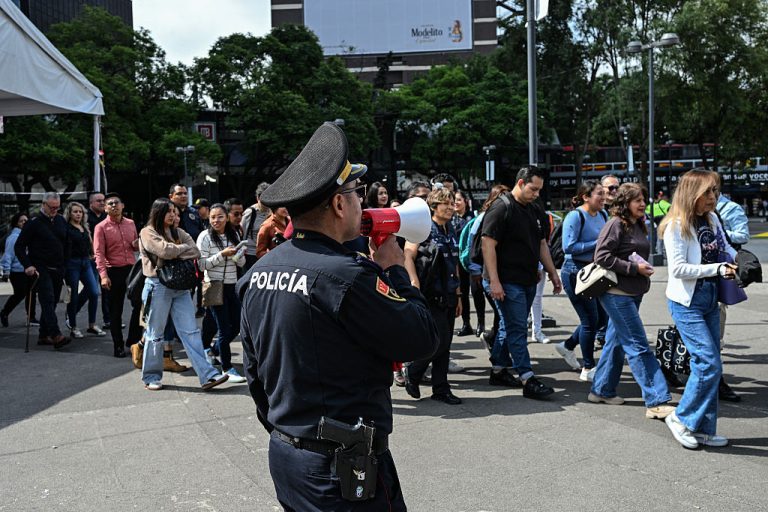
On Nov. 27, a four-day lockdown imposed on the Pakistani capital of Islamabad was finally lifted after authorities scattered protesters supporting jailed ex-Prime Minister Imran Khan.
“All roads are being reopened, and the demonstrators have been dispersed,” Interior Minister Mohsin Naqvi declared.
Among the protestors was Khan’s wife — Bushra Bibi — who, along with others, escaped as the police cracked down.
According to NPR, paramilitary forces had raided an encampment on Wednesday, where thousands called for Khan’s release from prison.
“All you could see was tear gas,” one woman recalled, who remained anonymous to avoid retribution. “My dad and I saw a body fall in front of us. It was all pitch dark. I could hear bullets being shot at people.”
Success
You are now signed up for our newsletter
Success
Check your email to complete sign up
After days of clashes, at least seven people were killed, though some claim there were more fatalities. It is also yet to be verified whether the police used live bullets or rubber ones.
Journalists have also been attacked, including a videographer for The Associated Press (AP) whose camera was broken by Khan’s supporters before he was sent to the hospital.
By the lockdown’s end, more than 4,000 of Khan’s supporters were detained by police, with around 1,000 arrested in the capital.
READ MORE:
- Huge Crowds Rally in Support of Pakistan’s Ousted PM Khan as Shehbaz Becomes New Leader
- New Sino-Indian Border Agreement Signals Thawing Relations, But Questions Remain
- Inside the CCP’s Propaganda Machine: How Beijing Fuels Disinformation Against Falun Gong, Shen Yun
How the chaos unfolded
The protests were in response to the imprisonment of former Prime Minister Khan, who in 2022 was ousted after he lost his support from the Pakistani army, whose influence dominates the people. He had been sent to jail following a corruption case in August 2023.
“You have a critical mass of the public that has essentially lost confidence in public institutions, and that includes the army,” Michael Kugleman, director of the South Asia Institute at the Wilson Center, said.
For over a year, Khan had been behind bars, facing more than 150 criminal cases, which his party — Pakistan Tehreek-e-Insaf (PTI) — claims are “politically motivated.” After he was seized from a courthouse in Islamabad in May, Khan’s supporters moved to storm army installations in Pakistan, leading to cases against Khan and a crackdown on those loyal to him.
In elections held in February, Khan’s party mustered strong support, but his rivals declared themselves the victors, which led to claims of rigged elections. With recent amendments enacted by the government in late October, which severely affected the independence of the judiciary, rising tensions soon led to a protest march led by Bushra Bibi.
Thousands of supporters marched into the capital demanding Khan’s release, but many were detained by authorities. Mobile and internet connections were suspended in several areas across the country. Roads had been blocked by shipping containers set up during the unrest, making travel between Islamabad and other cities almost impossible.
During the clashes, Naqvi warned that security forces would retaliate with live bullets should the protesters fire at them, al-Jazeera wrote.
“If they again fire bullets, the bullet will be responded with the bullet,” he said.
Even with the protests foiled, Khan’s party declared that the unrest will “continue,” adding that several workers were shot by the police. However, these claims could not be verified by the Anadolu Agency. The government has rejected those claims, calling them “propaganda”.