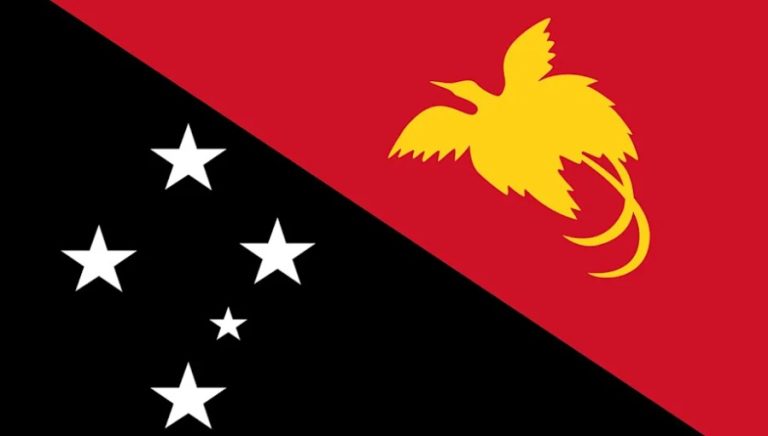
The Pacific island nation of Papua New Guinea (PNG) unexpectedly announced that it would close Taiwan’s Chinese Taipei Economic Office in the country and reiterated its commitment to the “One China” policy.
The move prompted a strong response from Taiwan. The Ministry of Foreign Affairs (MOFA) of the Republic of China (Taiwan) said the PNG government had unilaterally announced the decision without prior consultation with Taiwan.
MOFA expressed its strong protest and stated that it does not accept the decision. It added that Taiwan’s representative office in Papua New Guinea continues to operate normally and will keep engaging with the PNG government through diplomatic channels to safeguard Taiwan’s interests and continue providing services to its citizens, Taiwan’s Central News Agency (CNA) reported.
Decision by PNG’s National Executive Council
In a statement issued on July 15, PNG Foreign Minister Justin Tkatchenko said that, pursuant to a decision by the National Executive Council, the government had decided to immediately terminate the operations of the Chinese Taipei Economic Office (Taiwan) in Papua New Guinea and close its office in the capital, Port Moresby, Reuters reported.
Tkatchenko said the decision represented an important step in deepening Papua New Guinea’s relationship of mutual trust with the People’s Republic of China and reaffirmed the country’s long-standing commitment to the “One China” policy. He added that the move carries additional symbolic significance because 2026 marks the 50th anniversary of diplomatic relations between Papua New Guinea and China.
Success
You are now signed up for our newsletter
Success
Check your email to complete sign up
He also said that the decision had been formally conveyed to Yang Xiaoguang, China’s ambassador to Papua New Guinea, and that no official entity operating under the name “Chinese Taipei” would henceforth be recognized within Papua New Guinea’s jurisdiction.
Chinese Foreign Ministry spokesperson Lin Jian said at a regular press briefing on July 16 that China highly appreciates the Papua New Guinea government’s decision. He said the move once again demonstrates that adherence to the One China principle has become a broad international consensus and an irreversible global trend. He added that China will continue to support Papua New Guinea on issues involving each other’s core interests and deepen their comprehensive strategic partnership.
Response from Taiwan
In response, Taiwan’s Ministry of Foreign Affairs (MOFA) said the Papua New Guinea government had unilaterally announced the closure of Taiwan’s representative office without consulting Taiwan through the existing bilateral communication mechanisms.
MOFA said the decision is unacceptable and that it will continue engaging with the Papua New Guinea government through diplomatic channels. It added that Taiwan’s representative office in Papua New Guinea remains fully operational and continues to provide services to Taiwanese expatriates and handle its regular affairs, reported CNA.
MOFA also said it has convened an interagency emergency response meeting to conduct a comprehensive review of Taiwan–Papua New Guinea bilateral cooperation, trade and economic exchanges, and assistance programs. At the same time, Taiwan is maintaining close coordination with like-minded countries to seek international support while considering necessary and appropriate response measures.
Speaking to reporters on July 17, Vice President Hsiao Bi-khim said that the Chinese Communist Party continues to squeeze Taiwan’s international space and opportunities for international participation, reported Taipei Times.
She acknowledged that the incident represents a setback for Taiwan’s diplomacy, but emphasized that the government will not retreat. Instead, it will continue working to gain international support, deepen cooperation with like-minded partners, and safeguard the rights and interests of Taiwanese citizens living overseas.
Hsiao added that the government will continue expanding opportunities for cooperation with other countries and work to enhance Taiwan’s international visibility and participation, stressing that it will not abandon its diplomatic efforts because of a single incident.
Lawmakers from both the ruling and opposition parties also expressed concern over the developments.
Kuomintang (KMT) legislator Lo Chih-chiang said he hopes the Ministry of Foreign Affairs will continue its efforts to ensure that Taiwan’s overseas representative offices can maintain their services and protect the interests of Taiwanese expatriates.
Democratic Progressive Party (DPP) legislator Wang Ting-yu said that representative offices are generally established on the basis of bilateral agreements, and if such arrangements are to be terminated, they should follow proper procedures rather than being handled unilaterally under political pressure from a third party. He also criticized China for continuing to use diplomatic means to further restrict Taiwan’s international space.
READ MORE:
- China’s Arleigh Burke Destroyer Replica Signals Taiwan War Preparations: Analysts
- Taiwan Wins Global Anti-Money Laundering Award for Prince Group Investigation
Papua New Guinea holds significant strategic importance in trade and energy
Papua New Guinea is one of Taiwan’s most important partners in the South Pacific and also one of Taiwan’s key sources of liquefied natural gas (LNG). Each year, Taiwan imports LNG, timber, and mineral products from Papua New Guinea, resulting in a long-standing trade deficit with the country.
In addition, Taiwan has for many years dispatched agricultural technical missions to assist Papua New Guinea’s agricultural development. The two sides have maintained cooperation in areas including agricultural technology, vocational and technical training, and medical assistance.
According to informed sources, Beijing has in recent years steadily expanded its influence over Papua New Guinea through investment, infrastructure assistance, and diplomatic engagement. As early as 2023, when Papua New Guinea closed its representative office in Taiwan, observers believed that China had played a role in the decision. Over the past three years, Beijing has continued to combine economic incentives with diplomatic pressure in an effort to encourage Papua New Guinea to further adjust its policy toward Taiwan.
Sources said Taiwan has sought assistance from like-minded partners, including the United States and Australia, in communicating with the Papua New Guinea government to preserve existing exchanges. However, because China enjoys a clear advantage in the scale of its investments and aid resources, Taiwan faces considerable diplomatic challenges.
Taiwan–Papua New Guinea relations: The 17-day diplomatic ties and the ‘Papua New Guinea affair’
Looking back at bilateral relations, Taiwan and Papua New Guinea signed a joint communiqué establishing diplomatic relations in July 1999. However, following a change of government in Papua New Guinea, the new administration withdrew its recognition of Taiwan. As a result, official diplomatic relations lasted only 17 days, making them one of the shortest-lived diplomatic relationships in Taiwan’s history.
In 2006, the so-called “Papua New Guinea Affair” became a major political scandal. Taiwan had attempted to negotiate the establishment of secret diplomatic ties with Papua New Guinea, but approximately US$30 million in diplomatic funds was allegedly embezzled by two intermediaries. The case triggered judicial investigations and dealt a significant blow to Taiwan’s diplomatic reputation.
Although the two sides have not maintained formal diplomatic relations, Taiwan has operated a representative office in Papua New Guinea since 1990. In 2018, amid pressure from China, the office was renamed the Chinese Taipei Economic and Cultural Office. Papua New Guinea, for its part, closed its representative office in Taiwan in 2023. Its latest announcement ordering Taiwan’s representative office to cease operations presents another major challenge to bilateral relations.

Scholar: Reflects China’s expanding influence in the South Pacific
According to Taiwan’s Public Television Service, Lin Ying-yu, Associate Professor at the Graduate Institute of International Affairs and Strategic Studies at Tamkang University, said that the incident reflects China’s continued efforts to strengthen its strategic presence in the South Pacific. According to Lin, Beijing aims to reshape the regional strategic landscape by expanding its political, economic, and security influence among Pacific island nations.
He noted that the South Pacific constitutes an important strategic depth for Australia, the United States, and their allies in maintaining security in the Indo-Pacific. If China succeeds in establishing deeper political influence across the region, it could eventually affect U.S. and Australian military deployments and logistical support in the South China Sea and the Western Pacific. Consequently, Papua New Guinea’s shift in foreign policy has implications not only for cross-Strait diplomatic competition but also for the broader strategic balance in the Indo-Pacific.
In recent years, China has significantly increased its investment in Papua New Guinea, covering sectors such as ports, roads, energy, and other infrastructure projects. Papua New Guinea was also the first South Pacific nation to join China’s Belt and Road Initiative (BRI).
Amid intensifying strategic competition between the United States and China, Papua New Guinea’s decision to close Taiwan’s representative office has been widely viewed as the latest example of Beijing expanding its influence in the South Pacific. The move also underscores the continuing challenges Taiwan faces in preserving its international diplomatic space.