Japan is advancing a strategic project to extract rare earth elements (REEs) from deep-sea mud deposits in its exclusive economic zone (EEZ) near Minamitorishima (also called Minamitori Island or Marcus Island), a remote coral about 1,180 miles southeast of Tokyo, according to Nikkei.
Japan plans to begin industrial-scale verification testing as early as 2027, with the goal of collecting, transporting, and refining more than 350 tons of seabed mud per day.
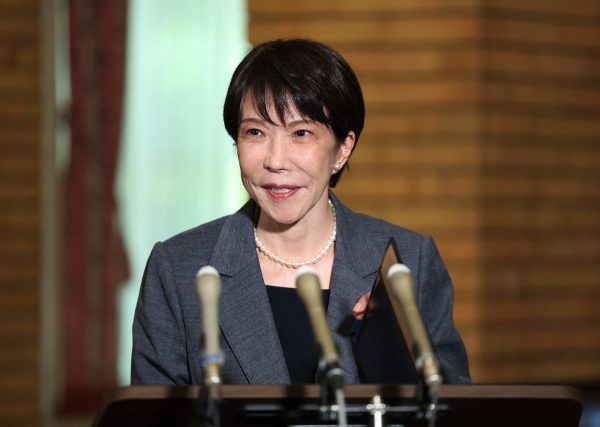
Nikkei is reporting that Japan’s Headquarters for Ocean Policy is expected to hold a meeting on June 29, where Prime Minister Sanae Takaichi will instruct relevant ministries to speed up development of the Minamitori Island seabed rare earth project. She will also push for advances in technologies such as marine unmanned vehicles and satellites, and the establishment of improved “Maritime Domain Awareness” (MDA) capabilities, strengthening Japan’s maritime security and resource resilience.
In recent years, the Chinese Communist Party (CCP) has continued to restrict exports of rare earths and permanent magnets, disrupting global supply chains and affecting Japanese companies.
Recently, according to Kyodo News, two employees of Japan’s Fuji Electric were detained in China on suspicion of violating laws related to “smuggling prohibited import and export goods.” In addition, online rumors that two Japanese tungsten hexafluoride (WF6) companies had permanently shut down due to a lack of Chinese tungsten powder further highlight the risks of the CCP using critical mineral resources as leverage, prompting Japan to accelerate supply chain “de-risking.”
Success
You are now signed up for our newsletter
Success
Check your email to complete sign up
Japan’s criticism of the CCP
According to the Japan Times, at a G7 summit, in France in mid June, Japan’s Takaichi criticized the CCP for using critical minerals as a coercive tool and actively promoted cooperation between Japan and like-minded countries such as the U.S., Australia and India to build a new critical mineral supply framework.
The Japanese government has designated ocean resource development as one of 17 key national strategic areas, planning to invest about 900 billion yen jointly by the government and private sector by 2040 to develop marine resources such as rare earths and manganese nodules.
In February this year, Japan’s Agency for Marine-Earth Science and Technology (JAMSTEC) successfully conducted a pilot extraction of rare earths at a depth of about 6,000 meters near Minamitori Island using the deep-sea research vessel Chikyū. The official goal is to begin commercial extraction after fiscal year 2028. If the plan proceeds smoothly, Japan would for the first time secure a large-scale domestic source of rare earths under its own control, significantly enhancing its supply autonomy and strengthening national economic security.
In addition to seabed rare earth development, the Takaichi government also plans to accelerate the development of marine unmanned vehicles and ocean monitoring technologies, using satellites and other advanced tools to strengthen maritime domain awareness capabilities.

Cutting dependence on China
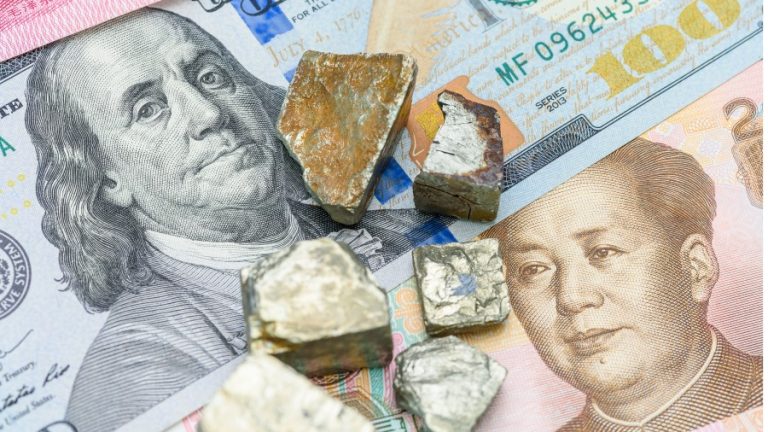
China currently dominates the global rare earth industry, accounting for about 60 percent of production and roughly 90 percent of refining. Recent Chinese export restrictions have heightened the urgency for other countries to decouple from China’s supply chain.
Should Japan succeed in it’s REE strategy it could provide hundreds of years of supply for key elements and bolster supply chain resilience for electric vehicles, renewables, and defense. It aligns with broader Japanese strategies: diversification, recycling, reduced usage, and overseas mining, Small Wars Journal writes.
The strategy is not without its risks, though. Technically it’s a difficult task. Extracting and lifting mud from extreme depths is unproven at scale; processing/refining must be viable. In addition, costs are extremely high for deep-sea operations compared to land-based mining and there still remains environmental considerations. There are potential negative impacts on deep-sea ecosystems.
For now, the project remains in early testing phases. After the 2026 Chikyu success, full industrial-scale demonstration is targeted for 2027, with broader commercialization eyed for 2028 or later. Delays in technology scaling, regulatory approvals, or environmental reviews could push viable production even further out—meaning commercial output is still years away.
However, Japan’s push enhances strategic autonomy amid U.S.-China tensions and strengthens global supply chain resilience.
Technological innovation, exemplified by the Chikyu’s pioneering role, not only addresses Japan’s vulnerabilities but could position it as a leader in deep-sea resource development. Success would have ripple effects for allies and the broader critical minerals market, diversifying away from concentrated risks.