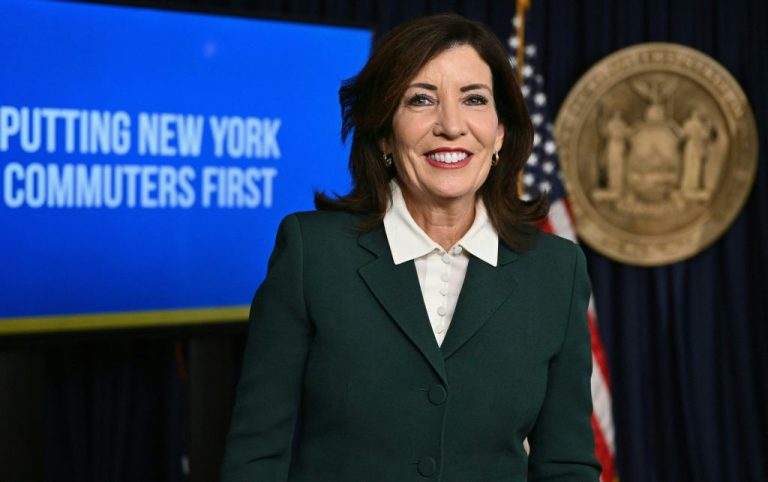
On Dec. 9, New York State Gov. Kathy Hochul announced a proposal — an “inflation refund” of upwards of $500 — to battle the cost-of-living crisis gripping the state and the country.
Sending 8.6 million New Yorkers the checks is expected to cost an estimated $3 billion, an expense that must be included in the upcoming state budget that is deliberated on in January and signed into law around April 1.
Hochul says the checks are a “refund” for excess sales tax that New Yorkers have paid due to higher consumer prices, which has in turn increased the amount of tax the state collects.
She said in a statement that the state is now returning the money “to help millions of hard-working New Yorkers.”
“It’s simple: the cost of living is still too damn high, and New Yorkers deserve a break,” she said.
Success
You are now signed up for our newsletter
Success
Check your email to complete sign up
Individual taxpayers earnings up to $150,000 can expect a check of $300 while couples filing a joint tax return with a combined income of up to $300,000 will get a check worth $500.
The relief won’t come soon however. It’s expected the checks will be distributed sometime next fall.
READ MORE:
- Pentagon Insists Iran Is Not Launching Drones From Mothership Off the Coast of New Jersey
- Daniel Penny Cleared of All Charges Related to Chokehold Death of Jordan Neely
- Supreme Court Will Likely Uphold Tennessee’s Ban on Transgender Medical Procedures for Minors
In step with other states
The move is in step with at least 22 other states that have offered tax rebates to their citizens since the start of the COVID-19 pandemic, Jared Walczak with the nonpartisan tax policy nonprofit Tax Foundation, told USA Today.
In 2022 California offered checks of up to $1,050 for eligible taxpayers and Virginia cut checks valued at $200 for individuals in late 2023.
Georgia has also offered special tax rebates for three consecutive years from 2022 to 2024.
These rebates sent $250 to single tax filers and $375 to the heads of households.
Walczak told USA Today, “Most states aren’t looking for patches to the inflation problem anymore. They’re looking more at long-term economic competitiveness, not rebate checks.”
He also said that rebate checks like these do little to promote economic growth.
“But generally speaking, rebate checks do very little to promote economic growth because they’re sort of after the fact,” he said while also pointing out that the Internal Revenue Service has deemed some of these rebates taxable.
According to the most recent polls, Hochul is not currently very popular in the state however it is expected she will run for her second term as Governor in 2026.
Her rebate plan has been characterized as a political gimmick by her Democratic rivals and opposing Republicans.