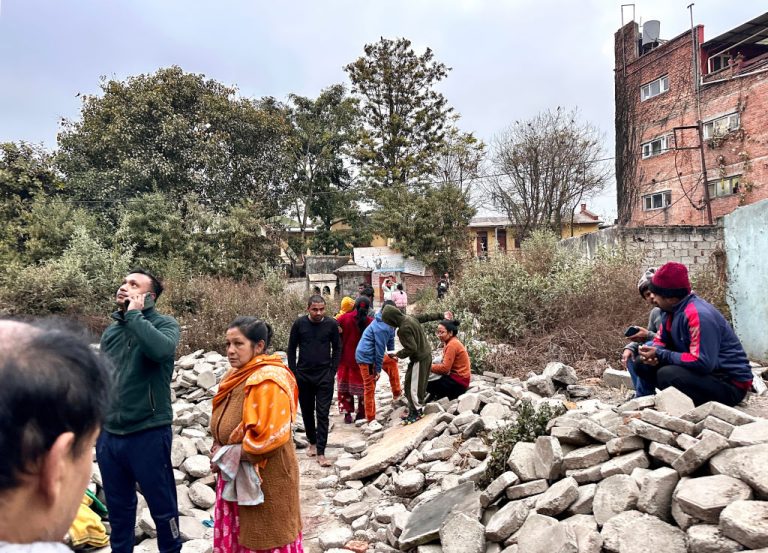
In the early hours of Jan. 7, a devastating 7.1 magnitude earthquake struck Tibet near the Nepal border, claiming the lives of at least 126 people and injuring 188 others. The quake, which struck at 9:05 a.m. local time, also caused significant destruction to the region’s infrastructure by damaging nearly 1,000 homes and temples.
The earthquake was then followed by multiple strong aftershocks that registered around magnitude 5.0, according to Chinese state media.
According to the United States Geological Survey (USGS), the earthquake’s epicenter was located approximately 50 miles northeast of Mount Everest, at a depth of 6.2 miles. The quake was powerful enough to be felt as far as Kathmandu, Nepal’s capital, where residents were jolted awake and were seen rushing into the streets in fear of collapsing roofs and buildings.
Communities in crisis
While no casualties or major damage have been reported in Nepal, which is home to 800,000 people, the tremors were felt across seven hill districts bordering Tibet, according to the Nepal National Disaster Risk Reduction and Management Authority (NDRRMA). “So far, we have not received any information of any loss of life and property,” said NDRRMA spokesperson, Dizan Bhattarai. “We have mobilized police, security forces, and local authorities to collect information.”

But the hardest-hit areas in Tibet include small, remote communities located within three miles of the earthquake’s epicenter. These vulnerable communities are situated about 240 miles from Lhasa, the capital of Tibet, and only 14 miles from Shigatse, the region’s second-largest city. The rugged, mountainous terrain poses significant challenges to rescue operations, making it difficult to reach those affected or for aid to arrive. Experts warn that as relief teams gain access to more isolated areas, the death toll could continue to climb.
Success
You are now signed up for our newsletter
Success
Check your email to complete sign up
RELATED: Earthquake in Western Afghanistan Kills 2,400
State broadcaster CCTV has reported ongoing rescue efforts, but accurate information about casualties and damage remains limited. Critics point out that the communist regime often censors or alters details of such disasters. This has led to speculation that the true impact of the earthquake could be much greater than what has been officially reported.
A trail of destruction
Tibet is no stranger to seismic activity as it sits on the fault line where the Eurasian and Indian tectonic plates collide — a zone marked by the towering Himalayan mountains. The USGS highlighted that there have been 10 earthquakes of at least magnitude 6 in this region over the past century. “This area is prone to catastrophic earthquakes due to its geological position,” said a USGS spokesperson, adding, “The collision of tectonic plates at the Himalayas creates immense stress beneath the surface, making it one of the most seismically active regions in the world.”

In 2015, two devastating quakes (both exceeding magnitude 7) rocked neighboring Nepal, claiming over 8,500 lives and causing widespread destruction to local infrastructure.
RELATED: 7.3 Magnitude Earthquake Strikes Coast of Japan Prompting Tsunami Warning
The quake’s proximity to Mount Everest — known as a global symbol of mountaineering adventure — has also drawn scrutiny. A tourism department official in Nepal confirmed that a German climber, the only person currently permitted to ascend the mountain, had already left base camp after an unsuccessful attempt to summit. This underscores the limited human activity in the high-altitude areas during winter — a factor that may have mitigated the earthquake’s human toll on Everest.
Despite the distance, tremors were felt as far as Kathmandu, which is located around 140 miles from the epicenter. As community members reel from the disaster, local authorities in Nepal are continuing to monitor the situation, though no immediate damage or casualties have been reported at this time.