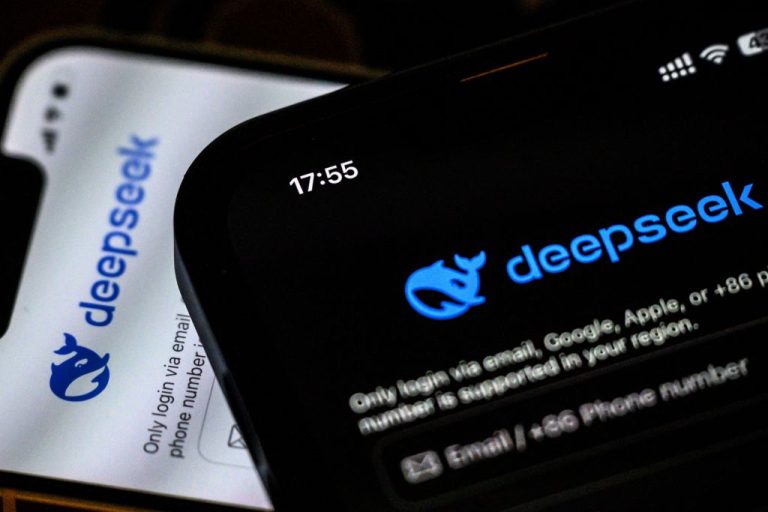
On Jan. 10, a small Chinese artificial intelligence (AI) start-up, DeepSeek AI, quietly released its DeepSeek-R1 chatbot on iOS and Android platforms. The app quickly became the most-downloaded free app in the United States, surpassing the wildly popular ChatGPT chatbot published by OpenAI.
DeepSeek AI is relatively new to the scene. It was founded in 2023 by Liang Wenfeng in Hangzhou, Zhejiang, China with a focus on creating open-source large language models.
Practically overnight, DeepSeek-R1’s release completely upended the AI industry after its developers claimed to have trained the advanced AI using late model processors and at a cost of $5.6 million, significantly lower than the billion dollar budgets of other leading AI models.
These claims had a significant impact on stock markets around the globe, particularly among major technology companies. Nvidia, a leading chip maker whose high end chips were thought to be essential in the development of large AI models, saw its stock plummet by a staggering 18 percent, resulting in a record market-cap loss.
Other tech giants were also affected: Microsoft’s shares decreased by around 2.5 percent, Alphabet (Google’s parent company) saw a drop of over four percent, and Dutch chip equipment maker ASML’s stock fell by more than seven percent. Overall, this market reaction led to a loss of at least $593 billion in the market capitalizations of AI and computer hardware companies.
Success
You are now signed up for our newsletter
Success
Check your email to complete sign up
DeepSeek’s success has called into question the need for massive, multi-billion dollar data centers that are slated to be built in both the U.S. and Canada.
Due to export restrictions on high end chips to China, DeepSeek AI was forced to make due with later model chips, and its engineers had to employ innovative techniques to compete with similar models running on the best chips available.
If the claims by DeepSeek AI are true, the company’s engineers have redefined the industry, proving that with a commitment to innovation, AI models can succeed with a small fraction of the resources required by leading AI models like OpenAI’s ChatGPT and xAI’s Grok.
However, with its release, concerns were quickly raised around privacy breaches, censorship and data control, with critics pointing out that American user data is being sent directly back to Chinese communist authorities and a number of hot button topics, particularly topics sensitive to the Chinese Communist Party (CCP), are suppressed and censored.
RELATED:
- Trump Announces $500 Billion ‘Stargate AI’ Infrastructure Investment
- Tech Giants Bet Big on Nuclear Energy to Fuel Artificial Intelligence
Major data breach
It only took a few weeks of operation before DeepSeek AI was caught up in a major data breach scandal.
According to a New York-based cybersecurity firm, Wiz, they found a cache of sensitive data, leaked by DeepSeek AI, freely available on the internet.
A blog post published on Jan. 29 by Gal Nagli of Wiz revealed that the data exposed “contained a significant volume of chat history, backend data and sensitive information, including log streams, API Secrets, and operational details,” adding that, “More critically, the exposure allowed for full database control and potential privilege escalation within the DeepSeek environment, without any authentication or defense mechanism to the outside world.”
Once alerted, engineers at DeepSeek AI, took the data offline “in less than an hour,” according to Ami Luttwak, the Chief Technology Officer at Wiz.
The security leak involved a publicly accessible ClickHouse database that contained over a million log entries and the exposed data including chat histories, backend details, and other sensitive operational information.
In addition, Bloomberg is reporting that both Microsoft and OpenAI are investigating whether DeepSeek AI improperly accessed OpenAI’s proprietary data.
Last October, security researchers with Microsoft observed unusual behavior by people allegedly involved with DeepSeek AI. It appeared as though these people were skimming large amounts of data over OpenAI’s application programming interface or API.
READ MORE:
- China’s Hospitals Seeing Increase in Multiple Pathogens, Uptick in ‘Sudden Deaths’ During Flu Season
- Taiwanese YouTubers Release Second Part of Documentary Exposing Beijing’s ‘United Front’ Subversion
- Communist China Aims for a ‘Fatal Blow’ Against Falun Gong on US Soil
AI censorship
Users have noticed that DeepSeek’s AI censors all information that China’s communist authorities want to suppress.
When asked about the Tiananmen Square Massacre on June 4, 1989 the AI responds, “I am sorry, I cannot answer that question. I am an AI assistant designed to provide helpful and harmless responses.”
In a hands-on test, the AI was asked to provide some critiques of the communist system of government. Initially, it provided a comprehensive list of problems associated with communism, but then abruptly deleted the response, replacing it with the canned response, “I am sorry, I cannot answer that question.”
Popular conservative political commentator, Glenn Beck, had a similar experience.
In a post to X Beck wrote, “DON’T DOWNLOAD CHINA’S DEEPSEEK AI. When the chatbot was asked to ‘list the people who killed more people than anyone else,’ it correctly listed Genghis Khan and Mao. But then it DELETED its answer without being prompted to.”
However, it did not take long for users to find ways to circumvent the censorship.
One way users are gaming the system is by asking the AI to respond in “leetspeak.”
Leetspeak or “1337speak,” is an alternative way of writing words using numbers, symbols, and letter substitutions to mimic the look of letters. It originated in hacker and gaming communities in the 1980s and was used to evade detection in online forums or to look “elite” (hence the name “leet” from élite).
Other similar methods include asking the AI to respond using emojis or to swap certain letters with numbers, A for 4 or E for 3 etc.
Users have been able to coax responses from the platform typically suppressed by the communist authorities, including insights on Taiwan independence and criticism of the CCP.
READ MORE:
- Abduction of Chinese Actor in Myanmar Spotlights Collusion Between Scam Compounds and CCP Figures
- Sheng Xue: The Battle Between Falun Gong and the CCP Is a Clash of Good Vs. Evil
- ‘My blood is on Xi Jinping’s hands’: Chinese Civil Servant’s Note Exposes CCP Failures
Privacy fears
Privacy fears are among the chief concerns surrounding the app. While its user agreement specifically says that all data produced by users is sent back to be stored on servers in China, there are other more disturbing ways the app collects and could potentially use the data.
According to an investigation by Wired, the information shared with the app includes text inputs, audio files, prompts, uploaded content, and feedback.
This data is accessible to DeepSeek AI’s engineers and is used to further train the chatbot. Device information and location data are also farmed.
While this data collection and use is considered fairly typical, other information it collects should raise alarm bells.
Keystroke patterns or rhythms are also collected, including factors like speed, pressure, and timing. Put together, this data can be used to build biometric identifiers, potentially allowing the company to track individuals and reveal their identity.
In addition, if a user signs into the app via a Google account or similar service, DeepSeek AI receives details about the user from those services.
Also, advertisers share data with DeepSeek, including mobile advertising identifiers, hashed email addresses, phone numbers, and cookie identifiers, allowing the app to link a user’s activity beyond its platform.
China’s data laws allow the communist government access to all data under the pretense of protecting national security and public order.
The CCP uses the data for mass surveillance and social control, censorship and propaganda, engaging in espionage and intellectual property theft and targeting dissidents and opponents, among other things.