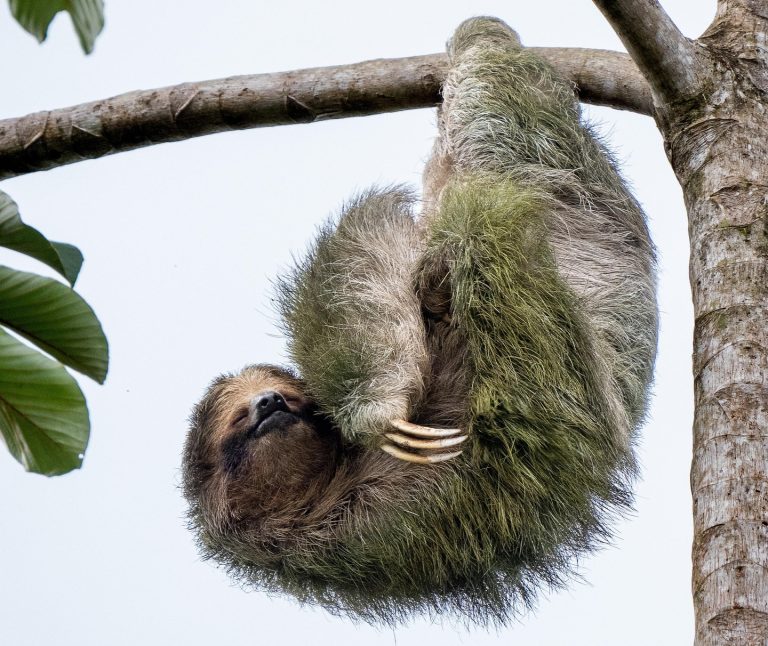
In the natural world, most animals cannot afford to be slow. Whether poised to pounce or quick to flee, speed is a critical asset in the game of survival. Even we humans are pressured to hurry up and get things done, lest we be left in the dust. We might well wonder how the slow survive in this hectic world.
As one of the slowest creatures on the planet, sloths could be an easy target for birds of prey and climbing cats in their forest home; yet they are remarkably suited for survival. Let’s look at the benefits of the sloth’s leisurely lifestyle, and what we might learn from it.

Tree-dwellers of South America
Sloths are the slowest mammals on Earth. They only move when necessary, and when they do, it is at a humble pace of around one quarter mile per hour.
Whether it be the two-toed sloths or the three-toed sloths, they spend most of their lives in the upper canopies of the South and Central American rainforests, safe from most land-bound predators.
These fascinating creatures don’t have incisors, so they use a hard smack of their lips to tear their food, which consists of tree leaves, twigs and buds. They sleep about 15 hours a day, and their fur is usually teeming with life — such as fungi, algae and insects. This makes the sloth a living, moving ecosystem!
Success
You are now signed up for our newsletter
Success
Check your email to complete sign up
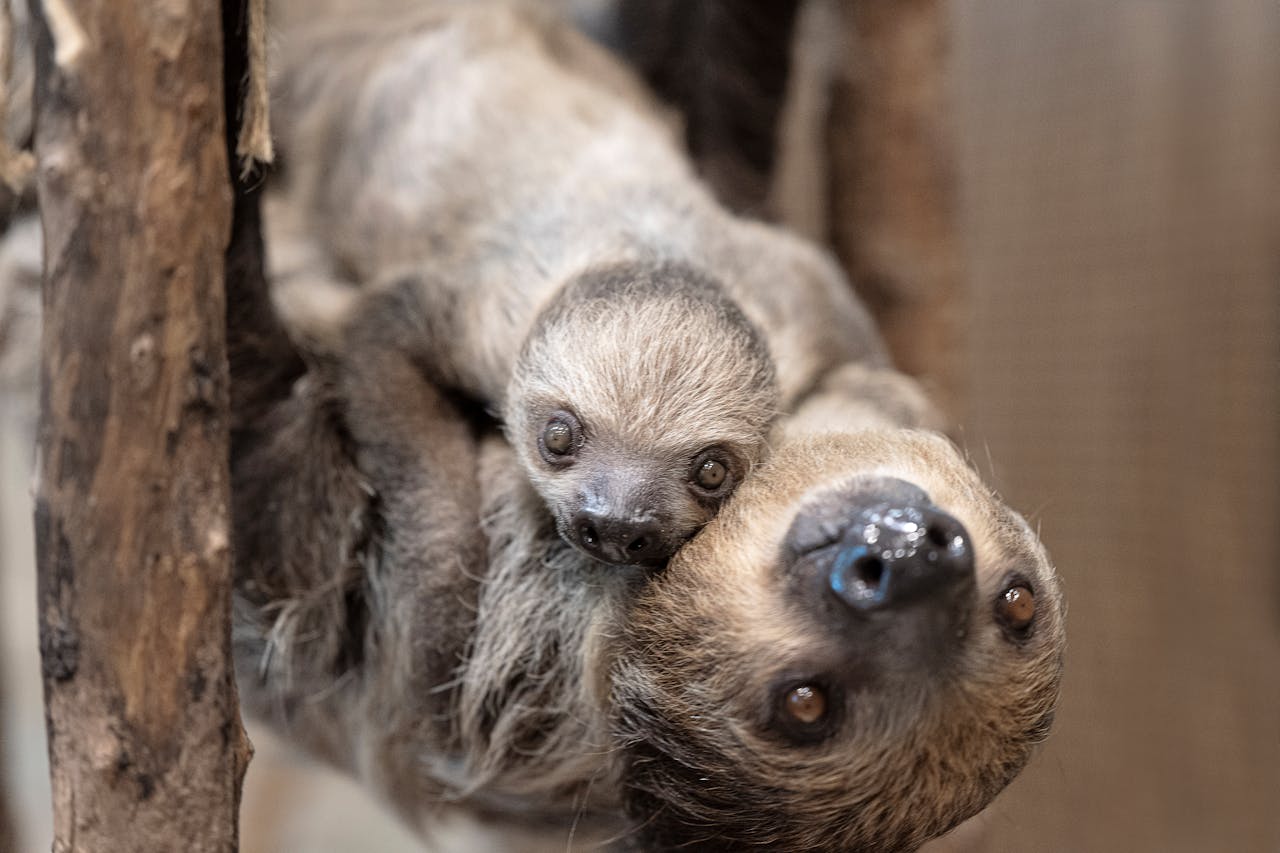
Mature female sloths give birth to one cub per year, after a gestation period of five or six months. The baby sloth holds on tight to its mother (mostly at a frightful height) for the next six months.
Large predators like harpy eagles, jaguars and ocelots are the sloths’ greatest danger, but humans also pose a threat due to urban development. Besides loss of habitat, sloths are at risk of electrocution by power lines. While not all sloths are endangered, some of them are, with the pygmy sloth being critically endangered.
READ MORE:
- Hare Is a Bunny Question: Why Is a Jackrabbit Not a Rabbit?
- Indian Folktales With Moral Lessons (Part IV): On Keeping a Clear Mind
- Cormorant Fishing: A Millenary Tradition of Human-Wildlife Collaboration
Survival of the slowest
At their pokey pace, sloths could be easy prey; yet they are perfectly suited for life in the slow lane. It all begins with their low-nutrient diet.
Tree leaves make up the bulk of the sloth’s diet. They do not provide much energy, and, on top of that, they are tough to digest. Sloths are well adapted to this difficult diet, though. Their special metabolism helps them conserve energy by doing everything very slowly.
It can take weeks to process the tough, fibrous leaves in their multi-chambered stomachs. This enables them to make the most of their meals, while ensuring that they seldom need to descend from the tree to defecate. Depending on the species, this only happens once in a period ranging from a week to a month!
Since it takes so much energy to leave the tree, one might think they would prefer to do their business in the treetops; but, according to Scientific American, their terrestrial dung is beneficial to the symbiotic algae and moths that inhabit their fir.
Friends in high places
In exchange for a balanced, mobile ecosystem, the life that inhabits a sloth’s coat provides important protection for the sluggish mammals. The algae, in particular, lends an effective green camouflage to render them practically invisible to predators. Even those who hunt by scent are thrown off by a collective “forest smell” that masks the sloth’s own odors.
A sloth’s low mobility makes them even harder to spot, as they often appear perfectly still. Because sloths have poor eyesight, their measured, deliberate movements also drastically reduce the chances of slipping and falling from great heights.
If they do lose their grip, though, they are built to survive falls of up to 30 feet – and if they happen to land in the water, rest assured they are very good swimmers. Sloths move faster in water than they do on land!

As a symbol of conservation and patience, the sloth can inspire us to live with more intention and less stress. Find the value in all that you have, and take the time to appreciate it.