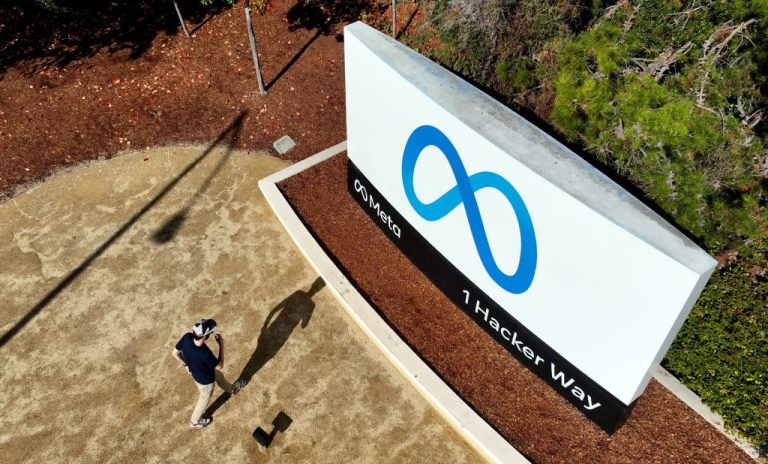
On April 9 in Washington, D.C. Sarah Wynn-Williams, former Director of Global Public Policy at Facebook, testified during a Senate Judiciary Committee hearing, alleging that her former employer, Meta, worked directly with the Chinese Communist Party (CCP) to “undermine U.S. national security and betray American values.”
Wynn-Williams said that Facebook allegedly custom-built censorship tools for the CCP that allowed certain individuals broad powers over how the platform performed, and also allowed for services to be completely shut down in certain regions of China, and on certain dates, like the anniversary of the Tiananmen Square massacre.
Her testimony follows the release of her book, “Careless People: A Cautionary Tale of Power, Greed, and Lost Idealism,” about her time working for Meta.
In March, a day after her book was published, Meta was granted an interim decision by an arbitrator which said Wynn-Williams violated a non-disparagement clause she had agreed to when she left the company.
In conversation with TechCrunch, Ryan Daniels, a Meta spokesperson defended his company. “Sarah Wynn-Williams’ testimony is divorced from reality and riddled with false claims. While Mark Zuckerberg himself was public about our interest in offering our services in China and details were widely reported beginning over a decade ago, the fact is: we do not operate our services in China today.”
Success
You are now signed up for our newsletter
Success
Check your email to complete sign up
In addition to the censorship tools, the allegations include Meta undertaking an internal initiative to collaborate with the CCP by sharing sensitive technologies, including artificial intelligence advancements.
She also said that Meta facilitated a covert data pipeline between the U.S. and China, which could have potentially granted the CCP access to American user data.
Meta is also under fire for allegedly allowing its AI model, Llama, to be used by Chinese military-linked projects, and aiding China’s AI development to outcompete American companies.
Meta has denied these allegations, and has taken legal action to prevent the promotion of Wynn-Williams’ book, citing the non-disparagement clause in her contract.
RELATED
Meta’s operations in China
Despite Meta’s insistence that they do not offer their services in China, in 2017, toward the end of Wynn-Williams’ tenure at Facebook, the company launched a photo-sharing app called Colorful Balloons, in China, as well as an app called Moments.
According to Meta’s own 10-k filing, the company pulled in $18.3 billion in advertising revenue from mainland China in 2024, up from $13.69 billion and $7.4 billion in 2023 and 2022, respectively.
Among some of Wynn-Williams’ more damning testimony, she provided emails showing Facebook executives discussing granting the CCP authorities access to user data from mainland China and Hong Kong.
During the hearing, Senator Richard Blumenthal (D-CT) said, “Facebook appears to have been willing to provide the data of users in Hong Kong to the Chinese government at a time when pro-democracy protestors were opposing Beijing’s crackdown.”
When asked if this was true, Wynn-Williams replied that it was.
She also said that Meta developed a tool for the CCP that allowed them to identify viral content and to step in if they wanted to censor it.
“As part of the censorship tool that was developed, there were virality counters — so any time a piece of content got over 10,000 views, that would automatically trigger it being reviewed by what they called the chief editor,” she said. “What was particularly surprising is that the virality counters were not just installed, but activated in Hong Kong and also in Taiwan.”
Senator Blumenthal was quick to point out that Zuckerberg had previously testified under oath that Facebook had never developed censorship tools for the Chinese market.
“The greatest trick Mark Zuckerberg ever pulled was wrapping the American flag around himself and calling himself a patriot, and saying he didn’t offer services in China, while he spent the last decade building an 18 billion-dollar business there,” Wynn-Williams told the Senate.
“And he continues to wrap the flag around himself as we move into the next era of artificial intelligence,” she added.