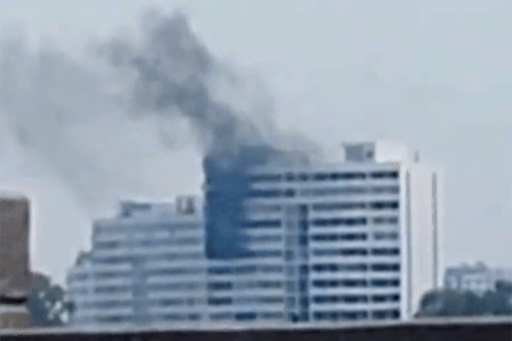
On April 27, an apartment complex in the city of Sinujiu, North Korea, was struck by a fire, spreading across several home units and burning up anything in its wake. However, those who wanted to call for help hesitated, due to the high costs of doing so, anonymous sources told Radio Free Asia (RFA).
The sources say that the fire was started by a group of school children at around 1 p.m. that day. It started on the seventh floor before spreading up to the 12-storey complex’s rooftop. Out of the 120 units in the building, more than 10 were consumed by the flames before firefighters arrived on the scene. No injuries or deaths were reported.
Concerned by the cost of calling the fire brigade, citizens took matters into their own hands and tried to extinguish the flames on their own.
“People hesitated to make the call because they couldn’t afford it,” one of the apartment building’s residents, told RFA. “By the time the firefighters arrived, the flames had already spread to neighboring units and the rooftop.
Fire services may be free in North Korea, but fuel shortages, obsolete equipment and poor funding have prompted authorities to charge to dispatch first responders, requiring citizens to pay for the fuel of emergency vehicles like fire trucks. Citizens are forced to pay 500,000 North Korean won (around $50) for fuel expenses to deploy just one fire truck. That is a sharp increase from 30,000 won last year.
Success
You are now signed up for our newsletter
Success
Check your email to complete sign up
One source said that not even the combined efforts of a single complex could provide the necessary funds to call the fire brigade.
“Most of the apartment complexes consist of about 30 households, so it is not easy to raise 500,000 won from residents,” they said.
Firefighters were able to arrive and put out the flames, but the damage had already been done. Many locals were angered by the system’s failure to address the emergency, especially since people have to pay a big sum of money to bring fire engines over.
“People are asking what is the use of the fire department if it can’t respond without money,” another source said.
READ MORE:
- Myanmar Quake Death Toll Hits 3,000, UN Urges Aid Ahead of Monsoon Season
- US Halts South Korean Sea Salt Imports Over Slave Labor Claims
- Canadian Federal Election: Liberals Secure Fourth Term as Opposition Leader Loses Seat
Ups and downs in North Korea
Since March, it was reported that North Korea has been hit with an economic meltdown, news site Express wrote. Inflation has risen resulting in “panic buying” where citizens are flocking to stores to buy essentials like corn and rice, with the fear that they could become more expensive.
The government has attempted to tackle the increased cost-of-living since February, but to no avail.
“The government has launched a response as rising prices that began in major cities like Pyongyang and Pyongsong last month have spread throughout the country, with general inflation increasing the financial burden on ordinary citizens,” authorities told Daily NK.
Despite this, Pyongyang is pushing for plans to finalize a five-year housing project, which aims to build 50,000 homes in the capital by the end of the year, state media reported.