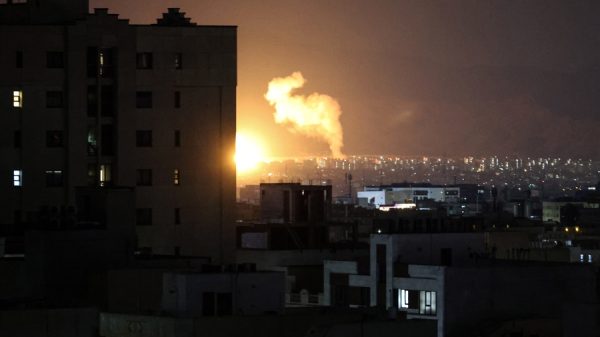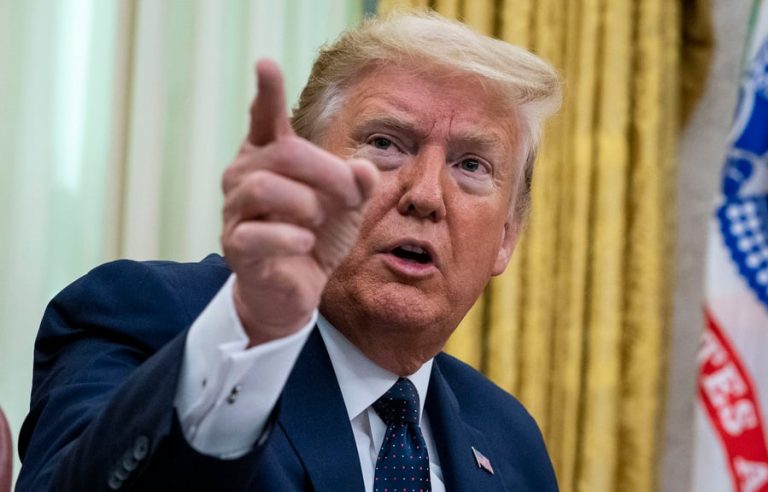
U.S. President Donald Trump announced on Thursday afternoon, June 11 on Truth Social that, given that the agreement reached with the Islamic Republic of Iran had been submitted to and approved by Iran’s supreme leadership, he had ordered the cancellation of the airstrikes and bombing operations against Iran that had been planned for that evening.
Trump said the agreement has not only been accepted by Iran, but has also received support from multiple countries. Relevant nations including the United States, Israel, Saudi Arabia, the UAE, Qatar, Turkey, Pakistan, Bahrain, Kuwait, Jordan, and Egypt have all approved the discussed outcomes and final terms in detail.
However, Trump emphasized that the U.S.-led maritime blockade will continue until the agreement is formally signed and takes effect. The timing and location of the signing will be announced later.
Earlier that day, in an interview with a Fox News foreign correspondent, Trump said that if a U.S.-Iran peace agreement can be successfully reached, he hopes both sides will sign it in Switzerland.

Success
You are now signed up for our newsletter
Success
Check your email to complete sign up
Trump previously warned of expanded bombing
Shortly before announcing the cancellation of the airstrikes, Trump also posted a strong warning to Iran on Truth Social earlier that day.
He wrote that the United States would launch a larger-scale attack on Iran that night, stating that Iran’s navy, air force, radar systems, air defenses, and much of its offensive capability had already been severely weakened.
Trump also said the U.S. would “take Iran like it took Venezuela.” He added:
“At some point in the not too distant future, we will be taking Kharg Island, and other oil infrastructure points, and assume total control of their Oil and Gas Markets, much like we have with Venezuela, which is working out brilliantly for both Venezuela and the United States of America.”
He also stated on Fox & Friends that Iran was very eager to reach a deal, and claimed that the previous night the U.S. military had dropped $250 million worth of bombs on Iran.
Trump also mentioned that the U.S. had previously supplied weapons to Iran’s Kurdish opponents, but believed the Kurds had kept the weapons for themselves rather than distributing them to the Iranian people.
“We actually sent them weapons and we were very disappointed by the Kurds, to be honest with you. The Kurds let us down. I think they kept them for themselves. I think it’s a disgrace. But I’ll remember that, Kurds, I’ll remember that.”
He also criticized the Iranian regime for suppressing its domestic population and referenced historical cases in which some countries used force to suppress protests.
“Very rarely — very rarely can that happen, because it’s very — there are not many countries. China was one that was able to do it in Tiananmen Square with the tanks. That tank operator, boom, rolled right over them when they went in front of the tank. There are very few people that can do that to their own people.”

US military: Strait of Hormuz remains open
Meanwhile, U.S. Central Command posted on X on Thursday that the Strait of Hormuz remains open for navigation.
CENTCOM also stated:
- The U.S. military has established secure maritime corridors for commercial vessels passing through the Strait of Hormuz.
- All ships not violating sanctions related to Iran may use these corridors.
- Hundreds of ships have passed through over the past two months.
- U.S. forces have been deployed to respond to Iranian aggression.
- Iran does not control the Strait of Hormuz.
Bessent: Iran will bear responsibility for damages it causes
U.S. Treasury Secretary Scott Bessent also posted on X that Iran’s regime is playing a zero-sum game that will ultimately fail.
He said: “Any damage it inflicts on our allies in the Gulf will be paid for with funds extracted from Iranian Accounts.”
Bessent also stated that any transit fees paid to authorities managing the Persian Gulf Strait would also be offset using Iranian-linked funds.
“Every attack Iran launches will only deepen the economic and financial consequences it faces,” he wrote.