After a devastating earthquake struck Myanmar on Mar. 28, the United Nations (UN) has urged nations to send aid for survivors before the death toll — already at around 3,000 — rises from the coming monsoons.
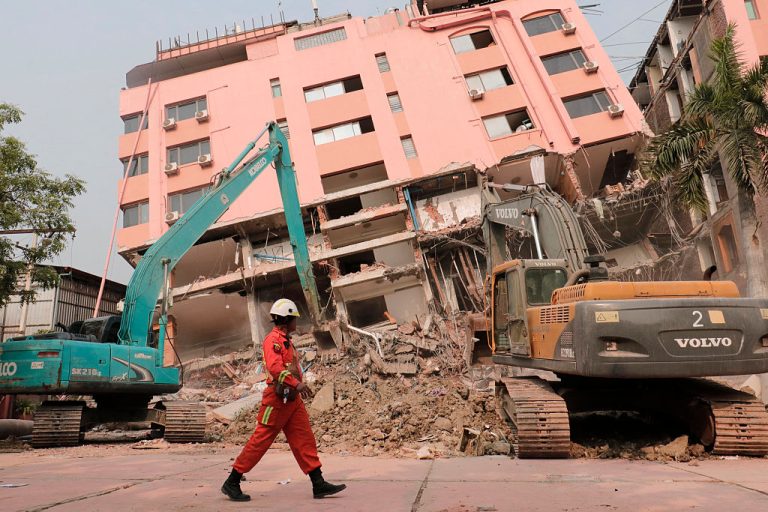
The 7.7 magnitude quake was the strongest to hit Myanmar in more than 100 years, destroying temples and modern structures alike. The cities of Mandalay and Naypyidaw — the latter of which was considered an “impregnable fortress” — were heavily damaged.
Other than the more than 3,000 dead, the military junta reported that 4,715 were injured and 341 were missing as of Apr. 3.
“Among the missing, most are assumed to be dead. There is a narrow chance for them to remain alive,” Myanmar’s ruler Min Aung Hlaing said in a speech.
Survivors have been left needing food, water and medicine to recover from the devastation of their homes, roads and bridges, humanitarian and resident coordinator Marcoluigi Corsi said, according to Reuters.
Success
You are now signed up for our newsletter
Success
Check your email to complete sign up
However, the crisis could escalate as the monsoon season comes, hindering rescue operations and damaging infrastructure even more.
“We remain, of course, deeply committed to reaching people in Myanmar who need aid,” UN spokesperson Stephane Dujarric said. “And we must act swiftly to provide relief before the upcoming monsoon season, which, of course, will even worsen this horrendous crisis.”
Agencies for the UN also report that hospitals are being overfilled from both the disaster and Myanmar’s civil war.
The quake also hit Thailand, killing over 20 people and injuring another 35 as of April 2. Tremors were felt as far away as Cambodia and India.
In Bangkok, 14 people were confirmed dead at the site of an unfinished skyscraper which fell. Seven more deaths have been confirmed elsewhere in the city. Rescuers estimated that 70 bodies were under the rubble, 12 of them were located using scanners.
“Maybe they can survive one week or two weeks, so we have to go on,” Bangkok’s governor Chadchart Sittipunt said. “The experts still have hope.”
READ MORE:
- Severe Storms Leave Trail of Destruction Across US, 42 Confirmed Dead
- Shanghai’s Population Crisis Deepens Amid Migrant Exodus, Dwindling Birth Rates
- Record-Breaking Cold Wave Hits Central-East China With Snowstorms, Hail, Strong Winds
People in dire danger
The carnage has struck home with the people of Myanmar, as survivors and rescuers rushed in the hopes of saving as many lives as possible.
“The tremors are continuing. Search and rescue operations are ongoing. Bodies are still being pulled from the rubble,” Julia Rees of the UN children’s agency UNICEF said.
“Let me be clear: the needs are massive, and they are rising by the hour. The window for [a] life-saving response is closing.”
The UN reported that 50 children and two teachers were found dead after a preschool was destroyed, Reuters wrote. An elderly woman was rescued after being trapped in the rubble of a collapsed building in Naypyitaw for a few days.
Several teams from other countries like India, China and Russia also joined the rescue effort. A team from Malaysia, the Special Malaysia Disaster Assistance and Rescue Team (SMART), rescued someone who was trapped for 72 hours in the region of Sagaing.
Civil war
Even before the monsoon season, rescue efforts were already threatened by the ongoing civil war between the junta and rebel forces. The junta’s forces are reportedly carrying out atrocities on civilians in their campaign against local militia.
The civil war saw more than three million people lose their homes, prompting Julie Bishop, UN Special Envoy for Myanmar, to call for both sides to stop fighting and let aid get through to victims.
“Continuing military operations in disaster-affected areas risks further loss of life,” Bishop said in a statement.
On Apr. 1, the rebels and the military agreed to a month-long “unilateral ceasefire” to help those affected by the quake. In a statement, the military warned rebel groups to “refrain from attacking the state” or they would face retaliation.
According to the state-run media outlet MRTV, quoting Min Aung Hlaing, the military stopped attacks on the rebels but also suspected that smaller armies were about to break the truce.
“The military is aware they are gathering, training, and preparing to attack,” MRTV said. “We consider it as attacking us and will respond accordingly.”
However, the Karen National Union, one of the rebel groups, reported on Mar. 30 that the military launched airstrikes during a critical quake relief time. Amnesty International also said it received reports of air strikes hitting areas of focus for rescue efforts.
“You cannot ask for aid with one hand and bomb with the other,” said Amnesty’s Myanmar researcher Joe Freeman.