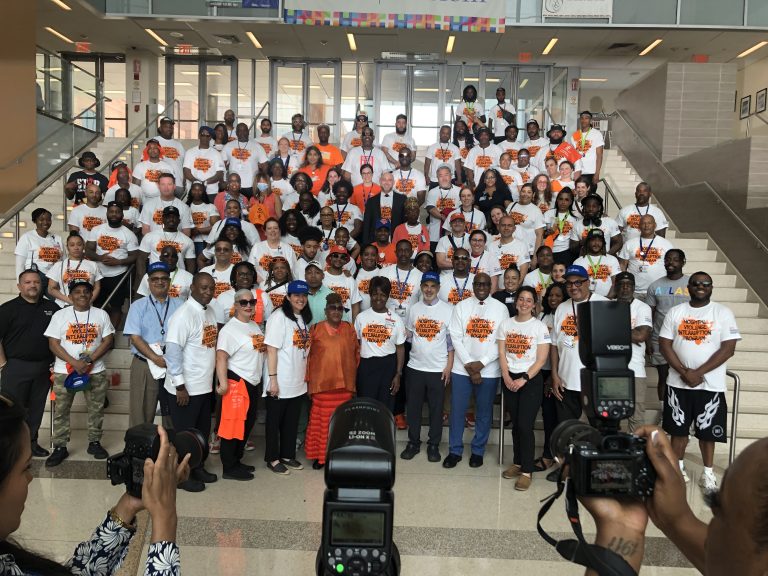
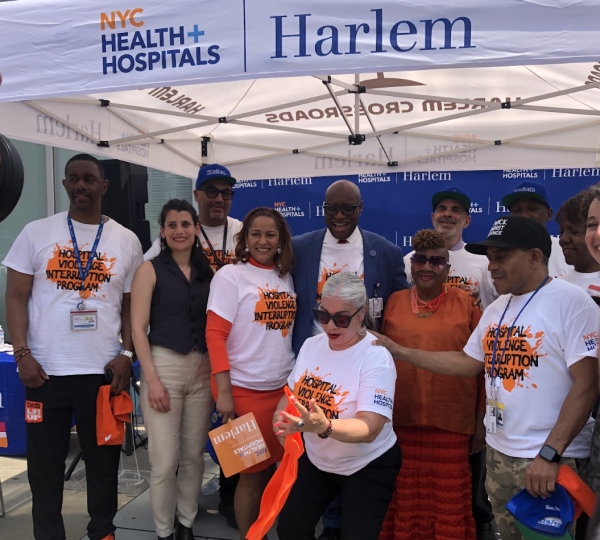
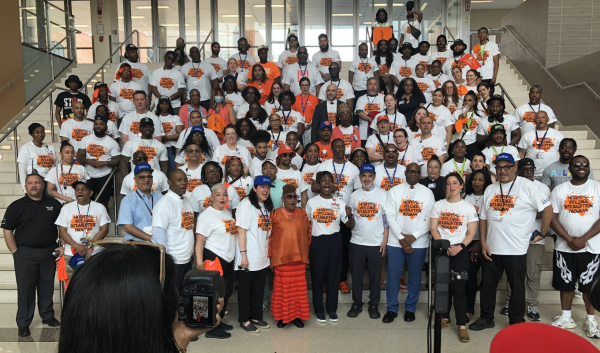
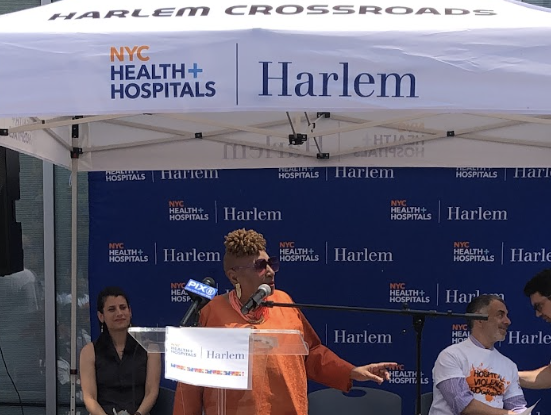
NEW YORK, New York — On June 6, in a major step towards addressing the gun violence epidemic in the city, NYC Health + Hospitals announced the unification and planned expansion of its Hospital-based Violence Interruption Programs (HVIPs) during a press conference held outside the Harlem Hospital Pavilion.
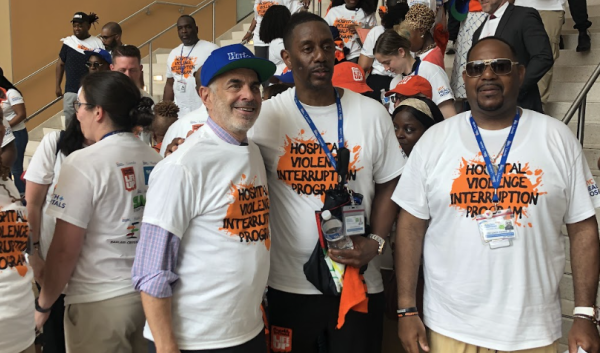
The event, which was held in recognition of “Gun Violence Awareness Month” and “Wear Orange Day,” brought together health leaders, community advocates, and youth performers from the Guns Down Life Up (GDLU) program to spotlight a bold public health approach to violence: healing trauma through coordinated, community-driven care.
Currently operating at five NYC Health + Hospitals trauma centers — Harlem, Jacobi, Kings County, Lincoln, and Woodhull — the HVIP programs will now follow a unified, systemwide model designed to offer trauma-informed care to victims of violent trauma. The announcement also revealed plans to expand HVIP programming to Bellevue and Elmhurst Hospitals, meaning all six of the city’s level-one trauma centers will soon offer this life-saving support.
A unified front against violence
“Violence is more than a criminal justice issue — it is a public health crisis with a prescription that demands a coordinated, holistic public health response,” said Dr. Mitchell Katz, President and CEO of NYC Health + Hospitals. “By unifying our Hospital-Based Violence Interruption Programs, we are advancing a systemwide model of trauma-informed care that meets victims at their most vulnerable moments and supports them through long-term healing.”
Each year, the NYC public hospital system treats approximately 7,700 patients for violent injuries, many of whom live in communities disproportionately impacted by gun violence. HVIPs already reach about 3,500 of these patients, with two-thirds receiving violence interruption, prevention, and community engagement services. The expansion to Bellevue and Elmhurst will add coverage for an additional 2,800 patients annually.
Success
You are now signed up for our newsletter
Success
Check your email to complete sign up
The HVIP model is based on a three-pronged approach: interruption, prevention, and community engagement. Interruption begins at the bedside, where multi-disciplinary hospital teams — including doctors, social workers, and violence interrupters — work with patients immediately after a violent incident to defuse conflict, prevent retaliation, and guide victims toward recovery. Prevention includes mentoring, education, and job training to offer young people alternatives to violence.
Community engagement also reinforces long-term change through vigils, neighborhood outreach, and public education initiatives to not only help victims rebuild their lives, but also promote healing and strengthen community ties in the process.
A public health approach to gun violence
“Our work begins at the hospital bedside, but it extends deep into communities, where our heroic violence interruption and prevention teams walk hand-in-hand with survivors, families, and youth to break the cycle of violence and build lasting peace,” said Marlee Ickowicz, Systemwide Director of HVIP.
Since 2006, Harlem Mothers & Fathers S.A.V.E. has been a foundational partner in this mission. Jackie Rowe-Adams, the organization’s President and Co-Founder, said, “We have made it our mission to create a safer New York City where families affected by violence get the support they need… Together with the NYC Health + Hospitals system, we’ve built a community-rooted, hospital-based response that brings hope and healing to families when they need it most.”
Each HVIP site has developed its own programming tailored to community needs. At Kings County, the Kings Against Violence Initiative (KAVI) merges medical intervention with love and long-term support. “Each person that enters our doors carries immeasurable worth, every story deserves to be heard,” said Yahsef Johnson, KAVI Hospital & Clinics Program Manager.
He added, “KAVI’s work is more than medical care — it is an act of love, a bridge to tomorrow, and a testament to our unwavering understanding that every person has the right to safety, dignity, and a future filled with possibility and endless potential.”
Community at the center
At Lincoln Hospital, Guns Down Life Up uses community mentorship and cultural programming to help youth escape cycles of violence. “Our work not only breaks cycles of violence it rebuilds trust, hope, and belonging in the communities we serve,” said James Dobbins, Executive Director of GDLU. “We do this in memory of those we’ve lost, and with unwavering belief in a future where healing leads the way.”
The Jacobi Hospital program, Stand Up to Violence (SUV), emphasizes grassroots efforts. “Our work is proactive to help both those in front of and behind the gun,” stated the SUV team. “We commemorate Gun Violence Awareness Month by remembering both those lost to gun violence, and all the good work being done… to keep our neighborhoods safe.”
As HVIPs expand, so too does the system’s effort to raise awareness and foster healing through art and community. This summer, the Arts in Medicine Department’s Community Mural Project will begin work on a collaborative citywide mural with artists Sheena Vaughn and William Bentley. The mural will honor victims of gun violence and promote peace in affected neighborhoods.
The initiative’s backing comes not only from health leaders but also from city agencies. Keith Howard, Commissioner of the Department of Youth and Community Development (DYCD), said, “By the time a young person picks up a gun, the system has failed them… DYCD joins all New Yorkers in shedding a spotlight on Gun Violence Awareness Day and Month. Today and every day, we continue to provide services to keep young people and communities safe and keep NYC the safest city to raise a family.”
NYC Health + Hospitals’ holistic, trauma-informed model underscores its belief that violence, like any disease, can be treated, contained, and ultimately prevented. With expanded funding through FY 2026 and a growing network of partners, the public health system is working to not only treat the wounds of gun violence, but also to build a future where fewer wounds are inflicted at all.
As Jessica Arocho, Director of Community Affairs at Woodhull put it, “Every act of violence is one too many, and together, we are building a future where safety is not a privilege, but a promise for all.”
For more information on upcoming events and other FAQs, please visit the official NYC Health + Hospitals site here.
With reporting by Ryan Wu.