By Janet Huang and Yang Tianzi, Vision Times
The escalating war between Israel and Iran has entered a dangerous stalemate, with fierce exchanges of fire leaving heavy casualties on both sides. As the world watches to see if the U.S. will intervene further, the Chief of Staff of the Israel Defense Forces (IDF) has issued a rare public warning, urging Israelis to prepare for a “prolonged campaign.”
Israel has launched its most extensive military operation in years, combining missile strikes, intelligence operations, and precision counterattacks. The goal: To significantly weaken Iran’s destructive capabilities during what military planners see as a critical strategic window. Officials warn this campaign will not end quickly.
RELATED: US and China Strike ‘Framework’ Deal Following London Negotiations
On June 19, the conflict escalated further when U.S. President Donald Trump, in coordination with Israel, authorized air strikes on three Iranian military facilities: Fordow, Natanz, and Isfahan. The strikes targeted missile sites and suspected nuclear development infrastructure and utilized seven B-2 stealth bombers that flew into Iranian airspace undetected.
Success
You are now signed up for our newsletter
Success
Check your email to complete sign up
The decision has sent shockwaves through the international community, with world leaders calling for restraint amid fears of a wider regional or even global conflict.
Heavy casualties mount in Iran
Since Israel’s surprise offensive began on June 13, more than a week of intense fighting has resulted in major losses. Iranian authorities report at least 430 deaths and 3,500 injuries — numbers Iranian state media say mark the deadliest phase of direct conflict between the two nations to date. Iranian news outlet Nour News, citing the Health Ministry, described the casualty toll as unprecedented.
Among the dead is Iranian nuclear scientist Isar Tabatabai-Qamsheh and his wife, killed in an Israeli airstrike. Their deaths reflect Israel’s continued focus on targeting Iran’s top scientific and military figures in an effort to undermine Tehran’s core strategic capabilities.
Israel mobilizes for a ‘long war’
The IDF’s Chief of Staff emphasized that Israel has long prepared for this moment. The military, he said, launched the campaign “thanks to the convergence of operational and strategic conditions.”
On the civilian front, Israel has ramped up public safety measures. The government is using media and social platforms to educate the public on bomb shelter protocols, missile shrapnel protection, and other defense strategies. The Ministry of the Interior has set up a real-time reporting system for residents to alert authorities to explosions or suspicious activity.
Within Israel’s parliament, there is broad support for the offensive. Lawmakers describe it not as a temporary operation but as a mission to eliminate what they see as an “existential threat.” Military and political leaders agree that preparing for a drawn-out defense is essential to preserving international backing and ultimately compelling Iran to retreat.
Lieutenant General Eyal Zamir, IDF Chief of Staff, warned of Iran’s expanding arsenal. He stated that Iran has built the capacity to destroy Israel for years and is now on the verge of a massive increase in missile production. He said:
“Had we delayed, there was a risk of losing these conditions and entering the campaign in the future from a position of clear disadvantage.”
Zamir added that Iran currently has about 2,500 surface-to-surface missiles — a number expected to rise to 8,000 within two years. “We understood that history would not forgive us if we failed to act now to defend the existence of the Jewish people in the State of Israel,” he said.
Following Zamir’s remarks, Israel expanded its call-up of reservists and introduced enhanced homefront measures, including bolstered air defenses, emergency stockpiles, and evacuation drills for schools, hospitals, and key infrastructure.
Missile defenses holding steady
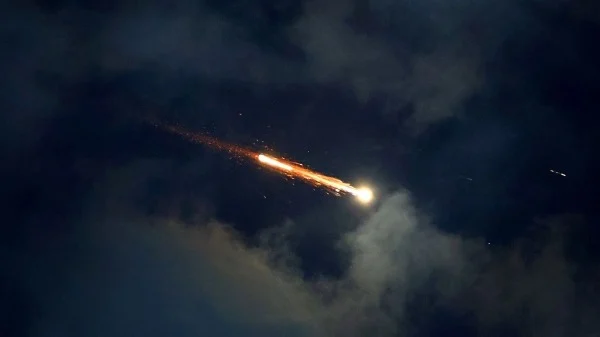
Despite concerns that Israel’s missile defense supplies could run low, military officials report that actual use has been well below projections. The IDF had expected several hundred missiles in Iran’s first retaliation wave but faced only about 100, most of which were intercepted.
Iran has now fired more than 470 ballistic missiles and around 1,000 drones, according to Israeli data. These attacks have killed 24 Israeli civilians and injured thousands. Thanks to advance preparation — including the deployment of precision strike systems, air defense batteries, and early warning intelligence — Israel says it remains ready for sustained combat in the region.
Global fallout
But the fighting and prolonged instability across the region has triggered evacuations of foreign nationals, with China leading the effort to withdraw its citizens. Several European countries are also reviewing similar plans. The conflict has disrupted air and trade routes across the region, prompting the United Nations (UN) to call for an “immediate” de-escalation.
The situation has also been further inflamed by the IDF’s indiscriminate bombing campaign in Gaza since October 2023, which has drawn widespread international condemnation for the high civilian death toll and deepened anger across the Middle East.
Meanwhile, protests have erupted inside Iran, with demonstrators demanding stronger retaliation against Israel. Many warn that U.S. intervention would risk entangling America in a long, costly war. Tehran insists on its right to retaliate and frames the conflict as a test of the regime’s resilience against Western pressure.
Whether this conflict will spiral into a wider regional war — or pull in major powers like the U.S. — remains to be seen. The coming days, and Washington’s next moves, will be critical in shaping the Middle East’s future.