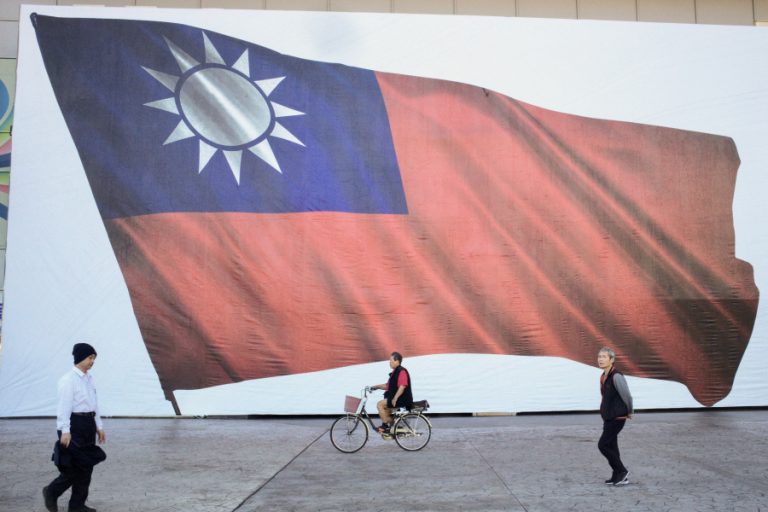
Pat Gelsinger, the former chief executive of American chipmaker Intel, warned in an interview on the All-In Podcast with Jason Calacanis that if China’s communist regime cut off Taiwan’s energy supply entirely, the damage to the global economy would surpass the Great Depression. Taiwan imports nearly all of its energy by sea, which makes its power grid a pressure point in any blockade scenario.
“When you turn off a fab, it doesn’t come back on for 90 days,” Gelsinger said. “The economic impact of a brownout of Taiwan is greater than the Great Depression in the world.”
Intel lost its edge because it spent roughly 15 years led by executives without technical backgrounds, Gelsinger argued. The great technology companies of today, he observed, all share deep technical roots. When he returned to lead Intel in 2021, he was the “first technical leader in essentially 15 years,” and his predecessors, he said, came from the wrong disciplines.
Making core technology decisions involving billions of dollars cannot be done through a spreadsheet, he said. Unless the direction of the technology proves the investment right, it will be a bad one.
The three men who ran Intel before him fit the pattern he described. Paul Otellini, who led the company from 2005 to 2013, rose through the sales organization and was Intel’s first non-engineer chief executive. His successor, Brian Krzanich, started on the factory floor at a chip plant in New Mexico and spent decades on manufacturing problems. Bob Swan, who held the job immediately before Gelsinger, spent his career in senior finance roles.
Success
You are now signed up for our newsletter
Success
Check your email to complete sign up
Intel dominated the semiconductor industry for decades before losing ground to Taiwan Semiconductor Manufacturing Company (TSMC), the Taiwanese contract manufacturer that now produces the world’s most advanced chips, and South Korea’s Samsung. Reuters has reported that a series of decisions by Intel’s leadership handed market share to once-smaller rivals such as the British chip designer ARM and the American chipmaker Advanced Micro Devices.
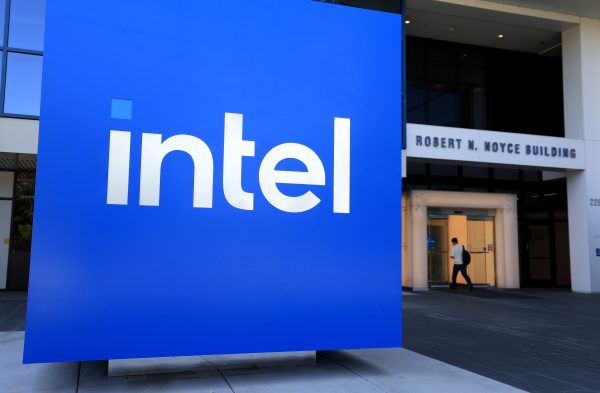
Washington took a stake in Intel over fears of Taiwan’s exposure to Beijing
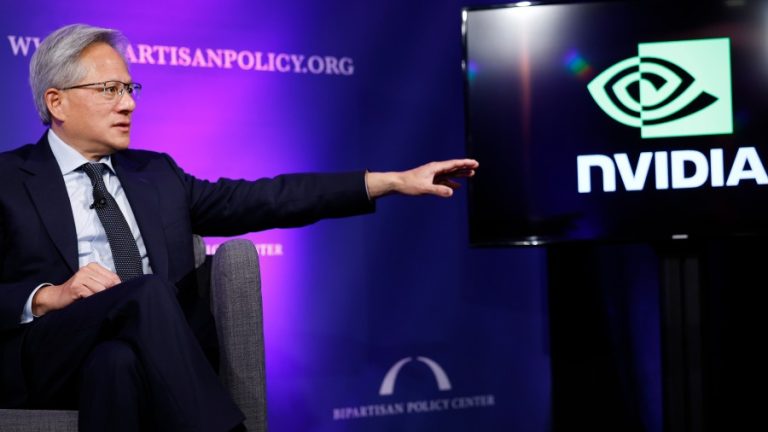
Intel’s market position has recovered sharply over the past year, after President Donald Trump decided to have the American government take a stake of roughly 10 percent in the company. Nvidia, one of Intel’s fiercest rivals and the world’s most valuable company, announced last September that it would buy about 5 billion dollars of Intel stock, giving it a holding of roughly 4 percent.
Lifted by both moves, Intel’s share price climbed more than 330 percent over the past year, though it has pulled back over the past month on market doubts about Intel and the pace of the broader artificial intelligence buildout.
The government’s stake in Intel extends a bipartisan American push to bring advanced chip manufacturing home. Both parties fear that TSMC, the world’s dominant producer of advanced chips, operates from an island Beijing threatens to seize. Gelsinger’s warning rests on the 90-day figure: chip factories cannot ride out a power loss and simply restart, so a Taiwan power cutoff would take the world’s supply of advanced semiconductors down with it, for months at a minimum.
Taiwan’s economics ministry says its supply chain can withstand disruptions
Taiwan’s government pushed back after Gelsinger’s remarks circulated. The Ministry of Economic Affairs said on Monday that Taiwan plays a central role in the global semiconductor and artificial intelligence supply chain, and that its industrial infrastructure and tightly integrated manufacturing clusters allow it to respond effectively to supply disruptions. The ministry pointed to Taiwan’s record of recovering from major earthquakes, arguing that the island’s chip industry has already proven it can absorb severe shocks to its power and production systems.