By Janet Huang, Vision Times
According to a new report by “The Telegraph,” China’s Communist Youth League is actively inviting social media creators under the age of 35 with at least 300,000 followers to join a 10-day “Cultural Exchange Tour.” The itinerary includes stops in Suzhou, Shanghai, Shenzhen, Handan, and Beijing, with full reimbursement of travel expenses available to eligible participants.
The initiative marks China’s latest push to expand its soft power influence abroad. Departing from state-run media tactics, Beijing is increasingly turning to Western influencers — seen as more “authentic” and relatable — to showcase China’s technological progress and modern image to global audiences.
“It’s becoming more sophisticated. Less crass stuff and more new media. Lord knows how much they are spending,” said Neil O’Brien, a British Conservative MP and member of Parliament’s China Research Group.
RELATED: TikTok Surges in Vietnam Despite Increased Regulatory Pressures
Beijing’s new focus
Success
You are now signed up for our newsletter
Success
Check your email to complete sign up
Helena Ivanov, a scholar at the Henry Jackson Society, added that China’s disinformation strategy is far more discreet than many realize.
“I think many people are, to a certain degree, underestimating the extent to which China is investing in disinformation because China doesn’t necessarily do it in an in-your-face style like, for example, Russia does,” she said, adding, “But the fact that it’s under the radar doesn’t mean that it’s not out there and I think China has been very good at capturing the ways through which it can disseminate its disinformation.”
With platforms like TikTok, YouTube, and Instagram now dominating how young people get their news and entertainment, Beijing has shifted its messaging strategies to align with where Gen Z and Millennials spend most of their time. According to the UK’s Office of Communications (Ofcom), Instagram, YouTube, Facebook, TikTok, and X rank as the top five news sources for individuals aged 16 to 24.
An Ipsos poll found that nearly half of young people trust influencers — and 55 percent access information from them everyday.
Leveraging social media
This shift has turbocharged China’s so-called “influencer diplomacy.” Some Western content creators have started sharing cheerful travel vlogs from places like Xinjiang—videos that critics argue whitewash human rights concerns. Others go further, claiming to “expose the lies of Western media” while offering a curated and more flattering view of China.
This trend echoes a precedent set in 2023 when fast fashion giant Shein — while facing accusations of forced labor and unsafe work conditions — invited influencers on a complimentary tour of its Guangzhou factory. TikTok personality Destene Sudduth later shared a video depicting “a clean factory with happy workers.” While Shein reiterated its zero-tolerance policy on forced labor, the video was swiftly taken down amid public backlash.
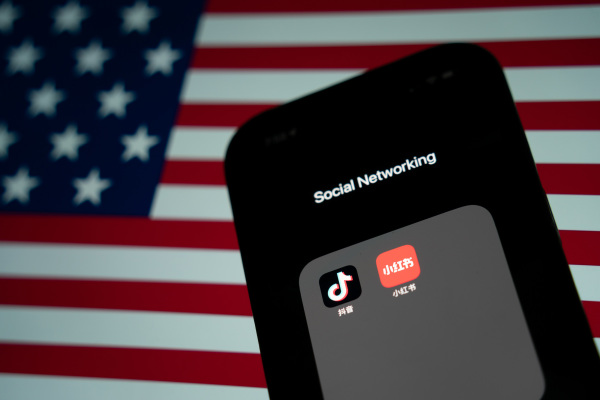
Amid mounting concerns over TikTok’s data practices and national security risks, a new player has quietly risen in its wake: RedNote. Known in China as “Xiaohongshu,” RedNote has rapidly gained traction among users leaving TikTok following a U.S. Supreme Court decision in January 2025 that upheld a federal law restricting the platform.
TikTok scrutiny gives rise to RedNote
According to “The Diplomat,” this shift has been anything but organic. Pro-China influencers quickly mobilized to promote RedNote as a safer, more transparent alternative to TikTok, claiming the app has no ties to the Chinese Communist Party. These assurances aim to ease skepticism while cloaking RedNote’s deeper role in a coordinated influence campaign.
Data analysis shows the hashtags #TikTokRefugee and #RedNote are being used extensively, with related videos amassing over 22 million views. Many of the influencers promoting the app open their videos with Mandarin greetings like “ni hao,” (“hello” in Chinese) and consistently praise China’s tech innovation and governance. Evidence also suggests bot accounts are being used to artificially boost this content and increase visibility.
A growing digital campaign
China’s digital propaganda tactics are becoming more refined, and its influence campaigns more difficult to detect. While countries like the United States and India have placed restrictions on Chinese-owned platforms like TikTok, experts warn that bans alone won’t be enough to counter Beijing’s evolving playbook.
The rise of RedNote illustrates the broader strategy. While the app presents a sleek, apolitical exterior, its original Chinese name — Xiaohongshu — carries ideological ties to the CCP. Some analysts believe the app’s success could signify a new front in China’s long-term soft power ambitions and a potential erosion of digital sovereignty in the West.
Ivanov observed that today’s Chinese influence efforts rely less on official news channels and more on cultural infiltration.
“China’s increasing use of influencers is ‘extremely concerning’. You can’t stop it anymore. Pandora’s box has opened.”