By Li Jingyao and Janet Huang, Vision Times
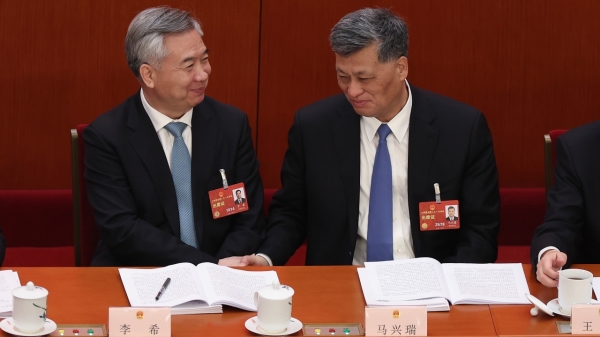
The recent removal of Ma Xingrui, a trusted ally of Xi Jinping and Party Secretary of Xinjiang, has sent shockwaves through China’s political establishment. Ma’s dismissal marks the first time a sitting Politburo member from Xi’s inner circle has been pushed out, signaling what analysts believe is the beginning of a coordinated counteroffensive by the Communist Party’s old guard.
Ma Xingrui’s sudden removal has raised questions about whether he has run into serious political trouble. A native of Shandong — the same province as Xi’s wife, Peng Liyuan — Ma was once seen as a rising star, bolstered by his background in China’s aerospace industry. That sector, however, has become a political minefield, with several top officials previously purged.
RELATED: Xi Jinping’s Power Continues to Wane Amid Family Tragedy, Silence From the CCP
Xi loses ground
Political commentator Chen Pokong offers a more nuanced view. “State media reports that Ma Xingrui is no longer serving as Party Secretary, Standing Committee member, or Committee member of Xinjiang, which means he technically remains a Politburo member. He even appeared at the June 30 Politburo meeting,” Chen noted.
Success
You are now signed up for our newsletter
Success
Check your email to complete sign up
The official explanation claims Ma is being “assigned to another post.” But Chen points out the phrase is often misleading. “That statement can be taken as half-true — usually it means another position is in the works.”
Chen recalled the case of Jing Junhai, once a trusted aide to Xi Jinping’s father, Xi Zhongxun. Jing was removed as Party Secretary of Jilin under the same vague promise of reassignment. But following the political turbulence of the Third Plenary Session—when Xi reportedly fell seriously ill and General Zhang Youxia took control of military power—Jing’s career abruptly stalled. He was relegated to ceremonial roles within the National People’s Congress and the Chinese People’s Political Consultative Conference.
“Jing Junhai’s career ended abruptly as Xi Jinping’s power waned. Now, with Ma Xingrui supposedly being reassigned, I suspect that phrase again carries only half its intended meaning,” Chen said.
Is Ma Xingrui being purged?
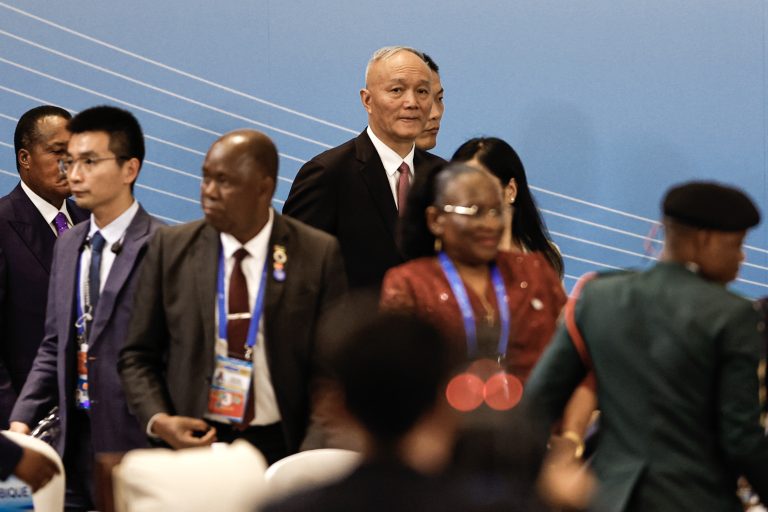
Chen emphasized that Ma’s departure from Xinjiang doesn’t necessarily confirm he’s being purged—at least not yet. “It’s possible he will be given a new post,” he said. Speculation last year suggested a shakeup within the Central Committee General Office, with rumors that Cai Qi would step down as director. At the time, both Ma Xingrui and Wang Xiaohong were floated as potential successors.
“If Ma Xingrui avoids a downfall, he could become director of the General Office,” Chen explained. “Another possibility is that he could be appointed Minister of Public Security.”
He pointed to recent appearances by Wang Xiaohong, whose official title has quietly shifted. Once referred to as Public Security Minister, he is now more often labeled a State Councillor or Secretariat Secretary. “Wang Xiaohong has spent his entire career in the public security system and never held a local government post. His appointment as minister was already an ‘artful arrangement,’” Chen said.
He added, “After the Third Plenum, Wang — Xi Jinping’s top confidant — may have been sidelined, and it’s unlikely he’ll remain in that role. Before the Fourth Plenum, factions may push for a change at the top of the ministry.”
Another scenario? Ma Xingrui could be tapped to lead the Ministry of State Security, where current minister and Xi loyalist Chen Yixin has vanished from public view.
A broader realignment
Political analyst Jiang Feng believes Ma’s removal and the appointment of Chen Xiaojiang as his replacement is not just a personnel shuffle — but a sign of tectonic shifts behind the scenes.
Chen Xiaojiang, with no prior experience managing a province, was parachuted into one of China’s most politically sensitive posts. “This isn’t just about one man being removed. It reflects a broader change at the helm of the system,” Jiang said.
Though the move may appear on paper as a standard transfer by the CCP’s Organization Department, Jiang insists Chen’s appointment was anything but routine. A former subordinate of Politburo elder Shi Taifeng, Chen is also linked to former Vice President Wang Qishan and the Communist Youth League (Tuanpai), a faction associated with former leader Hu Jintao.
“Chen Xiaojiang is essentially a hybrid figure — a blend of the Youth League, the discipline inspection system, and the United Front,” Jiang explained. “He didn’t rise through a single track but has been repeatedly trusted by various party elders. He’s a technocrat veteran acceptable to multiple factions. That’s why he was chosen for Xinjiang—a compromise figure, a consensus pick by the system’s upper echelon.”
Jiang emphasized that this move represents a critical inflection point. “This isn’t Xi Jinping playing chess — it’s the Party playing chess. This is not the opening game, it’s the endgame. It’s the first counterattack fired by the party elders.”
Who’s next on the chopping block?
Jiang warned that Ma Xingrui may only be the first in a string of Xi-aligned provincial leaders to be replaced. Other Politburo members who currently serve as provincial party secretaries include Yin Li in Beijing, Chen Min’er in Tianjin, Chen Jining in Shanghai, Yuan Jiajun in Chongqing, and Huang Kunming in Guangdong.
“The more extensively Xi installed his loyalists across provinces and ministries during the 20th Party Congress, the harsher this counterattack will be,” Jiang said.
He concluded with a stark assessment: the reshuffle in Xinjiang is a signal that Xi’s once-unchallenged authority is beginning to crumble — and the old guard of the Chinese Communist Party is reclaiming influence.
“This time they chose to fire the first shot in Xinjiang. The question now is: who will be the next Ma Xingrui? Whether in state security, public security, or finance — nowhere is safe anymore.”