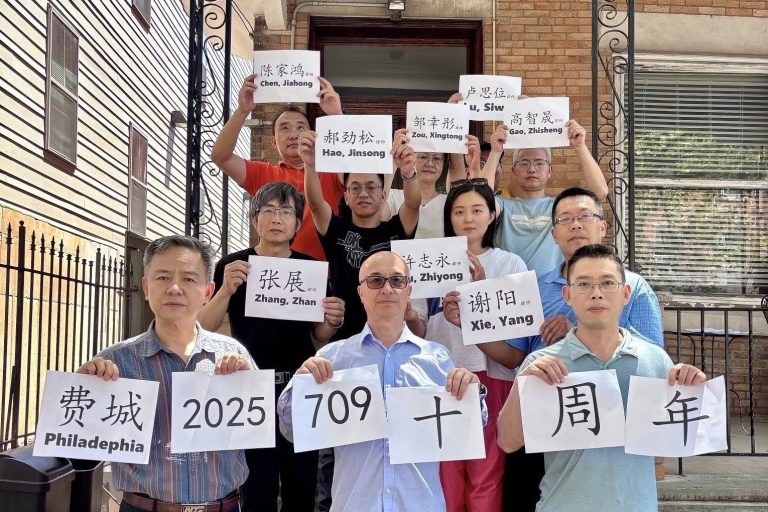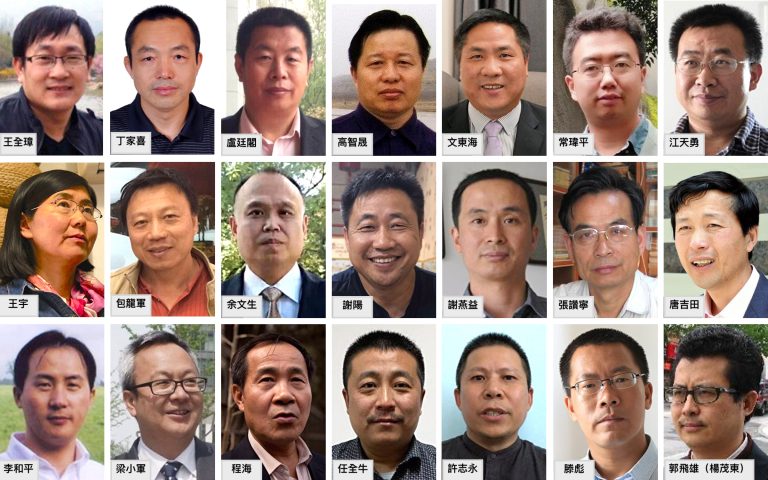
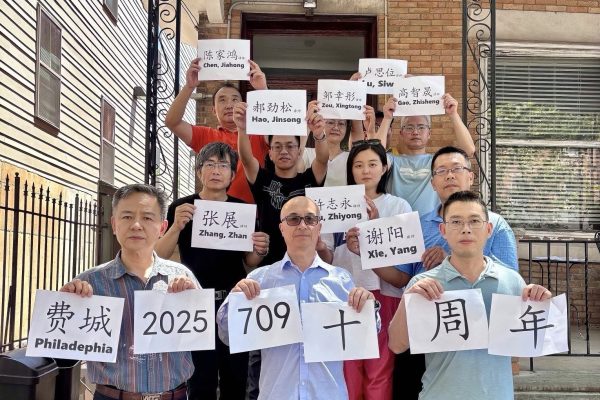
A decade ago, dozens of Chinese lawyers known for taking on politically sensitive cases faced mass arrests, prolonged detention, torture, and show trials at the hands of the communist authorities.
Starting July 9, 2015, the “709 crackdown,” as the events came to be known, dealt a severe blow to a community of attorneys and activists who, through their practice, worked to support human rights in China.
Among those whom the lawyers targeted in the 709 crackdown had defended were people fighting for their economic rights, those seeking justice following abuse by corrupt government authorities, as well as religious Chinese persecuted for their faith.
Around 300 people were caught up in the arrests, disappearances, interrogations, and abuse. Meanwhile, as the Chinese Communist Party (CCP) pressed charges against the lawyers for “subversion of state power,” the state media ran a smear campaign to denigrate them.
Prominent among those arrested were attorneys Zhou Shifeng, who ran the Fengrui Law Firm in Beijing, as well as Wang Yu, Wang Quanzhang (no relation), Li Heping, Xie Yang, Jiang Tianyong, and others.
- 9 Years Following Infamous ‘709’ Crackdown, China’s Human Rights Lawyers Hold Out Hope
- Human Rights Lawyer Lu Siwei Detained Amid Escalating Crackdown on Dissidents (October 2024)
- ‘New Citizens Movement’ Activists Re-sentenced by Communist China Give Defiant Statements Before Trial (April 2023)
Success
You are now signed up for our newsletter
Success
Check your email to complete sign up
Prior to their show trials, which were held in the following years, the lawyers arrested during the 709 crackdown were held incommunicado in “residential surveillance at a designated location” (RSDL). Belying its innocuous-sounding title, RSDL involved solitary confinement for extended periods, sleep and sunlight deprivation, various kinds of physical torture, and brainwashing.
‘Flagrant violations’ of China’s rule of law
The 709 crackdown has been seen as a significant turning point in the development of civil society under the modern-day rule of the Chinese Communist Party (CCP), with the regime taking an increasingly hardline approach to advocates of greater freedoms and rule of law. These included Chinese dissidents, academics, activists, religious practitioners, journalists, and others.
“What united these diverse groups was the struggle for a fair and just China; and human rights lawyers, though small in number, were the connecting node of them all, as they worked through the often unscrupulous judicial system firmly in the grasp of the Communist Party,” as described in an announcement for a July 9 event on the 10th anniversary of the 709 crackdown that was jointly hosted by a number of human rights groups.
Though the lawyers have been released after serving their terms, they and their families continue to suffer surveillance, harassment (including having their utilities shut off or being repeatedly evicted), and various deprivations, mainly disbarment.
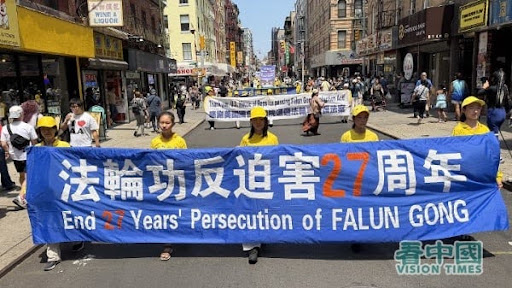
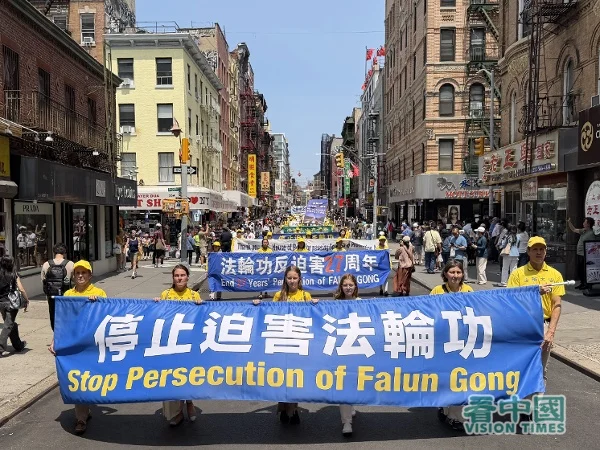
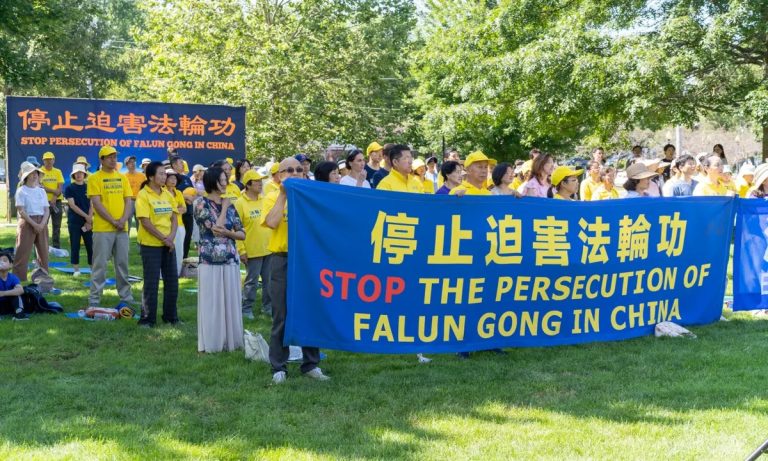
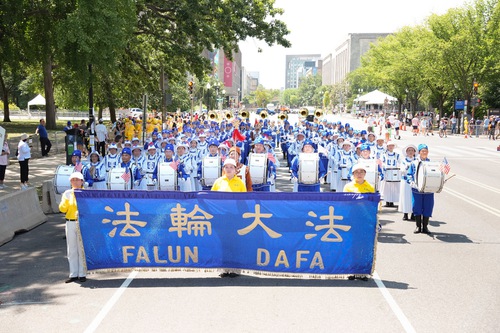
The occurrence of the 709 crackdown is related to the human rights lawyer’s defence of Falun Gong persecutors, Christians, petitioners (Chinese protesters seeking government redress for various abuses) and other groups.
For example, lawyer Wang Quanzhang defended Falun Gong practitioners in the Jiansanjiang case of 2014 in northeastern China near the Russian border.
That March, Wang and other lawyers were abducted by police and had their ribs broken during torture while they were representing Falun Gong adherents held at the local Qinglongshan brainwashing center.
- China’s Purged Justice Minister Fu Zhenghua, the Man Behind Infamous ‘709’ Crackdown on Lawyers (October 2021)
- China Hands Suspended Death Sentences to Ex-Justice Minister Fu Zhenghua and Other ‘Political Liars’ (September 2022)
Falun Gong is a traditional Chinese spiritual practice that gained great popularity in the 1990s before the CCP launched a massive campaign against it and its adherents beginning in July 1999.
According to various reports, the mass arrests of Chinese human rights lawyers the next year in 2015 was orchestrated by the CCP’s central Political and Legal Affairs Commission (PLAC), a powerful organization that controls China’s police, prosecutors, and courts.
The significance of the 709 crackdown
At a symposium held July 8 at Capitol Hill in Washington, D.C. to commemorate the 10th anniversary of the 709 crackdown, U.S. Rep. Chris Smith (R-N.J.) criticized the Communist Party’s “weaponization” of Chinese law to violate human rights, saying that in some ways Communist China had even surpassed North Korea in its misdeeds.
He specifically called out the CCP’s harvesting of organs from prisoners, noting that the main victims of this barbaric practice are members of the Uyghur Muslim population native to northwestern China, as well as Falun Gong practitioners.
Chen Guangcheng, who served as a lawyer in China before being arrested and escaping the country in 2012, said that Article 73 in Chinese criminal law makes it possible for the CCP to keep political prisoners detained for long periods before they are put on trial.
These prisoners are kept in RSDL, as well as at unofficial sites known as “black jails.”
He brought up the example of lawyer Gao Zhisheng, an award-winning Chinese attorney who was severely tortured for daring to represent Falun Gong practitioners and other politically sensitive clients.
Gao was last heard from in 2017; it is not known if he remains alive.
Zhou Shifeng, one of the prominent lawyers in the 709 cases who was forced to admit guilt under duress, called for the verdicts in the 709 trials to be overturned, saying that the whole affair was a “flagrant violation of justice and the rule of law.”
In video remarks prepared for the event, Zhou described how, at the time of his detention, the police showed no identification, produced no warrant, wore no uniforms, and did not give any reason for arresting him.
“They could find no evidence for the ‘subversion of state power’ charge against me. They altered a [recording of a] sentence I had spoken at a dinner gathering as evidence, but it was the opposite of what I had actually said,” Zhou said.