Experts who spoke with the Australian Broadcasting Corporation (ABC) commented on the two trade deals that the U.S. Trump administration managed to sign in its 90-day pause on “Liberation Day” tariffs that had been announced early this April.
One of those deals was reached with the United Kingdom in early May, whereby the two sides in the “special relationship” agreed to a 10 percent tariff on the UK, with some goods exempted. The agreement came into effect on June 30, 2025.
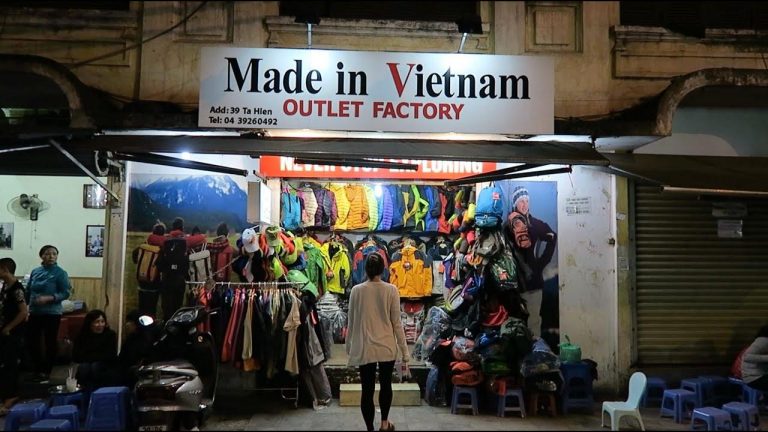
The other deal was with Vietnam, and is a framework for a future agreement. It calls for 20 percent tariffs on Vietnamese products exported to the U.S., and a 40 percent tariff on Chinese goods transshipped through the Southeast Asian country.
- A Recap of US Tariff Actions, Feb–July 2025
- Nippon Steel to Raise $5.6 Billion in Subordinated Loans to Fund US Steel Purchase
Other planned U.S. tariffs on a number of countries have been again postponed from the original deadline of July to Aug. 1.
Some of the experts who talked to ABC said that Trump’s tariff measures backfired due to the speed and scale with which they had been rolled out, while others said the aggressive announcements were made with China — America’s main competitor — in mind.
Success
You are now signed up for our newsletter
Success
Check your email to complete sign up
“There’s no question China is driving some of this,” Steve Okun, who founded APAC Advisiors, told ABC’s “The World” program.
He noted that the U.S. is upset with Southeast Asian countries’ tolerance of transshipment, whereby Chinese producers sell their America-bound goods via third countries to avoid Washington’s tariffs.
Transhipment took off in 2018, after the first Trump administration (2017–2021) levied tariffs on most Chinese products.
The second Trump administration has taken a hard line on transshipment. One-fifth of Chinese exports this April have gone to Southeast Asian countries, while direct Chinese exports to the U.S. have declined by 10.5 percent, per the Financial Times.
Dr. William Mathews, a China researcher at the think tank Chatham House, told ABC that “the trans-shipment clause [in the U.S.-Vietnam trade deal] does seem to be directed at China but it is not clear what specifically constitutes trans-shipment.”
He added that “Vietnamese producers rely on Chinese components and the reality is that component manufacture, as well as a lot of raw materials processing, is dominated by China.”
“The bottom line is that China makes stuff at a scale and cost that the US cannot compete with without massive changes to its own industrial policy,” Mathews said.
A Vietnam expert at the ISEAS-Yusof Ishak Institute in Singapore, Nguyen Khac Giang, told ABC that the U.S.-Vietnam trade deal is a welcome development for both sides, noting that the export-dependent Hanoi desires stability in its economic ties to the U.S. while Trump gets “a headline-grabbing zero tariff and a pledge to crack down on trans-shipment.”
But Nguyen said that “the real test lies in enforcement.”