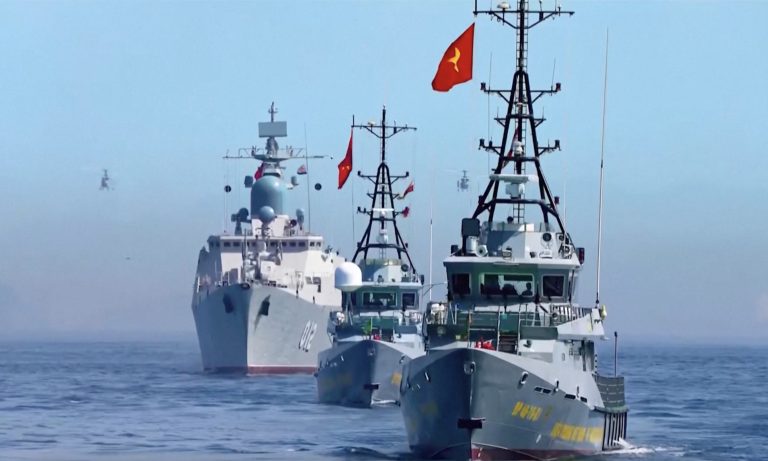
A U.S. think tank notes that Vietnam’s island-building in the disputed Spratly Islands is expanding at a pace that could rival China’s efforts.
The Center for Strategic and International Studies’ (CSIS) Asia Maritime Transparency Initiative on AUg. 22 published a report of how far Vietnam’s island-building had grown since reclaiming areas of the island chain in 2021.
Using satellite imagery shared earlier this year, the report showed that eight new features were developed, with Vietnam undergoing “dredging and landfill work” at Alison Reef, Collins Reef, East Reef, Lansdowne Reef and Petley Reefs, Reuters wrote.
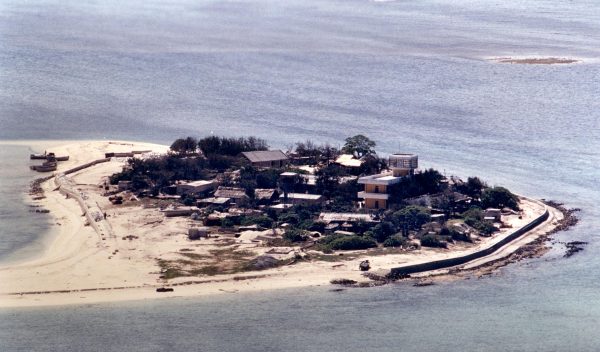
All of the Spratly Islands’ 21 rocks and low-tide elevations claimed by Vietnam are now filled with man-made land.
Moreover, new construction had commenced at three other sites — Amboyna Cay, Grierson Reef, and West Reef — where Vietnam had previously built medium-sized artificial islands through earlier dredging projects.
Success
You are now signed up for our newsletter
Success
Check your email to complete sign up
The report also suggests that some of the longer features may be built into runways, with one at Barque Canada likely being built to join Vietnam’s only airstrip at Spratly Island.
Overall, the report states that Vietnam had built “about 70 percent as much artificial land in the Spratlys as China had.”
”Reclamation at these eight new features all but ensures that Vietnam will match — and likely surpass — the scale of Beijing’s island-building,” it added.
READ MORE:
- Former Chinese Official Warns of Escalating Transnational Repression by Beijing, Urges Western Response
- Thousands Gather Outside Chinese Embassy in South Korea to Protest CCP Influence
- Chinese Vessels Collide While Pursuing Philippine Boat in Contested Waters
Strategic setup
The Spratlys island chain is one of the most highly contested areas in the South China Sea, involving claims by not only Vietnam and China, also the Philippines, Malaysia and Brunei.
China and Vietnam both claim the majority of the South China Sea, with China’s claims encompassing nearly the entire region.
In Chinese, the Spratlys are known as the Nansha Islands. Beijing has successfully militarised the major “big three” islands it controls — Mischief Reed, Subi Reef and Fiery Cross. All are armed with anti-ship and anti-aircraft missile systems, jamming equipment and aircraft.
Analysts say that Vietnam’s island-building signal Hanoi’s commitments to its claims, as well as its challenge to the Chinese narrative.
”The immediate benefits from this expansion are that upgraded facilities in these features would allow Vietnamese military and law enforcement to operate in greater numbers and for longer periods of time before returning to shore,” Hanh Nguyen, research fellow at the Yokosuka Council on Asia Pacific Studies in Japan, said.
Abdul Rahman Yaakob, research fellow at the Lowy Institute’s Southeast Asia programme, also said that Vietnam’s expansion could force China to change its “strategic calculus” for a “more assertive and aggressive posture.”
”Another critical infrastructure that we should monitor is the construction of berthing facilities, which would support long-term Vietnamese naval presence in the contested waters,” he said.
According to Ding Duo, associate research fellow at the National Institute for South China Sea Studies in Hainan province, China could “begin new construction activities, deploying larger-scale facilities or making adjustments to the infrastructure on the island, which could help compensate for the loss.”
However, Yaakob still believes that China is still ahead of Vietnam in the contested waters. He also adds that Beijing may not act so aggressively, given the good relations between the two communist regimes.
Additionally, Nguyen noted that Vietnam’s improvements would still not be enough to hinder China’s operations in the South China Sea.
Other analysts also claim that Vietnam would label the expansion as a defensive measure, but Hanoi wishes to maintain its strong relations with its neighbors.
Vietnam and the Philippines are working on a coastguard hotline, while also creating protocols to avoid incidents for better harmony over their claims.