Commentary
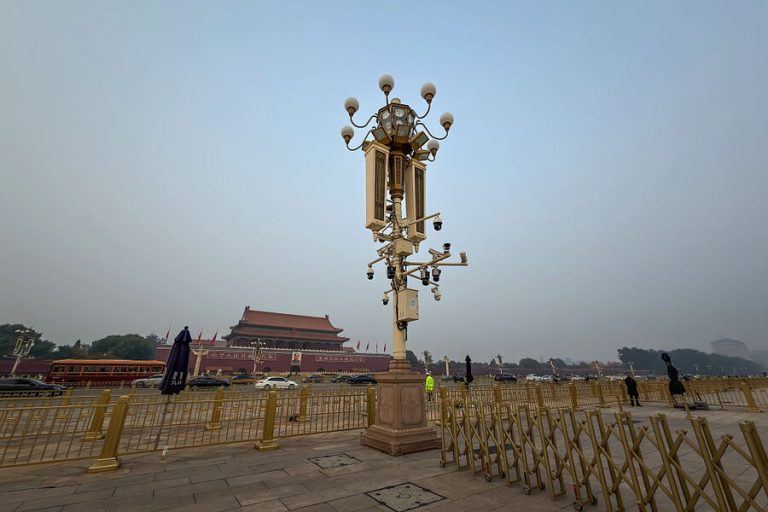
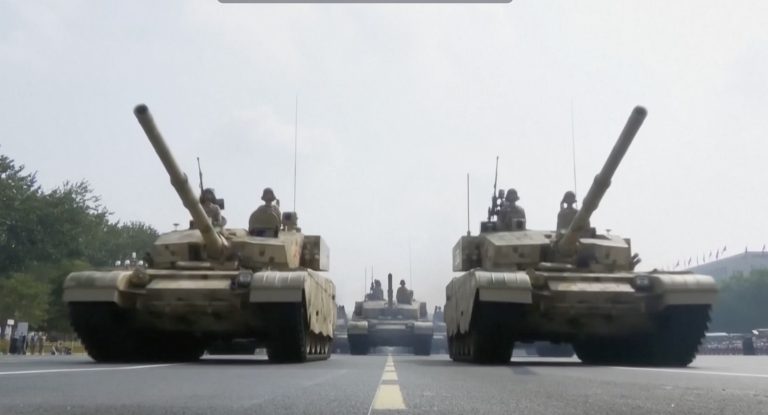
Chinese President Xi Jinping hosted a grand military parade in Beijing’s Tiananmen Square on Wednesday, Sept. 3 commemorating the 80th anniversary of Japan’s surrender in World War II. The event drew global attention as Russian President Vladimir Putin and North Korean leader Kim Jong Un joined Xi on the dais, marking their first public appearance together.
Many observers, particularly in Taiwan, have called out the Chinese Communist Party (CCP) for its hypocritical treatment of China’s wartime struggles. While the country lost millions of soldiers and civilians fighting Imperial Japan, the Chinese communist movement was at the time a rebel force that mostly worked to undermine the Republic of China (ROC) government, and had little role in combating the Japanese army.
Having preserved and strengthened its forces during the war, the CCP then overthrew the greatly weakened Nationalist Chinese government, which, after losing the civil war to the communists, retreated to the island of Taiwan in 1949.
A show of military might
The meticulously choreographed parade featured thousands of goose-stepping soldiers, advanced weaponry — including hypersonic missiles, nuclear-capable systems, and underwater drones — and a flyover of fighter jets. Xi, flanked by Putin on his right and Kim on his left, used the occasion to project China’s military strength and diplomatic influence. Unlike the 2015 Victory Day parade, where foreign dignitaries were seated to Xi’s right and Chinese officials to his left, this year’s arrangement highlighted the prominence of Russia and North Korea.
Success
You are now signed up for our newsletter
Success
Check your email to complete sign up
In a brief speech, Xi emphasized the global choice between “peace or war, dialogue or confrontation, win-win or zero-sum outcomes,” framing China as a champion of a multipolar world order. The parade, attended by leaders from 26 nations, including Myanmar, Pakistan, and Central Asian states, showcased Beijing’s regional clout, with only two Western leaders, Serbia’s Aleksandar Vučić and Slovakia’s Robert Fico, present.

An ‘axis of upheaval’?
In a post on Truth Social, U.S. President Donald Trump sarcastically extended his “warmest regards” to Xi, Putin, and Kim “as you conspire against the United States of America.” He also called upon Xi to acknowledge the massive material support that America contributed to China’s fight against the Japanese invasion, noting that many American service members had given their lives to defend China.
Xi’s speech notably omitted mention of the United States’ contributions to China’s ultimate triumph over Japan. Instead, Xi’s remarks — and the prominent position afforded to his foreign counterparts at the parade — alluded to strategic competition with the West.
The attendance of Iranian President Masoud Pezeshkian further underscored what some Western analysts call an emerging “axis of upheaval” between nations aligned against the U.S.-led international order.
The parade’s guest list, including leaders from heavily sanctioned nations like Iran and Myanmar, fueled speculation about a coalescing anti-Western bloc.
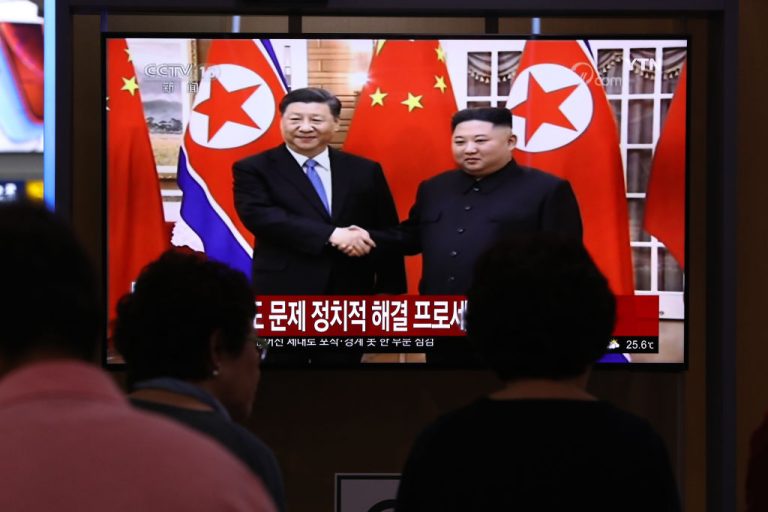
Taiwanese researcher Shen Ming-shih, who works for a government think tank, told The Epoch Times that Kim Jong Un’s presence alongside other authoritarian leaders counters perceptions of North Korea’s diplomatic isolation. The event signaled unity among regimes opposed to U.S.-led global norms, amplifying concerns in Washington about their growing cooperation.

Yuan Hongbing, a Chinese dissident and jurist living in Australia, said that China hopes to use the World War II victory celebration to reinforce the Sino-Russian relationship at a time when the Trump administration is attempting to drive a diplomatic wedge between Moscow and Beijing.
According to Yuan, citing “people of conscience” within the Communist Party establishment, Xi and Putin have arrived at a secret agreement that draws Russia closer to China in exchange for the CCP’s support on Russia’s war in Ukraine.
During Putin’s visit to China, Russia signed deals to increase gas exports to China by 16 percent annually.
Historical narrative and strategic ambitions
At the parade, Xi’s speech and state media emphasized the Communist Party’s role in defeating Japan, sidelining the contributions of the ROC government, which, then under the control of the Chinese Nationalist Party or Kuomintang, led China’s war effort.
Mainstream media coverage of the parade often highlights China’s historical grievances and national pride, but critics argue this risks legitimizing the CCP’s doctored historical narrative.
In recent decades, the CCP has attempted to portray itself as the main force fighting the Japanese and “liberating” China from foreign influence, despite communism being a Western ideology. In lieu of concrete wartime achievements, much of the Party’s narrative has focused on hatred towards Japan for wartime atrocities committed by its troops occupying China.
Taiwanese officials, including Shen Yu-chung of the Mainland Affairs Council, criticized Beijing’s selective history, noting that the Republic of China, not the Communist Party, accepted the Japanese surrender and took part in the Allied peace talks for the postwar order.
Sydney University professor Feng Chongyi noted in remarks made to The Epoch Times that Beijing’s prominent displays of military strength could backfire by spurring greater wariness of the CCP’s increasingly forceful stance in regions like the Taiwan strait and South China Sea.
By framing itself as the victor of World War II, Beijing seeks to erase the Republic of China’s historical legitimacy, paving the way for its narrative that Taiwan, where the ROC still governs, is a rightful part of Communist China.
Analysts warn that this “memory war” is a psychological and propaganda offensive aimed at undermining Taiwan’s identity and international standing.
Reuters noted that the parade signals China’s attempt to build a “value alliance” centered on sovereignty and regime stability, challenging the human rights-based framework of the liberal world order. Taiwan and its neighbors are on the front lines of this ideological battle.