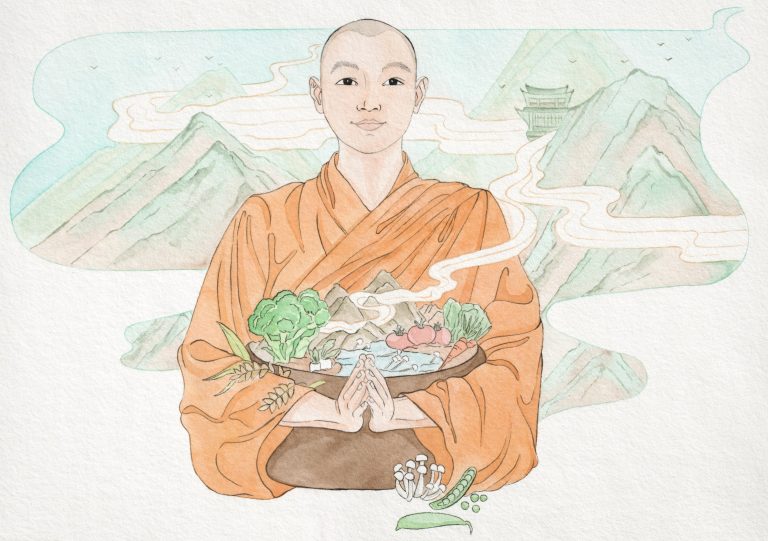
Historically, Yogis, Taoists and Buddhist monks lived very well — maintaining clarity, energy and mobility into old age — on a very basic diet. These ancient sages valued simplicity, and found truth and wisdom by following heaven and nature.
In today’s fast-paced, material world, people are aching to reconnect with the divine; but everything from hectic schedules to undisciplined eating habits are working against our spiritual journey. Although we usually think of food as a source of energy and nutrition for our bodies, it also has a profound impact on the spirit, and our capacity for spiritual growth. Perhaps we should consider eating for enlightenment.
We are what we eat
Food doesn’t just provide energy, it is energy. Some foods are high energy — they keep us physically energetic or even help us transcend the earthly realm. Other foods are low energy — they promote lethargy and keep us tied to worldly things.
In Ayurvedic tradition, food is measured in Prana (life force), and it is intrinsically tied to the consciousness. Prana is made up of three Gunas (characteristics): Sattva, Rajas and Tamas, which are always present, but in fluctuating degrees.

Satva (harmony and stability)
Sattvik foods are considered optimal, as they promote balance and clarity with their clean, light, vitalizing energy. They provide excellent nutrition and include what we normally think of as “health foods:”
- Fresh fruits and vegetables supply vitamins, minerals, fiber and antioxidants.
- Whole grains and legumes are a good source of complex carbohydrates, fiber and plant-based protein.
- Nuts and seeds provide healthy fats, protein and essential nutrients.
- Seasonings include honey, ghee, and mild spices to enhance flavors without overwhelming them.
Success
You are now signed up for our newsletter
Success
Check your email to complete sign up
A predominantly sattvic diet promotes spiritual growth while supporting a healthy body.
Rajas (activity and passion)
Rajasik foods are stimulating and dynamic. They can enhance energy and motivation, but can also contribute to irritability and restlessness. They include, but are not limited to, what we might consider “junk food:”
- Fast food and processed foods
- Fried foods and oily foods
- Strong seasonings (spices, salt, onions, garlic and vinegar)
- Fermented foods
- Refined sugar
- Caffeine
Rajasic foods should be used in moderation, as overstimulation can cause imbalance.
Tamas (darkness and inertia)
Tamasic foods are said to dull the mind with their heavy, stale energy. They include what many consider “comfort foods:”
- Most animal products
- Refined grains (pasta, white bread, white rice)
- Overcooked or reheated foods
- Preserved foods (canned goods, jellies)
- Preservatives and artificial ingredients
- Alcohol
Limiting or avoiding tamasic foods can help one overcome lethargy, apathy and anger, improving your capacity for spiritual work. Excessive consumption of tamasic foods can be both physically and spiritually harmful.
Principles in practice
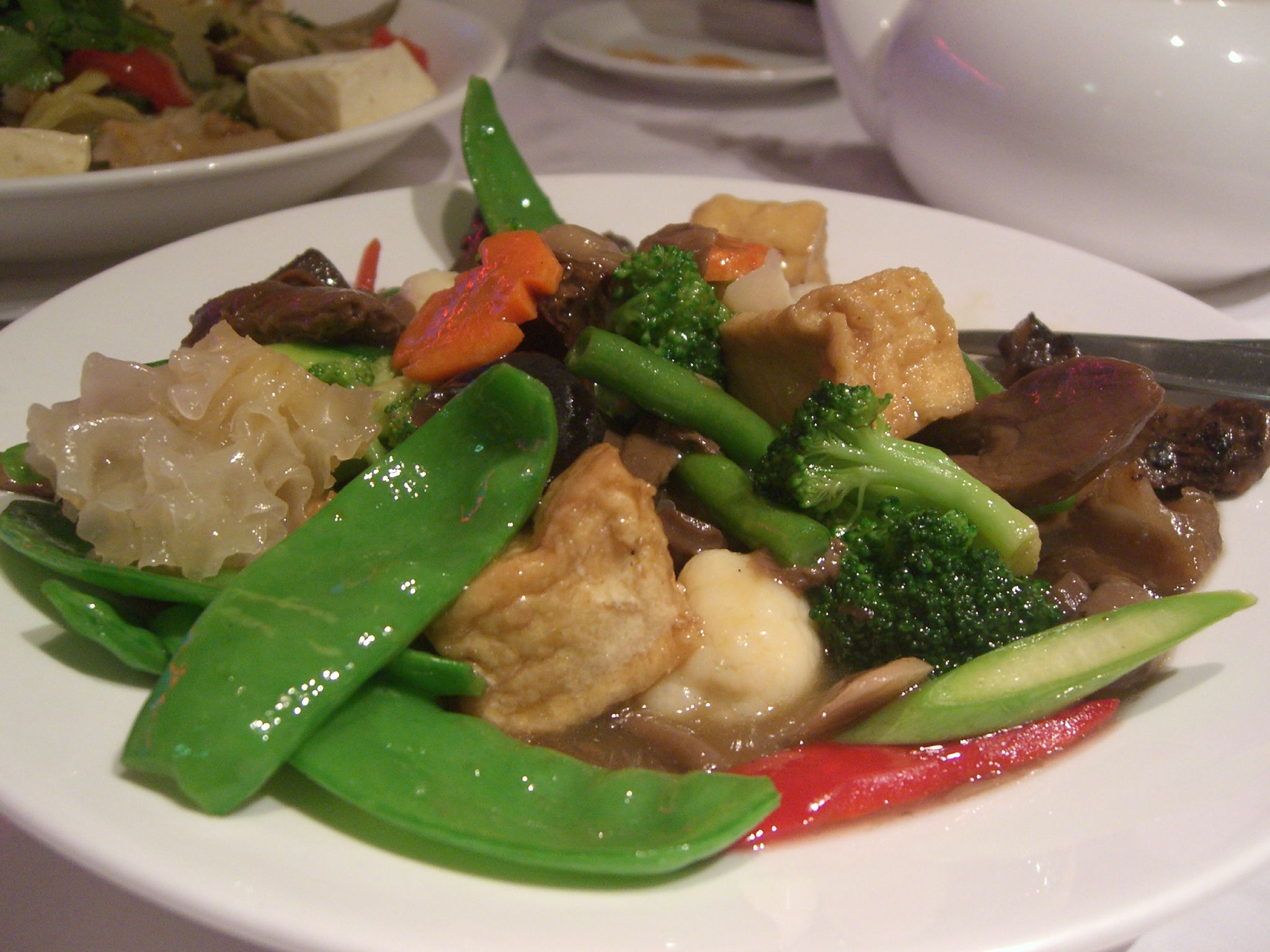
When applying these principles to spiritual work, the goal is to build a sturdy, balanced foundation with a predominantly sattvic diet. Rajasic and Tamasic foods can be used wisely, and to a purpose. For example, we need some tamas for good rest, and some rajas for momentum.
Of course, this theory applies mainly to Indian Yogis, but other spiritual groups have similar dietary customs.
The Buddha advised his followers to eat in moderation, treating food as medicine and not being attached to taste. The highly-disciplined Shaolin Monks of China support their rigorous training on a simple, natural, vegetarian diet. Taoists align with nature’s way by consuming local, organic, seasonal, vegetarian foods. Christian monks, according to tradition, abstain from meat because it is thought to inflame the passions.
In short, a wholesome, modest diet helps Yogis, monks and Taoists maintain clarity and gain wisdom in their spiritual journey; but the discipline is not limited to what one eats. How one eats is just as important.
Less is more
Traditional Yogis typically eat one vegetarian meal a day, yet they are neither malnourished nor frail. This practice is believed to promote health, while allowing one to focus on spiritual growth. It may sound rather extreme, but studies show that autophagy (the body’s recycling system for cells) is activated by such intermittent fasting, making the body more efficient and energetic.
Monks in other parts of the world traditionally limit themselves to one or two small meals as well, typically taken early in the day. According to chronobiology, how we process food is affected by our circadian rhythm — and we use food more efficiently in the early hours of the day.
While it may be uncomfortable at first, allowing ourselves to feel a little hunger is an exercise that helps strengthen self-discipline and gratitude, since an empty stomach makes any meal that much more appetizing and satisfying.
Please note: Growing children, young adults, pregnant women and individuals with diabetes should not limit themselves to one meal. Getting enough nutrients is first and foremost.
Give thanks

In the age of convenience, it is easy to forget all that goes into the making of our meals; but traditionally, food was treated with reverence — especially within the spiritual community. Whether it is a home-grown tomato or a sub from Jersey Mike’s, food is a gift that we should acknowledge.
Gratitude is integral to spiritual growth — it elevates our consciousness and paves the way for enlightenment. Pausing to give thanks for our sustenance not only connects us with the Creator, it is thought to raise the vibrational quality of the meal and improve the dining experience. So take a moment to reflect on the marvelous avenue that brought food to your plate.
Slow down
On any given day, about one third of Americans consume fast food, and consume it quickly, no doubt; but this is not The Way. Yogis, monks and Taoists honor their meals with a sacred space, and eat with measured mindfulness, often in silence.
We, too, can create a calm and peaceful atmosphere to promote mindful dining. Incorporating rituals like prayer, affirmations or small ceremonies give us reason to pause, and remind us of the spiritual nature of eating.
By chewing slowly and thoroughly, eating, itself, can be a meditative experience. Put down your utensils, close your eyes, and chew at least 30 times. Pause between bites to savor the flavors. Eating slowly not only aids digestion, it also allows us to sense fullness approaching, so we don’t over-indulge.
In conclusion: If you want to clear your mind for spiritual awakening, think of your body as a temple. Consume pure and wholesome foods to keep it clean and hospitable for the Divine. Limit comfort foods and junk foods, as they cloud our perceptive abilities.
While eating, engage your senses, but do not indulge them. While it is important to enjoy your meals, remember the purpose of eating is not for pleasure, but to nourish. Conquer your cravings by enjoying modest meals of quality foods, and you’ll be taking an important step on your spiritual journey.