On Friday, Oct. 10, U.S. President, Donald Trump, posted to his social media platform, Truth Social, a scathing rebuke to communist China’s moves to impose export controls on rare earths originating on the mainland.
“Some very strange things are happening in China!” the president wrote. “They are becoming very hostile, and sending letters to Countries throughout the World, that they want to impose Export Controls on each and every element of production having to do with Rare Earths, and virtually anything else they can think of, even if it’s not manufactured in China.”
China produces over 90 percent of the world’s processed rare earths and rare earth magnets and has used export controls to restrict shipments ahead of talks between Presidents Donald Trump and Xi Jinping at the end of this month.
However, according to Trump’s post, that meeting may now not happen.
“I was to meet President Xi in two weeks, at APEC, in South Korea, but now there seems to be no reason to do so,” Trump wrote.
Success
You are now signed up for our newsletter
Success
Check your email to complete sign up
Trump said that Beijing has been “sending letters throughout the World,” notifying economies that it would be imposing export controls on the essential elements, a move Trump said would “‘clog’ the Markets, and make life difficult for virtually every Country in the World.”
Trump then vowed to retaliate, saying as President he would be “forced” to “financially counter the move.”
“I never thought it would come to this but perhaps, as with all things, the time has come,” Trump wrote, adding, “Ultimately, though potentially painful, it will be a very good thing, in the end, for the U.S.A. One of the Policies that we are calculating at this moment is a massive increase of Tariffs on Chinese products coming into the United States of America.”
In a subsequent post, also on Oct. 10, Trump wrote that China plans on implementing the new export restrictions on Nov. 1, to which Trump promised to retaliate with “a Tariff of 100% on China, over and above any Tariff that they are currently paying.”
“It is impossible to believe that China would have taken such an action, but they have, and the rest is History. Thank you for your attention to this matter!” Trump concluded.
READ MORE:
- US Chamber of Commerce Urges Tougher Stance as Analysts Warn Beijing May Be Pressured into Major Concessions
- Con Edison Awards $15 Million to Nonprofits Advancing Clean Energy, Climate Resilience in NY
- Xi Jinping Under Fire After Alleged Daughter-Yang Lanlan’s Lavish Life in Australia Revealed
China’s trade war
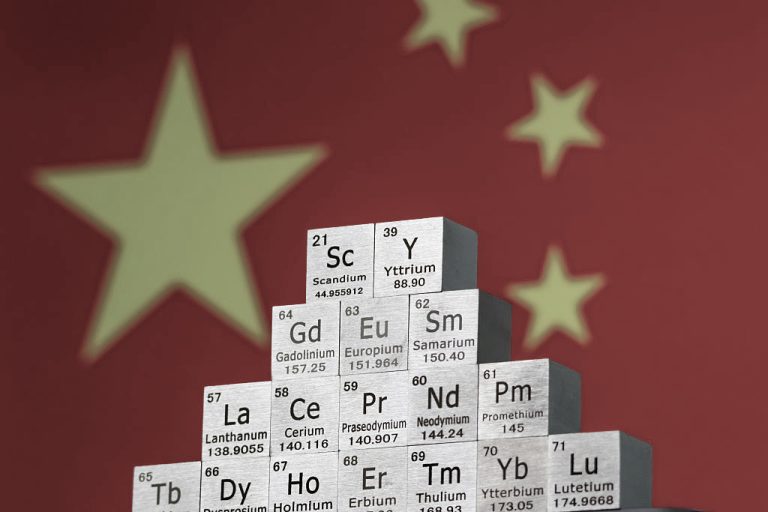
Seventeen rare earth elements, found and mined in China, are vital components of a number of products ranging from electric vehicles to aircraft engines and military radars.
On Thursday, Oct. 9, Beijing, which already tightly controlled its rare earth exports, restricted the export of an additional five new elements, bringing the number of restrictions up to 12.
The communist country has also limited the exports of a number of pieces of equipment and material used to extract and refine rare earths, processes where China leads the world.
Last April a round of controls by China resulted in a shortage of rare earth magnets which led to a number of car plants around the world suspending operations, Reuters reported.
Communist authorities said it would facilitate license approvals, but that it would reject applications related to defense and would closely scrutinize exports related to advanced semiconductors and Artificial Intelligence (AI).
In recent years, Washington has imposed similar restrictions on foreign semiconductor firms, barring them from selling chips to China if those chips were made with U.S. technology.
It’s unclear how China will be able to enforce its export controls. Chinese law imposes penalties from fines to imprisonment for violating export controls, though prosecuting foreign companies would be challenging.
Foreign rare earth companies that depend on Chinese materials or equipment risk losing access to Chinese suppliers if they violate the rules. That threat is expected to accelerate ongoing efforts in the U.S. and Europe to diversify supply chains away from China.