During former President Donald Trump’s second term, the U.S.–China trade war has reignited globally. Trump’s negotiation team is intensifying talks with Beijing to forge a new trade deal that would ease tariffs and technical barriers and bring stability to markets. Surprisingly, the loudest caution has come from America’s business elite.
The U.S. Chamber of Commerce, the nation’s largest business lobbying group, urged both “sobriety” and “strength” in negotiations with China. According to The Wall Street Journal, the Chamber made it clear it does not support full economic decoupling, warning it would bring “huge, unbearable costs and painful consequences.”
In a submission to the U.S. Trade Representative (USTR), the Chamber argued for a “more balanced, sustainable” bilateral framework. The document claims China has systematically breached its WTO commitments over the last 25 years, replacing promised market reforms with aggressive industrial policies, forced technology transfers, and opaque security laws designed to tilt competition in China’s favor.
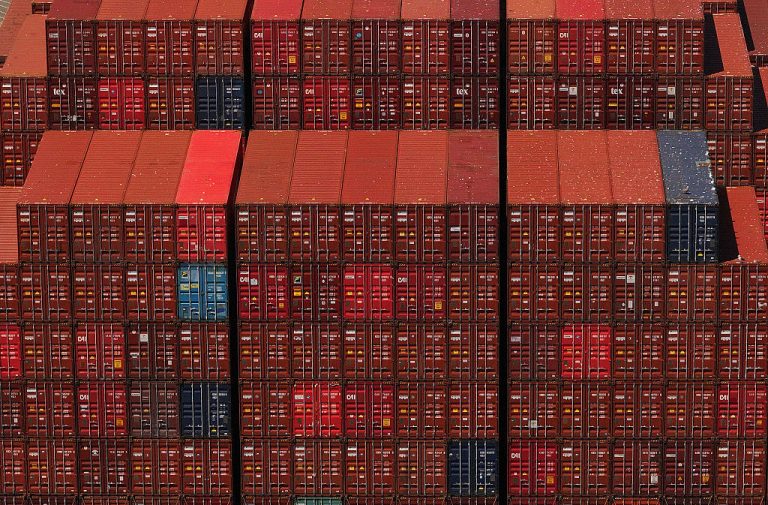
From steel and solar panels to electric vehicles and semiconductors, the report says China’s state-subsidized industries are generating massive overcapacity. These goods flood domestic markets and are exported cheaply, distorting global supply chains and displacing competitors from Southeast Asia to Europe.
The report also calls out internal procurement rules, including “Document 79” and “Notice 551,” which it alleges foster a “Delete America” ethos—excluding U.S. goods by design. One regulation grants a 20 percent price advantage to Chinese products in government bids, a move that threatens U.S. exports in medical technology, semiconductors, and other high-tech sectors.
Success
You are now signed up for our newsletter
Success
Check your email to complete sign up
Business sector’s “quick win” strategy: Agriculture to rare earths
To rebuild trust, the Chamber proposes a phased approach. First, it suggests lifting retaliatory tariffs on U.S. crops like soybeans and corn. That step could relieve pressure on farmers in the Midwest, bolster China’s food security, and signal Beijing’s willingness to de-escalate. China currently taxes U.S. agricultural goods at 25 percent, cutting exports by about 30 percent. The Chamber views lifting those tariffs as a low-cost, high-yield opening move.
Next, the Chamber presses for long-term, predictable agreements on exports of rare earths and critical minerals. Short-term permits—such as six-month licenses—have become bargaining chips that destabilize U.S. supply chains. The Wall Street Journal reported that this uncertainty already alarms industries in auto, telecom, energy, and defense. A stable, multiyear deal would help secure U.S. competitiveness in EV batteries and semiconductor production.
The Chamber further insists that any agreement must include meaningful protections for American innovation—stronger IP enforcement, transparency in China’s patent system, and the removal of the “Delete America” procurement bias. These reforms, the Chamber says, are essential for restoring fair access for U.S. tech and healthcare firms in Chinese markets.
Beijing under pressure: Kneel and sign or resist?
Commentators now widely assert that Beijing’s window for making concessions is closing. Jiang Feng draws parallels between the 2025 trade war and the 2019 conflict, citing six levers Trump holds—tariffs, supply chain reshaping, tech blocks, allied alignments, investment scrutiny, and financial pressure. Within months, Trump signed over 80 executive orders—many directed at China.
Jiang claims insider leaks from the June 28 agreement show five major Chinese concessions: tariff relief on agricultural goods, rare earth export liberalization, IP reform pledges, subsidy cuts, and a 90-day compliance period. “The CCP has already knelt,” Jiang says, though it won’t say so. If Beijing resists further moves, he forecasts tariffs could jump to 245 percent, triggering real estate collapse, soaring joblessness, capital flight, and reserve losses.
Wen Zhao frames the dispute as a global restructuring, not just bilateral. He views Trump’s decision to suspend tariffs for all countries except China as evidence Xi miscalculated. Wen warns Beijing’s retaliatory energy tariffs will backfire and precipitate a global economic downturn. He forecasts a 20 percent drop in exports, stock market collapse, and supply chains shifting to Southeast Asia. Wen bluntly asks: “Who knelt? Beijing.” Taiwan, in his view, is Trump’s hidden card to force concessions over rare earths and chips.
Wu Jianmin warns of China’s internal vulnerabilities. He says Xi’s confrontational posture may depress growth below 2 percent. He sees Beijing’s short-term fixes—like six-month rare earth permits—as mere band‑aids. If the conflict escalates into investment warfare, Wu says we’ll see capital flight, military discontent, backlash against anti-corruption efforts, and deep economic stress. Without major concessions, he warns Beijing may be forced into a full deal by year’s end—effectively admitting violation of WTO rules.
What lies ahead: Turning point or new cold war?
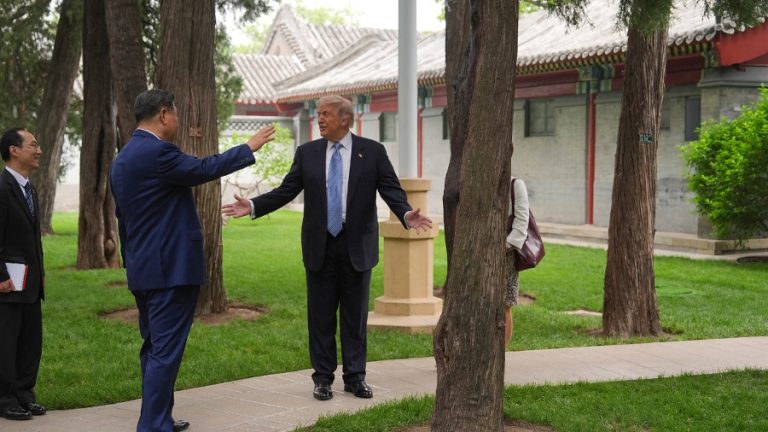
Trump’s team has already held three phone calls with Xi, most recently discussing Taiwan and semiconductor exports. Reports suggest a summit may be on the horizon, with Taiwan potentially becoming a U.S. bargaining chip. The Chamber supports a “quick win” approach but warns against allowing negotiations to slip into a “new cold war.”
As this conflict unfolds, the stakes go beyond trade—they involve geopolitics and global order. Whether Beijing recalibrates or digs in may become clear in the coming months.