By Li Jingyao, Vision Times
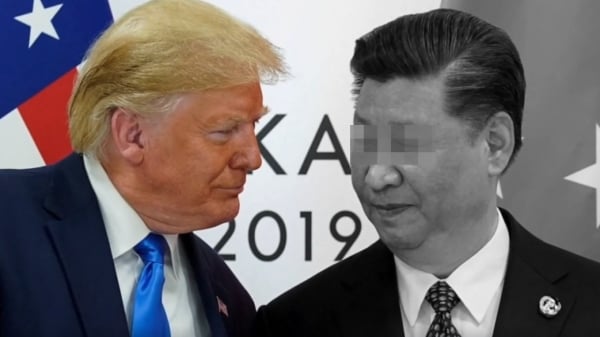
As China tightens restrictions on rare earth exports, U.S. President Donald Trump hit back with a 100 percent tariff on Chinese imports. But on Oct. 12, Trump struck an unexpectedly personal tone, saying he believed Chinese leader Xi Jinping was merely “in a bad mood” and that he did not wish to see China fall into recession.
Analysts, however, say Trump’s remark reveals far more than diplomacy. They argue that the rare earth ban reflects a widening split within the top echelons of the Chinese Communist Party (CCP) — and that Xi’s unpredictable behavior may be a symptom of a deepening power struggle inside Zhongnanhai. Some even suggest Xi is deliberately provoking instability ahead of the Fourth Plenary Session in a last-ditch effort to consolidate power and remain at the helm.
RELATED: Faking the 14th Five-Year Plan: Xi Jinping’s Last-Ditch Struggle Ahead of China’s Fourth Plenum
China’s rare earth ban sparks global outcry — and Trump’s fury
On Oct. 9, the CCP announced sweeping controls on rare earth exports, expanding restrictions to include advanced materials, manufacturing equipment, and five heavy rare earth elements such as holmium. It also targeted lithium battery components and synthetic graphite anodes — key ingredients in the global clean-energy supply chain.
Success
You are now signed up for our newsletter
Success
Check your email to complete sign up
Simultaneously, Beijing added two Western firms — Dedrone (owned by Axon) and TechInsights of Canada — to its “Unreliable Entities List.” The move cited their alleged cooperation with Taiwan’s defense industry and their “facilitation of foreign government pressure on Chinese firms.”
The decision jolted Western markets. The U.S., heavily reliant on Chinese rare earths, responded swiftly. On Oct. 10, Trump condemned Beijing for “hijacking the world,” calling the act “unprecedented and hostile.” In retaliation, Washington announced plans to double tariffs on Chinese goods, effective no later than Nov. 1.
When the House Foreign Affairs Committee reposted Trump’s statement on X (formerly known as Twitter), it added: “Xi is playing with fire and burning himself. President Trump has always been sincere about negotiating. We want trade parity, not dominance. America will not let China hold global supply chains hostage.”
Factional divides within the CCP
Commentator Tang Jingyuan said the rare earth clampdown exposes a split at the very top of the CCP.
One camp, he noted, favors reconciliation with the U.S., hoping to ease tensions through compromise. The other advocates confrontation, even at economic cost — a classic “good cop / bad cop” strategy in CCP politics. Tang outlined three possible scenarios:
- Xi himself is playing both roles by alternating between conciliatory and combative positions.
- The Party elders act as moderates, while Xi defies them with hardline moves.
- The elders orchestrate both sides, letting Xi take the blame while they reap the benefit.
Tang favors the second scenario, suggesting Xi and his loyalists are sowing chaos before the Fourth Plenum, hoping to exploit disorder and reclaim dominance. Despite weakening influence, Xi still commands loyal operatives within key ministries — enough to disrupt policymaking.
RELATED: Trump Warns of ‘Hostile’ Chinese Trade Move on Rare Earths, Threatens Retaliation
Unusual moves ahead of the Fourth Plenum
Commentator Yang Wei observed that Zhongnanhai typically seeks stability before major political meetings. Yet this time, Beijing’s aggressive foreign policy is defying convention.
“Something very strange is happening in China!” Trump pointed out on Truth Social. Yang speculates that the timing of the export ban may be part of a larger internal gambit. If leadership changes are imminent, such dramatic actions could serve as bargaining chips in post-Plenum negotiations with Washington — or as sabotage by rival factions seeking to undermine Xi.
“Whether it’s a gamble or a trap,” Yang wrote, “it’s profoundly suspicious.”
Similarly, analyst Zhou Xiaohui called the confrontation with the U.S. a “red flag” ahead of the Plenum. He suggested Xi’s faltering faction might be acting out of desperation, provoking Washington to pressure Party elders into retaining Xi’s titles for “stability.” Others, he added, may simply miscalculate, clinging to the outdated belief that “fight and negotiate” can still yield concessions from the U.S.
A diagnosis, not a diplomatic slip
When Trump posted on Truth Social that Xi was “in a bad mood” and “doesn’t want his country to fall into depression,” many saw it as an offhand comment. But Chinese analysts viewed it as a calculated act of psychological warfare. Commentator XiaoShuoJia said Trump’s phrasing sent “seismic shockwaves through Zhongnanhai.”
“It was not casual,” Xiao wrote. “It was a diagnosis — a public declaration that Xi is politically and psychologically unstable.”
According to Xiao, Trump’s familiarity with Xi — forged through more than 20 direct exchanges during his presidency — lends weight to his words. “When a dictator loses internal control,” Xiao said, “his decisions become emotional and erratic. Trump is signaling that Xi is no longer a stable adversary, but a man unraveling under pressure.”
Bypassing the Politburo
XiaoShuoJia also noted that Xi reportedly bypassed normal procedure in issuing the rare earth ban. The decision should have been reviewed by both the State Council Executive Committee and the Politburo Standing Committee.
Instead, Xi allegedly ordered it unilaterally, informing Premier Li Qiang, Executive Vice Premier Ding Xuexiang, and Party Secretary Cai Qi only after the fact. The move, Xiao argued, underscores Xi’s isolation and impulsivity — a leader acting from emotion rather than strategy.
“It wasn’t a policy move,” Xiao said. “It was a reflex — a desperate reaction to internal enemies and collapsing authority.” He added that Trump’s comment served as a subtle warning: Washington sees the CCP’s internal fractures and will support stability over dictatorship.
“Once foreign leaders describe you as being ‘in a bad mood,’” Xiao concluded, “you’ve gone from feared adversary to pitied ruler.”
A new phase of decline
Multiple sources in Beijing told Xiao that Xi now rarely meets individual Politburo members, relying instead on intermediaries through the General Office — a sign of increasing emotional detachment and paranoia. “When foreign leaders publicly comment on a dictator’s mood,” Xiao wrote, “it’s not mockery. It’s a signal — that he has lost control.”
As the Fourth Plenum approaches, uncertainty looms over whether Xi will preside openly. Party elders are reportedly split: if Xi attends, he risks disruption; if he abstains, he cedes power. Trump’s remarks, Xiao said, serve both as an olive branch to reformist factions and a psychological blow to Xi’s inner circle.
“The rare earth battle is theater. ‘Xi is in a bad mood’ is the message,” Xiao noted, adding, “And the Fourth Plenum may be the final showdown of a ruler whose regime is collapsing under its own weight.”