By Li Muzi, Janet Huang, Vision Times
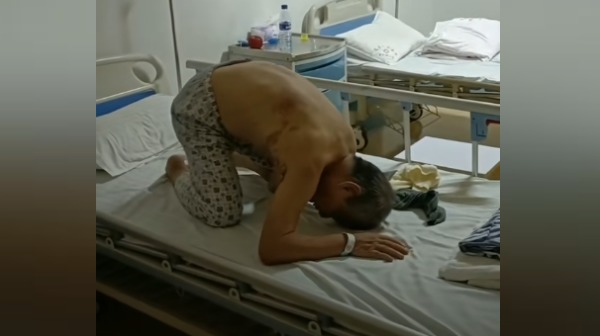
Known in China to cause pain and discomfort akin to a “snake coiling around the waist,” shingles — a painful viral infection — has reached its seasonal peak across the country. Hospitals are reportedly overwhelmed, with netizens describing long lines of patients suffering from excruciating pain. Some online users have even dubbed it an “undying cancer.”
According to a “Global Times” report on Oct. 12, shingles cases have risen sharply as temperatures cool and fall begins. The disease, caused by the varicella-zoster virus (the same virus that causes chickenpox), triggers painful blisters and nerve pain that can linger long after visible symptoms fade.
Doctors warn: Shingles now striking younger adults
Dr. Lin Zengmao, Associate Chief of Anesthesiology at Peking University First Hospital, said the highest incidence remains among people over 50, but cases among younger adults are growing. “Age and weakened immunity are still key risk factors,” said Dr. Lin, adding, “But due to fatigue, stress, and irregular sleep, we’re now seeing more young patients than before.”
He also noted that many describe the pain as “stabbing or burning.” Even after lesions heal, some patients develop persistent nerve pain — a complication known as “postherpetic neuralgia,” which can last for months, or even years after the initial blisters subside.
Success
You are now signed up for our newsletter
Success
Check your email to complete sign up
On Chinese social media, patients have shared accounts of their suffering. “If you visit the hospital, you’ll see — half the people on IV drips have shingles,” one Shanghai resident wrote. “Why are so many people getting it?” questioned another user in Beijing.
Many took to social media to describe their agony in visceral detail:
- “I can’t sleep because of the pain.”
- “It’s been 15 days — the scabs formed, but it still hurts terribly.”
- “It hit my elderly mother. She said it felt like fire crawling on her skin.”
- “The pain covers my entire back. It’s unbearable.”
Some users even reported suspected transmission or relapse:
- “My classmate had shingles. My mom visited her, and two days later, I got it too. The pain was excruciating.”
- “I’ve had it four times this year,” another user wrote. “It just keeps coming back.”
A long-term health burden
Earlier this year, Huashang Daily reported that an 80-year-old woman at Shaanxi Provincial People’s Hospital continued to experience severe pain even after her skin lesions had healed. Doctors say postherpetic neuralgia remains difficult to treat and may persist for years despite medication.
“Compared with previous years, outpatient visits for shingles have increased, and cases are becoming more complex,” said Dr. Lin. “Many patients first visit other departments, missing the golden window for treatment.”
The condition has also affected public figures. In June 2024, singer Na Ying appeared onstage wearing a half-face veil after shingles had reportedly spread to her eye. “It’s painful,” she admitted. “Why couldn’t it appear on my back instead of my face?”
Days earlier, fellow singer Cai Guoqing revealed he had developed acute shingles while filming a TV show, but continued performing despite experiencing severe pain. Their openness has helped bring national attention to a disease long dismissed as a minor rash.
Post-COVID surge among younger adults
Doctors report that shingles cases are now increasingly appearing in younger adults, particularly those who have recovered from COVID-19. According to state-run media “The Paper,” about 1.56 million new shingles cases occur each year among Chinese aged 50 and above, but younger patients are now appearing in unprecedented numbers.
A doctor from the China-Japan Friendship Hospital’s Pain Department confirmed the trend: “While the over-50 group is still the main demographic, we’re now seeing more patients in their 30s and 40s. It’s a shift that deserves close attention.”
In June 2023, China Newsweek reported that many young people developed shingles shortly after COVID-19 recovery, calling it “the undying cancer” of the post-pandemic era.
A potential vaccine link?
On Chinese social media, speculation has also emerged over a possible connection between shingles and COVID-19 vaccinations. A popular Douyin (known as a TikTok equivalent in China) user posted in September: “Why are shingles cases exploding this year? Patients are everywhere — and [they’re] getting younger! Could this be a post-COVID complication?”

Another viral post alleged that rising cases followed vaccination, claiming: “Side effects after the shot are often reclassified as unrelated illnesses.”
So far, no official studies have confirmed any correlation between vaccines and shingles, but such speculation continues to spread across Chinese platforms.
Doctors urge early treatment and rest
Medical experts emphasize that shingles is caused by reactivation of the varicella-zoster virus, which remains dormant in the body following childhood chickenpox. While it is not generally contagious, people who have never had chickenpox can still contract it through direct contact with blisters or by sharing garments with infected individuals.
Doctors urge the public to maintain healthy routines, reduce stress, and seek treatment early.
“This isn’t a new disease,” said Dr. Lin. “But the number of cases, especially among younger patients, is a warning sign.”