By Lin Meng, Vision Times
Beijing’s attempt to weaponize its dominance in rare-earth minerals may have backfired, strengthening Washington’s resolve to achieve resource independence and accelerate industrial realignment.
According to a recent analysis by Miquel Vila, Executive Director of the Catalonia Global Institute and political adviser on international affairs, published by the U.K. outlet UnHerd, Beijing has escalated its economic confrontation with Washington by tightening export controls on rare-earth minerals and the technologies used to refine them.
Within hours, U.S. President Donald Trump denounced the move as “economic aggression,” announcing 100 percent tariffs on a broad range of Chinese goods and warning of even harsher retaliatory measures if Beijing failed to seek a compromise.
RELATED: US-China Trade Tensions Escalate: Port Fees and Rare Earth Controls Signal Strategic Shift
Success
You are now signed up for our newsletter
Success
Check your email to complete sign up
Though both sides now appear to be seeking de-escalation, analysts believe the Chinese government may have overplayed its hand. Much like U.S. chip export restrictions that pushed Beijing to pursue semiconductor self-reliance, China’s rare-earth measures could now drive Washington to secure its own mineral supply chains at a faster pace. Even if new negotiations achieve temporary relief, underlying strategic tensions are unlikely to fade.
A tit-for-tat over technology controls
Beijing’s move was not spontaneous; it was retaliatory, experts note. Earlier in the week, the U.S. Commerce Department quietly expanded semiconductor export restrictions under the so-called “50 percent rule,” extending bans to any company in which a blacklisted Chinese entity holds a majority stake.
In practice, that decision immediately subjected hundreds of Chinese subsidiaries to U.S. export controls. Washington also raised port fees for shipping firms tied to Chinese state enterprises — officially described as “regulatory clarifications.” Beijing, however, viewed these as violations of the informal truce reached in Madrid this June, which stipulated that neither side would escalate during ongoing talks.
This time, rather than retaliate with tariffs, China struck at a more strategic choke point: Rare earths.
China’s iron grip on rare-earth processing
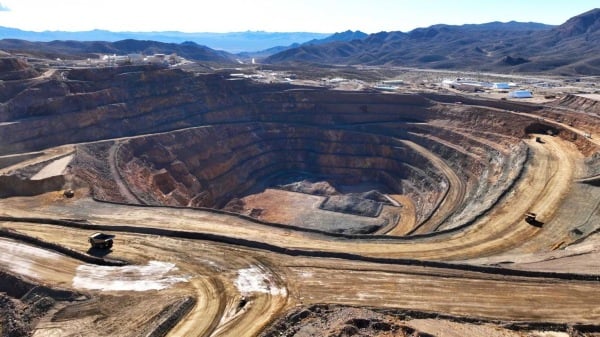
China currently controls about 87 percent of the world’s rare-earth refining capacity. These minerals — and the permanent magnets derived from them — are essential for everything from F-35 fighter jets and Tomahawk missiles to satellites, quantum computing systems, electric vehicles, and renewable-energy infrastructure.
Yet this dominance may prove a strategic misstep. Despite their name, rare earth elements are not truly rare; they are dispersed across the United States, Australia, Brazil, Vietnam, and Sweden. What China monopolizes is the processing stage, secured since the 1990s through state-backed industrial policy that tolerated pollution and undercut global competitors with low prices.
By turning this economic edge into a geopolitical weapon, Beijing may have handed Washington both the political and economic justification to do what it has long postponed — rebuild domestic refining and magnet-manufacturing capacity.
Rebuilding in the West
The reaction will not be immediate, but it is already under way. The Pentagon, invoking the Defense Production Act, has funded MP Materials to restart heavy-rare-earth refining in California and magnet production in Texas. Meanwhile, Australia’s Lynas Corporation is constructing a U.S.-funded refinery in Texas, and Japan, South Korea, and the United States are planning joint ventures to strengthen non-Chinese supply chains.
Historically, Beijing wagered that Western governments were too slow and bureaucratic to mount a serious industrial counter-strategy—a bet that largely held true. But China may have underestimated the agility of private enterprise. U.S. manufacturers reliant on rare earths are already diversifying suppliers and investing in new refining capabilities independent of Beijing’s reach.
A miscalculation?
China’s export-control threats have sent an unmistakable message to global firms: dependence on Chinese supply chains is a liability. Even if temporary deals ease tensions, they cannot erase the risk of future disruptions.
Beijing’s goal was to tighten leverage and pressure President Trump into concessions. Instead, the move could galvanize a long-term U.S. campaign for resource self-sufficiency, transforming supply-chain independence from a policy preference into a national imperative.
Editorial Note: Views expressed in this article are the opinions of the author and do not necessarily reflect the views of Vision Times.