By Jin Yan, Vision Times
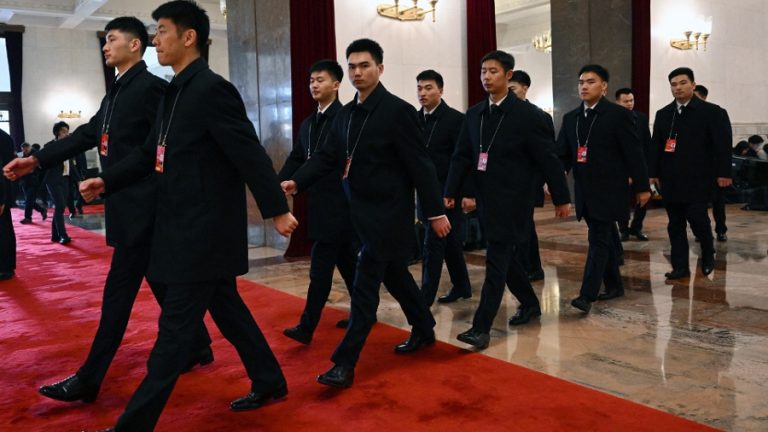
As the Chinese Communist Party (CCP) wraps up its long-delayed Fourth Plenary Session on Oct. 24, the regime released an ambitious economic roadmap in its “Recommendations for the 15th Five-Year Plan and 2035 Long-Term Goals.” State media hailed the document as a sweeping blueprint for “high-quality development” and “Chinese-style modernization.”
But according to independent Chinese commentators, that optimism is little more than a “political illusion.” Analysts warn that Beijing’s economic model is buckling under structural pressures, including deflation, industrial overcapacity, a collapsing real estate market, weak consumer spending, and increased isolation on the world stage — all of which threaten to derail the CCP’s economic agenda.
Political observers Dr. Cheng Xiaonong, Lao Deng, and Jiang Feng argue that the CCP’s report conceals more than it reveals — and that the gap between rhetoric and reality has never been wider.
Economic paralysis
According to state mouthpiece “Xinhua News Agency,” the plenary focused largely on accelerating the transition to a new “dual-circulation” growth model — driven primarily by domestic demand while integrating with global markets. The plan called for breakthroughs in science and technology, deeper market reforms, expanding consumer spending, and bolstering national security.
Success
You are now signed up for our newsletter
Success
Check your email to complete sign up
RELATED: Faking the 14th Five-Year Plan: Xi Jinping’s Last-Ditch Struggle Ahead of China’s Fourth Plenum
Official data claimed that China’s GDP grew 5.2 percent year-over-year in the first three quarters of 2025, slightly above its 5 percent annual target — a sign, Xinhua said, of “resilient growth.” Yet beneath the surface, structural decline looms.
Commentator Lao Deng ridiculed the state’s “over-fulfilled” GDP data as “a number that must be completed, no matter reality.” He said the regime’s slogans hide an economy that no longer obeys central directives. Lao identified four major crises currently plaguing China’s economy:
- Deflationary spiral: The National Bureau of Statistics reported persistent price stagnation through 2025. The Purchasing Managers’ Index (PMI) remained below 50 for six straight months — a contraction signal across manufacturing and services. “Falling prices crush corporate profits, discourage investment, and push households toward saving, not spending,” he said.
- Overcapacity and property collapse: Industrial overproduction has worsened while the real estate sector continues to unravel further. Major developers such as Evergrande and Country Garden are still defaulting, dragging down local finances and banks in the process.
- Weak consumption and flailing job market: Consumer confidence is evaporating. “Youth unemployment officially disappeared from the data, but everyone knows it’s above 20 percent,” he noted.
- Trade isolation: On Oct 10, U.S. President Donald Trump announced 100 percent tariffs on Chinese imports beginning Nov. 1, effectively pushing U.S.-China trade toward full decoupling. Meanwhile, the Russia–Ukraine war has crippled China–Europe rail exports, and unrest in the Middle East has doubled shipping costs as cargo routes detour around Africa’s “Cape of Good Hope,” a longer and more costly alternative to the Suez Canal.
Despite rate cuts and stimulus measures, Lao said the central bank’s easing policies have failed to lift overall growth. “China’s economic paralysis is structural,” he warned, adding, “There’s no short-term fix — and Beijing has no political will for real reform.”
Cold War economics
In a separate livestream, Dr. Cheng Xiaonong argued that China’s economy “no longer belongs to Zhongnanhai” but to what he likened to a “new Cold War” with the U.S. He cited three core dynamics, including:
- Tariff shock: Every 10 percent tariff increase triggers a visible contraction. “Exports to the U.S. have fallen sharply,” Cheng said, adding that even re-exports through Vietnam are slowing.
- Global supply chain upheaval: Ongoing wars and blockades have raised freight costs and isolated China logistically.
- Excess capacity crisis: “China’s overreliance on investment and exports is now its biggest weakness,” noted Dr. Cheng. “Global demand is shrinking, and Beijing has no way to absorb its surplus output.”
Cheng believes Xi privately acknowledges parts of this reality, but blames “America’s Cold War mentality” instead of his own mismanagement. “The future is bleak,” he said. “China’s recovery depends not on Zhongnanhai, but on people waking up from Party propaganda.”
Meanwhile, commentator Jiang Feng framed the crisis as political rather than purely economic. He said the rumored return of Hu Chunhua to oversee the economy may be part of a desperate “hostage exchange” within the Party. “Xi Jinping is offloading the hot potato of fiscal and employment policy to Hu,” said Jiang, “but forbidding him to touch foreign affairs or technology — the core of Xi’s ideological control.”
RELATED: Are Hu Chunhua and Wang Yang Poised for a Comeback as the CCP’s Fourth Plenum Nears?
He also described state media praise for “collective wisdom” as a coded message — a subtle sign of a power transition in progress. “Propaganda that flatters the leader while hinting at continuity is how the system prepares for succession,” Jiang added.
Dr. Cheng revealed in an Oct. 23 Taipei broadcast that the real focus of the Fourth Plenum was not economic planning but Xi Jinping’s secret internal report, titled “On the Current International Situation.” He said the report blames U.S. hostility for China’s downturn while absolving Xi of responsibility. “Xi’s strategy,” said Cheng, adding, “is scapegoating — purging military and civilian officials such as He Weidong and Lin Xiangyang as ‘incompetent generals.’”
Meanwhile, Lao Deng claimed military insiders pushed unsuccessfully to remove Xi as Chairman of the Central Military Commission, forcing him to instead cede partial authority to Zhang Youxia. Jiang Feng added that rumored promotions of Hu Haifeng and Hu Chunhua signal “backroom deals” aimed at stabilizing the regime.
A fragile future
International media, including “BBC” and “CNN,” noted that the mass purge of nine top generals has shaken morale inside the People’s Liberation Army. “The Fourth Plenum exposed both economic decay and political fragmentation,” said Jiang.
RELATED: Shock in Beijing: Nine Generals Purged Before the Fourth Plenum
Despite the upheavals, all three analysts agree that China’s “official show of optimism” cannot mask a deep structural and political crisis. GDP “growth” conceals deflation and stagnation, while propaganda hides internal dissent. As Dr. Cheng put it, “The façade of modernization is collapsing under its own contradictions.”
With another Party Congress is expected as early as next year, observers say Xi’s grip on power — and China’s economic future — hang in the balance.
Editorial note: Views expressed in this article are the opinions of the author and do not necessarily reflect the views of Vision Times.