By Chen Jing, Vision Times
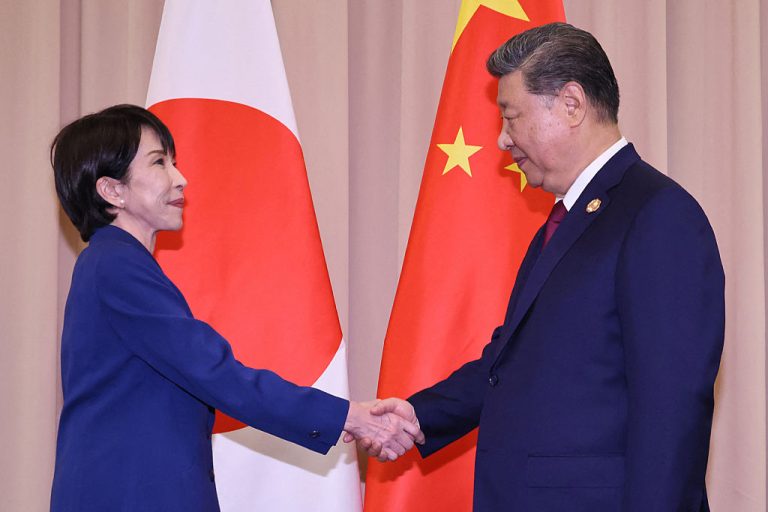
At the 2025 APEC Summit in Busan, a brief but tense encounter between Japanese Prime Minister Sanae Takaichi and Chinese leader Xi Jinping unfolded. The bilateral meeting, which lasted less than 30 minutes, was described by Japanese media as “a dialogue of ice and fire.”
Within just two minutes of the conversation between the two leaders, Takaichi was reportedly heard launching into a series of pointed remarks, confronting Beijing head-on over nearly every sensitive issue dividing the two nations. Observers called it “a scene unseen in modern Japan–China diplomacy.”
According to reports by Japan’s NHK and Bloomberg, Takaichi dispensed with diplomatic pleasantries, beginning with the statement that “there are clear differences” of opinion between Tokyo and Beijing. She then raised, in rapid succession, a number of politically sensitive issues concerning the Chinese Communist Party (CCP) and Sino-Japanese relations:
- The Senkaku Islands and East China Sea tensions,
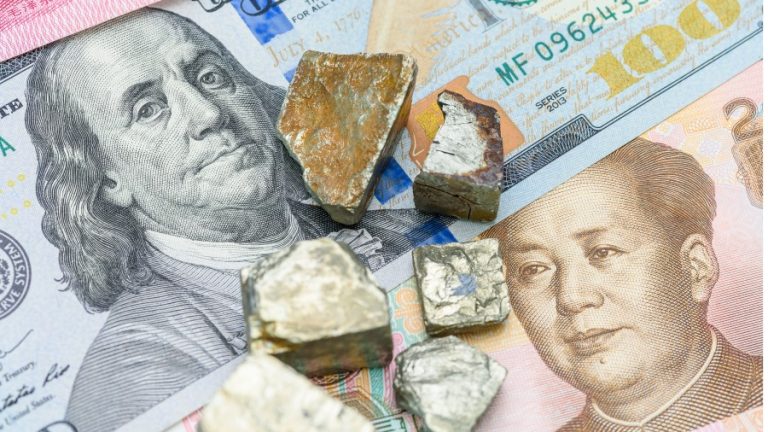
- China’s restrictions on rare earth exports,
- The detention of Japanese citizens in China and the safety of Japanese nationals,
- Beijing’s violations of international law in the South China Sea,
- The erosion of freedom and rule of law in Hong Kong,
- Human rights abuses in Xinjiang,
- The unresolved issue of North Korea’s abductions of Japanese citizens.
Xi’s reaction
When Takaichi brought up the situation in Xinjiang, Xi reportedly left the room briefly to use the restroom. Though yet to be verified, the claim went viral across Japanese social media, where users joked that “Xi was scared stiff.”
Success
You are now signed up for our newsletter
Success
Check your email to complete sign up
For years now, reports of mass internment camps, forced labor, ethnic cleansing, and the systematic persecution of Muslim Uyghurs in China’s Xinjiang region have drawn international condemnation by human rights and political activists.
RELATED: USCIRF Hearing Urges Accountability for CCP’s Religious Persecution and Transnational Repression
Footage aired by NHK showed both leaders looking stoic as they shook hands before the meeting — a stark contrast to Takaichi’s warm and animated exchange with U.S. President Donald Trump and other leaders days earlier.

Commentators described the atmosphere as cold, deliberate, and deeply symbolic.
“Bloomberg” noted that Beijing is still sizing up Japan’s new prime minister, but Xi’s tense expression and the meeting’s brevity suggested that the process is not going smoothly.
After the meeting, Takaichi was reportedly heard telling reporters: “I made it clear that maintaining peace and stability across the Taiwan Strait is essential for regional security.”
It was the first time she had directly mentioned Taiwan in talks with the Chinese top leadership since taking office, in a move analysts described as a “quiet yet powerful signal” of Tokyo’s stance.
Communist China claims Taiwan as a breakaway province that must be “reunified” with the mainland by any means necessary. Taiwan is officially known as the Republic of China (ROC), which used to govern all of China prior to being pushed off the mainland by the communist rebels led by Mao Zedong in 1949.
‘The true spirit of the samurai’
In just one encounter, Takaichi defined a new doctrine: No retreat, no ambiguity. She neither sought confrontation nor smiled for the cameras, but she drew unmistakable lines that drew the praise of several commentators. Some Japanese analysts called it “the true spirit of the samurai.”
“This is what Japanese diplomacy should look like — meeting the other side’s gaze and telling the truth,”
wrote one widely-shared comment on social media. Xi, by comparison, appeared to look uneasy, analysts noted. Apart from a brief remark expressing a desire to “put bilateral relations back on track,” he offered few specifics during the meeting.
Chinese state media covered the meeting in unusually muted language, using formulaic phrases such as “candid exchange.” Analysts said the tone reflected Beijing’s dilemma: It seeks to repair relations with Japan amid intensifying U.S.–China rivalry, yet cannot afford to appear weak at home, particularly when faced with a female prime minister challenging Xi directly.
As one commentator put it: “The restroom episode, whether literal or metaphorical, speaks volumes; Beijing fears those who don’t fear it.”
Calm, firm, and unyielding
Strategically, Takaichi’s assertive diplomacy marks Japan’s bid to reclaim leadership in the Asia–Pacific order. For over a decade, Tokyo has maintained a cautious balance between Washington and Beijing, often criticized as “strategic ambiguity” by political analysts.
Now, amid intensifying U.S.–China competition and mounting cross-Strait tensions, Japan appears to be shedding its restraint. Takaichi’s directness signals a pivot toward principled diplomacy — one that prioritizes democratic values over economic expedience and aligns Tokyo more closely with its allies in the free world.
Analysts believe Japan is positioning itself as a central pillar of the democratic alliance, capable of shaping Asia’s security and diplomatic agenda for the next decade. It was not just an act of personal resolve from Japan’s first female prime minister, but a declaration that Japan will no longer remain silent in the face of authoritarian power.
“When Xi sought to command respect through power, Takaichi answered with composure and truth,” wrote one user in response to the exchange.
Editorial note: Views expressed in this article are the opinions of the author and do not necessarily reflect the views of Vision Times.