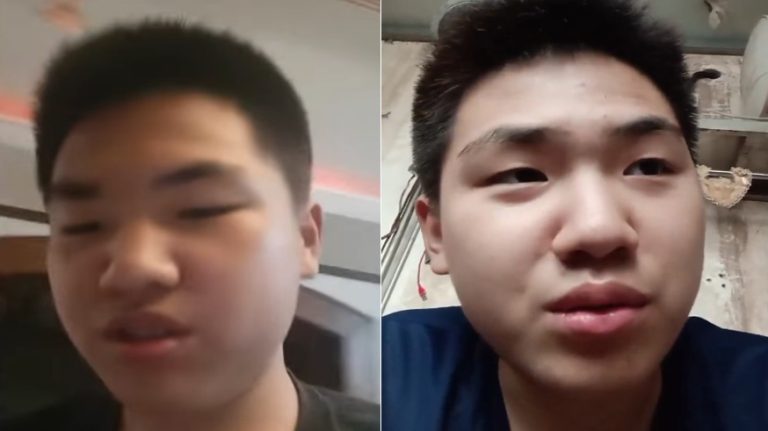
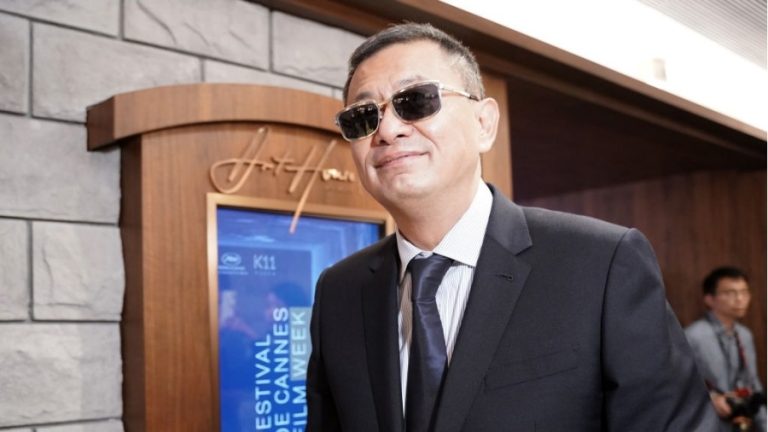
Acclaimed Hong Kong director Wong Kar Wai has been heard in a leaked recording criticizing the Chinese Communist Party’s (CCP) handling of the Wuhan novel coronavirus outbreak in late 2019, linking it to what he described as the chaos of “a greedy one-party state.” The audio clip, uploaded to Weibo on Nov. 8, 2025, was swiftly removed by the regime’s internet censors.
In the leaked discussion, Wong and his collaborators — co-director Li Shuang and screenwriter Qin Wen — sharply criticized Beijing’s response.
Wong reportedly remarked, “Only in a greedy one-party state could things get this chaotic.” Others in the conversation complained that the Party “has no compassion” and “only knows how to exploit,” while comparing China unfavorably with democratic nations.
These words — rare in China’s heavily censored entertainment world — immediately triggered outrage among nationalist internet users, who accused Wong of “insulting the Party.” Some demanded that his TV drama Blossoms Shanghai (《繁花》, which Wong directed) be pulled from streaming platforms and that his Magnolia Award be revoked. Weibo deleted the recording within hours, but it had already spread widely across the internet, sparking debate about censorship and political control in Chinese culture.
From script credit dispute to political issue
The controversy originated from a copyright dispute. Young screenwriter Cheng Junnian (known online as “Gu Er”; 古二) accused the Blossoms production team of denying him due credit. Cheng claimed he co-wrote major storylines — including those of Hu Ge’s “A Bao” and Tang Yan’s “Miss Wang” — but was only listed as a “preliminary editor.” When Blossoms won Best Screenplay at the 29th Shanghai TV Festival, credited solely to Qin Wen, Cheng felt betrayed.
Success
You are now signed up for our newsletter
Success
Check your email to complete sign up
After failed negotiations, Cheng retaliated by leaking over an hour of private production recordings to social media. Initially perceived as a standard screenwriting dispute, the leaks soon evolved into a political and moral scandal, as they revealed not only private gossip about Chinese celebrities but also politically sensitive conversations.
In the recordings, Wong and others are heard mocking well-known actors, calling some “pretentious” and others “hard to deal with.” More explosive were claims that comedian Jin Jing was cut from the show for refusing to comply with “unspoken rules,” and that actresses Ni Ni and Liu Shishi had clashed over screen time during another production.
Cheng also described Wong as “harsh and arrogant,” further tarnishing the director’s image. These candid remarks shattered the polished public image of many Chinese film industry figures, feeding public fascination with the hidden hierarchies and abuses of the entertainment world.
Politics and privilege
Another major revelation concerned screenwriter Qin Wen, who, along with colleague Xu Siyao, allegedly assaulted a police officer in Shanghai in 2024 but faced no punishment. In the leaked recording, Qin bragged that she “punched a cop in the back” and was released within thirty minutes after her husband, veteran director Wang Guangli, made a single phone call to the local police chief.
The incident outraged the public, symbolizing the entertainment industry’s culture of privilege and impunity. Even Wong’s mild response — “Don’t make it too public; maybe you can use it in a script” — was criticized as revealing a troubling indifference to the law. Chinese state media later condemned Qin’s actions, calling them “an insult to the rule of law.”
The scandal underscores several deep-rooted issues in China’s entertainment and political systems:
- The Political Red Line – Wong’s comments on the CCP’s “one-party rule” directly challenge the regime’s political legitimacy. In China’s tightly controlled environment, any public criticism of the Party risks severe punishment, including blacklisting, censorship, or even criminal investigation.
- Copyright and Labor Exploitation – Cheng’s case highlights the chronic lack of intellectual property protection for writers in China’s film industry, where junior creators often lose credit or compensation once a project becomes successful.
- Abuse of Privilege and Weak Rule of Law – The “assault on police” incident exposed how connections and influence can override legal accountability, deepening public resentment toward the privileged elite.
- The Power of Social Media – Platforms like Weibo and Xiaohongshu gave Cheng a voice against institutional suppression, while fueling mass outrage. State censorship quickly intervened to limit discussion, but damage to reputations and to public trust was done.
As of now, Blossoms Shanghai and its production team remain under intense public scrutiny. Although the recordings have been scrubbed from Chinese platforms, they continue to circulate abroad. Observers note that even if the authorities refrain from directly punishing Wong, his professional future in mainland China will likely be affected.
By Yang Tianzi (楊天資)