By Zhang Ke, Vision Times
The practice of medical organ transplantation, when done ethically, is one of modern medicine’s most remarkable achievements. It relies on voluntary donation, transparent consent, and strict ethical oversight, all designed with one goal in mind: To preserve and extend life while honoring human dignity.
In legitimate medical systems, organ sources must be legal and publicly documented, with written consent from either the donor or their family. Every stage of the procedure is reviewed by regulatory bodies and ethics committees to ensure transparency and patient safety. Globally, the wait time for a compatible kidney typically ranges from three to five years.
RELATED: Hospitals in China Admit to Live Organ Harvesting of Falun Gong Practitioners
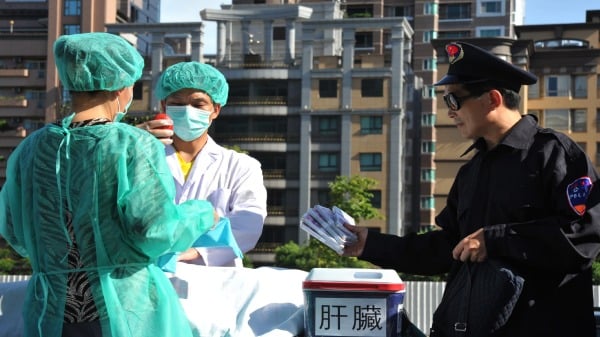
A state-run organ harvesting machine
But the Chinese Communist Party’s (CCP) system of “live organ harvesting” is something else entirely. Rather than respecting life, it involves removing organs from healthy, conscious human beings (often without anesthesia) to extract hearts, livers, kidneys, corneas, and more. The resulting organs are then sold for transplantation, profit, or research.
Success
You are now signed up for our newsletter
Success
Check your email to complete sign up
But the victims, who are being “dissected alive,” are not death-row prisoners or voluntary donors. They typically include:
- Falun Gong practitioners persecuted for their beliefs
- Political dissidents
- Uyghur detainees
- House-church Christians
- University and high school students abducted in secret
- And increasingly, even infants and toddlers
They are disappeared, dismembered, and cremated, leaving no trace. Their organs enter a lucrative shadow market; their identities are wiped out by design.
How the machinery was built
The timeline traces back to one crucial date:
June 10, 1999 — the CCP established the 610 Office, an extralegal security agency created to crush Falun Gong. Operating above the courts, police, and prosecutors, the 610 Office provided the political umbrella needed to carry out mass detentions, disappearances, and medical testing.
Simultaneously, public security agencies were granted new authority to obtain “medical resources” directly from detention centers, labor camps, and prisons. This authorization created a seamless, and untraceable, pipeline:
Arrest → Detention → Medical testing → Transfer → Organ extraction → Cremation
Because all steps occurred inside a single centralized power structure, the disappearance of the victim and the acquisition of the organ became nearly impossible to investigate.
This is why, after 2000, China’s organ transplant numbers suddenly exploded to an estimated 60,000–100,000 per year, with no corresponding increase in voluntary donors. The “donors” had no names, no legal records, and no families notified. Many relatives of detained Falun Gong practitioners still do not know where their loved ones went. Some received nothing but ashes.
A transplant match arrives in two weeks
Outside China, a patient may wait years for a matching heart or liver. Yet under CCP rule, hospitals routinely tell prospective recipients that suitable organs can be secured in one to two weeks. The implication is chilling: This means the match does not come from a willing donor, but from a living human being selected to be killed on demand. A person whose life is scheduled for execution.
Forced organ harvesting in China has become an industrialized state enterprise — a killing system powered by the mechanisms of government. This is not medical advancement; it is a national apparatus of extermination.
The atrocities exceed even those committed by the Nazis in scale and systemization; they’re akin to:
- A state-organized crime carried out under the name of the nation.
- The most brutal massacre in human history.
The CCP’s harvesting of organs from living victims is not simply an abuse of medical power; it is one of the most extensive and violent crimes against humanity ever documented.
For more evidence, the documentary “State Organs” provides additional testimony and comprehensive investigative findings.