President Trump has signed a new law directing the Department of Justice (DOJ) to release its investigative files on the late convicted pedophile Jeffrey Epstein. The DOJ now has 30 days to publish the documents in a fully “searchable and downloadable” format. The move marks a major turning point in the long-running Epstein scandal, but it remains unclear whether the release will expose the full truth or come with significant redactions and limitations.
The bill faced a rocky path. For months, Trump resisted releasing federal investigative files related to Jeffrey Epstein and held back large portions of the material. But growing pressure from Epstein’s victims, their attorneys, and grassroots Republican supporters ultimately pushed Trump to reverse course and support full disclosure.
The House took up the bill Tuesday morning and passed it within hours, delivering a stunning 427–1 vote. The only “no” came from Republican Rep. Clay Higgins of Louisiana, while five lawmakers abstained. The Senate quickly followed with its own approval.
This rare display of bipartisan unity underscores how the Epstein case has evolved from a legal scandal into a major national issue tied to power, corruption, and public trust. With overwhelming demand for transparency, lawmakers saw supporting the bill as both politically necessary and publicly expected.
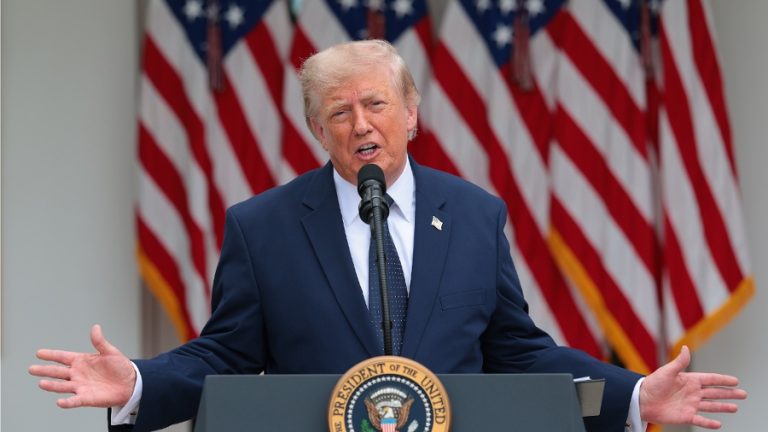
The bill was delivered to Trump Wednesday morning, and that evening he announced on Truth Social that he had signed it. Notably, there was no public signing ceremony—very different from Trump’s usual practice when signing major legislation. In his post, Trump not only announced the signing but also attacked Democrats he claimed had ties to Epstein, while boasting about his second-term achievements and referencing his two impeachment trials.
Success
You are now signed up for our newsletter
Success
Check your email to complete sign up
His remark—“Perhaps the truth about these Democrats and their relationship with Jeffrey Epstein will come out soon, because I just signed the bill to release the Epstein files!”—clearly framed the disclosure as a political “unmasking operation” aimed at opponents. It served both as a response to Republican grassroots pressure and as an attempt to turn a sensitive issue that could harm both parties into a political weapon against Democrats, reinforcing his anti-establishment image.
RELATED:
- Epstein Files to Be Made Public After Rare Bipartisan Vote
- Larry Summers Resigns From OpenAI Board Over Epstein Email Fallout
When will the Epstein files be released?
Under the law, the DOJ now has 30 days to release the Epstein-related materials in a “searchable and downloadable format.” This means the public will soon see the highly anticipated documents. However, the timeline is not absolute—the bill includes flexibility.
It explicitly allows the DOJ to withhold any documents that “could jeopardize an ongoing federal investigation or prosecution,” but such withholding must be “targeted and temporary.” This clause gives the DOJ legal grounds to delay the release of certain materials if necessary.
Beyond potential delays, the released files will almost certainly contain heavy redactions. This is not only to protect privacy but also due to the sensitive and legal nature of the case.
The bill states that the Attorney General may “withhold or redact” records containing victims’ names, medical records, or other personal information if releasing them would be “a clearly unwarranted invasion of personal privacy.” This is crucial in sexual-abuse cases to avoid re-victimization. Attorney Christine Dunn noted: “I’m glad the bill added clear language to strengthen victims’ privacy rights.”
In a batch of Epstein-related documents released last week by the House Oversight Committee, names and phone numbers were routinely blacked out to protect privacy—signaling how the large upcoming document release will likely be handled.
The DOJ previously disclosed that its Epstein investigative files include 300GB of data, containing a large amount of images and videos involving minors, as well as thousands of downloaded child-sexual-abuse videos and images. These extremely sensitive materials may also be restricted by grand jury secrecy rules, which the new law does not specifically address. Attorney General Pam Bondi said: “We will continue to act according to the law—maximizing transparency while protecting victims.” This sums up the DOJ’s challenge in balancing transparency with legal and privacy requirements.
As a result, the released files can be expected to contain extensive redactions, especially concerning victims’ identities, explicit acts, and leads tied to ongoing investigations.