On Tuesday, Nov. 18, the U.S. Congress overwhelmingly passed a bill in both the House and Senate requiring the disclosure of federal government-held “Epstein investigation materials,” and sent the legislation to President Donald J. Trump for signature.
The legislation moved quickly through Congress, ending a year-long dispute among lawmakers over whether to release the “Epstein files,” and was seen as a rare bipartisan consensus.
Under the bill, the Department of Justice must, within 30 days of enactment, hand over all “unclassified records, documents, communications, and investigative materials,” and to the greatest extent possible, provide any classified information related to the case.
In the House vote that day, the bill passed 427–1. Hours later, Senate Minority Leader Chuck Schumer immediately moved to send the bill to the White House, and no objections were raised. Schumer said, “The Senate passed this Epstein bill at the earliest opportunity after receiving the House version.”
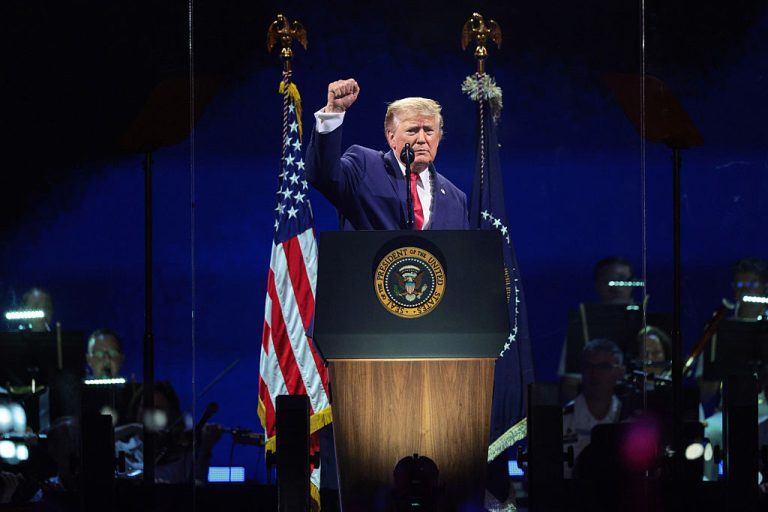
Trump posted on Truth Social that he “had no preference” regarding when the Senate passed the bill, writing: “Whether it passes tonight or later doesn’t matter. I just don’t want Republicans to take their eyes off all the victories we have achieved.”
Success
You are now signed up for our newsletter
Success
Check your email to complete sign up
The bill’s passage marked the end of months of internal debate in Congress. Trump had previously opposed the disclosure, even pressuring Republican lawmakers to delay the vote, but he suddenly changed his stance last weekend.
Trump wrote on Truth Social: “House Republicans should vote to release the Epstein files, because we have nothing to hide. It’s time to come out of this Democratic hoax created by radical left-wing maniacs.”
Debate over ‘innocent party protection’ continues
House Speaker Mike Johnson had urged the Senate to “amend” the bill to provide “appropriate protection for the innocent,” but this recommendation was not adopted.
The bill was introduced as a bipartisan effort by Representatives Thomas Massie and Ro Khanna. It also requires the Attorney General, Pam Bondi, to submit within 15 days of the President’s signature a list of government officials and other “politically sensitive individuals” related to Jeffrey Epstein.
House Majority Whip Tom Emmer told the New York Post that Republicans “let the facts speak for themselves and seek justice for the victims,” accusing Democrats of using Epstein’s victims as “political leverage against Trump and others.”
The sole opposing vote in the House came from Republican Clay Higgins, who stated on X (formerly Twitter) that the bill “had problems three months ago and still has problems.” He argued that, as currently written, it could expose and harm thousands of innocent people, including witnesses, alibi providers, and family members.
Higgins warned: “Turning over a massive amount of criminal investigation files to a ravenous media will only hurt the innocent.” He emphasized that the House Oversight Committee is conducting a full investigation and has already released over 60,000 pages of relevant material.
Trump said Monday that he is willing to sign the current version, but Johnson insisted the bill “contains dangerous flaws,” noting that releasing the files could harm innocent individuals’ privacy and potentially expose undercover law enforcement, informants, and federal agencies’ “confidential sources and methods.”
Senate Majority Leader John Thune said that with near-unanimous support in both chambers, the bill is unlikely to change further.
The forced discharge petition to bring the bill to a vote garnered the required 218 signatures, including four Republicans—Massie, Nancy Mace, Lauren Boebert, and Marjorie Taylor Greene—and all 214 House Democrats.
Some materials already public
Some Epstein-related materials have been released through the House Oversight Committee investigation, though many were redacted. Other documents come from federal prosecutions of Epstein and his co-conspirator Ghislaine Maxwell.
Johnson noted that the resolution does not “adequately protect victims’ privacy” and could disclose child sexual abuse material (CSAM), false allegations, and even expose law enforcement and confidential sources.
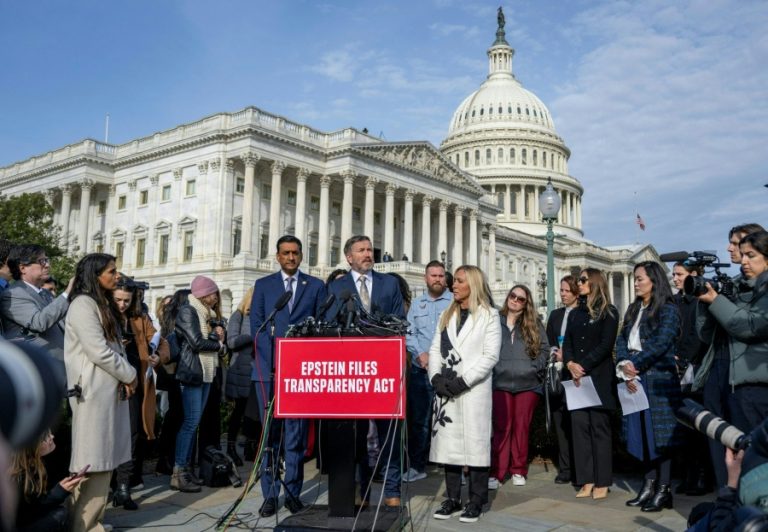
Earlier that day, Massie, Khanna, and Greene held a press conference with several Epstein victims, thanking Trump and government officials for pushing Republicans to accept the motion after months of rejection.
Both Trump and Johnson emphasized that several prominent Democrats, including former President Bill Clinton and former Treasury Secretary Larry Summers, had maintained “friendly relations” with Epstein. Trump last week ordered the Department of Justice to investigate these connections.
According to emails released by the Oversight Committee, Summers’ interactions with Epstein spanned more than a decade, continuing even after Epstein pleaded guilty in 2008 to soliciting underage girls for prostitution, up until shortly before Epstein’s 2019 arrest on sex trafficking charges.
Johnson stated that the Oversight Committee’s 65,000 released documents include Epstein’s flight logs, personal financial records, ledgers, daily schedules, and more—content not even required under the forced disclosure motion.
Democratic committee members also released three emails last Wednesday suggesting Trump may have been aware of Epstein’s sexual abuse of minors. However, the allegations involve deceased victim Virginia Giuffre, who never publicly accused Trump of wrongdoing.
Epstein was found dead on Aug. 10, 2019, in a Manhattan detention center, before facing trial. Official investigations ruled his death a suicide.
Maxwell, Epstein’s co-conspirator, was convicted in December 2021 of participating in sex trafficking and conspiracy, and sentenced in June 2022 to 20 years in prison.
By Gao Yun