By Tianzi Yang, Vision Times
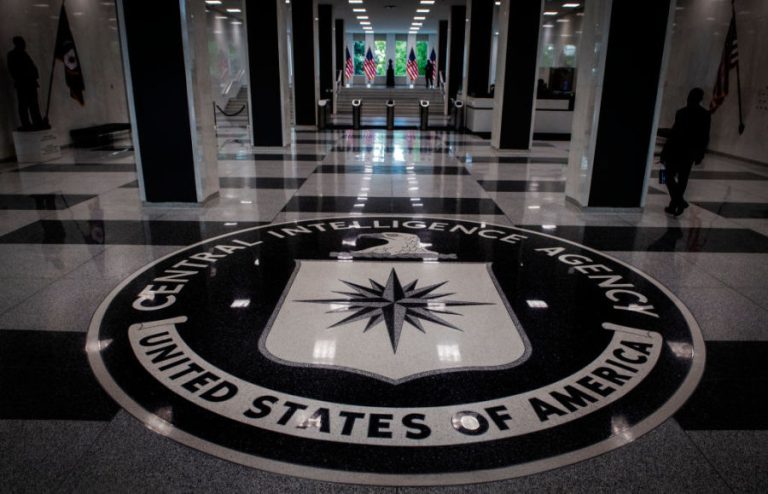
A BBC investigation published on Nov. 20 revealed that as early as 2015, China’s Fosun Group quietly acquired Wright USA, an insurance provider that serves personnel from the Central Intelligence Agency (CIA) and the Federal Bureau of Investigation (FBI). The deal was financed with a $1.2 billion loan package from four Chinese state-owned banks. Though relatively unknown at the time, the transaction gave a Chinese company potential access to sensitive data connected to U.S. intelligence officials—and later became a catalyst for Washington’s tightening of foreign investment rules starting in 2018.
How Fosun’s quiet acquisition revealed a broader strategy’
In 2015, Fosun’s purchase of Wright USA appeared at first glance to be nothing more than a small corporate transaction. But the implications went far deeper. The acquisition touched directly on U.S. national security and became a turning point in how Western governments assess China’s overseas investments. What looked like a routine business deal set off a chain reaction that led the United States and its allies to reassess foreign capital flows and confront a much larger state-backed expansion strategy engineered from Beijing.
BBC’s findings—combined with new data from the U.S. research group AidData and expert commentary—show that the Wright USA deal was part of a broader playbook. China has been using its party–state financial system to facilitate strategic asset purchases across advanced economies, aligning commercial acquisitions with national technology and geopolitical objectives in a coordinated push that spans multiple sectors.
Sensitive CIA and FBI personnel data under communist China’s ownership
In 2016, national security reporter Jeff Stein learned that Wright USA—known for insuring CIA officers, FBI agents, and others in sensitive government posts—had been purchased by Fosun the year before. His reaction, “I was stunned,” mirrored the unease felt across the U.S. intelligence community.
Success
You are now signed up for our newsletter
Success
Check your email to complete sign up
The issue was not the insurance business itself but the data behind it. Wright USA’s files contained:
- Identifying details: names, home addresses, contact information, and family data for current and former intelligence officers;
- Career histories: roles, postings, and areas of specialization across the U.S. intelligence workforce;
- Potential vulnerabilities: claims histories that could hint at financial or legal stress—information highly valuable for intelligence targeting.
Even without evidence that data was misused or transferred, the mere possibility that such records sat under the ownership of a Beijing-linked firm was enough to raise significant alarm inside the U.S. government.
State-backed financing behind a ‘private’ firm
Fosun is nominally a private conglomerate, and the acquisition did not violate U.S. law at the time. But newly surfaced documents cited by the BBC reveal that four Chinese state-owned banks provided the $1.2 billion in financing. The funds were routed through a web of Cayman Islands entities before enabling Fosun to acquire Ironshore, Wright USA’s parent company.
These details reframed the deal entirely. What appeared to be a private purchase instead reflected direct support from China’s state-controlled financial system. As Stein put it, “Because everything in Beijing is tightly interlinked, you’re essentially handing that information over to the Chinese intelligence services.” In China’s political structure, corporate and state interests are often inseparable.
After Stein’s report appeared in Newsweek, the Committee on Foreign Investment in the United States (CFIUS) launched a probe. While the process remains confidential, the outcome was clear: Wright USA was quickly resold to the American firm Starr Wright USA.
More significantly, senior U.S. intelligence officials have said the case was one of the pivotal examples considered during the drafting of the 2018 Foreign Investment Risk Review Modernization Act (FIRRMA). The law expanded CFIUS oversight from defense-related industries to any transaction involving critical technology, infrastructure, or sensitive personal data. It marked a shift from broad openness toward foreign investment to a more stringent system of national-security screening.
Mapping the bigger picture: China’s hidden $2.1 trillion footprint
A separate discovery by AidData further pushed Western governments to reconsider the scale and direction of Chinese capital. After four years of research involving 120 analysts, the group found that China has spent roughly $2.1 trillion abroad since 2000—far more than previously known.
Contrary to the assumption that most of the money went to emerging markets, over $1 trillion flowed into advanced economies such as the United States, the United Kingdom, and Germany.
AidData’s executive director Brad Parks said researchers were surprised to find “hundreds of billions of dollars hiding in plain sight” within the world’s wealthiest countries. While public attention focused on China’s Belt and Road Initiative, a parallel surge of capital was quietly reshaping sectors in the developed world — from real estate and technology to finance and insurance.
As examples accumulated, Western governments began recognizing patterns in deals involving companies with ties—direct or indirect—to Beijing’s party–state system. One of Europe’s starkest cases unfolded in the Netherlands.
In 2017, an $800 million loan from Chinese state banks enabled a Chinese consortium to acquire semiconductor firm Nexperia. Ownership later shifted to Wingtech, a Chinese-listed company. Dutch officials grew increasingly concerned that semiconductor technologies could be funneled into other parts of Wingtech’s operations, potentially aligning with China’s military or strategic programs.
In September 2024, the Dutch government took operational control of Nexperia’s Netherlands business, effectively separating it from the company’s China-linked manufacturing operations. For a country long known as a champion of open trade, the intervention signaled a major policy shift toward a far more defensive posture.
Analyst Xiaoxue Martin noted that while many Chinese private firms remain commercially driven, the structure of China’s political system often blurs the boundaries between business and state interests—leaving foreign governments unsure which companies can be trusted.
A cautionary tale for a new geopolitical era
The Wright USA saga has become emblematic of a broader global dilemma. As geopolitical competition intensifies, data has become a form of power, technology a measure of national strength, and even routine commercial transactions can carry far-reaching security implications. The world is entering a period in which countries rely on Chinese capital while simultaneously questioning its strategic intent. Balancing economic engagement with risk management will be one of the defining challenges for governments in the decade ahead — a tension unlikely to ease anytime soon.