By Fu Longshan, Vision Times
Bo Xilai, once dubbed the scion of the powerful “red aristocracy” and son of revolutionary elder Bo Yibo, has built a reputation of arrogance and carelessness long before his dramatic purge in 2012. But newly resurfaced accounts from insiders paint an even darker portrait of his contempt for China’s top leaders, including then-Party chief Hu Jintao, Premier Wen Jiabao, and Vice Premier Wu Yi.
Once elevated to Minister of Commerce in 2004 thanks to then-CCP leader Jiang Zemin, Bo exhibited what one Hong Kong publication described as “brazenness bordering on open insubordination.” But sources now say he openly derided Hu and Wen as “nothing more than two high-level house servants,” and dismissed Wu Yi, the vice premier who directly supervised his ministry, as “a mere maid.”
RELATED: CCP Military Purge Intensifies as Xi Jinping’s Shenzhen Power Base Is Seized
These remarks, paired with repeated breaches of diplomatic protocol, triggered a chain reaction inside Zhongnanhai. By the time the CCP’s 17th Party Congress arrived in 2007, Bo Xilai’s promotion to vice premier had been blocked. Instead, he was sent to Chongqing — an assignment insiders say was intended as “political exile.”
Lashing out
Success
You are now signed up for our newsletter
Success
Check your email to complete sign up
According to the Hong Kong outlet “Frontline” (Qianshao), Bo routinely belittled Hu Jintao and Wen Jiabao in private. At one point he reportedly snapped and said, “Don’t mention Wen Jiabao — and as for Hu Jintao, what are they? At best the two of them are just high-level house servants.”
In Bo’s mind, his own pedigree, as son of Bo Yibo and protégé of Jiang Zemin, gave him a superior mandate within the CCP hierarchy. Wu Yi, the formidable vice premier known internationally as China’s “Iron Lady,” was treated even worse. To Bo, she was nothing but “a little maid.”
RELATED: Bo Xilai, Organ Harvesting, and the Mystery of China’s Pregnant Body Exhibit
During the early 2000s, with China newly admitted to the WTO, the Commerce Ministry was tasked with delivering a polished, cooperative image to foreign governments. Wu Yi carefully prepared Bo before every major negotiation, drafting responses word-for-word and stressing the need for moderation.
But once overseas, Bo ignored all guidance. When U.S. negotiators raised concerns that Chinese subsidies were depressing global prices, Bo refused to utter a single line Wu Yi had instructed him to use. Instead, he lashed out, accusing American officials of “fabricating lies.”
His insubordination infuriated Wu Yi, who believed Bo threatened China’s international credibility at a critical moment. According to reports, she grew so distressed she “fell seriously ill.” She later tearfully complained to Wen Jiabao — and filed formal grievances with Hu Jintao and Zhu Rongji. By then, a consensus was quietly forming inside Zhongnanhai: Bo had to be contained.
Bo’s detained in Dalian
Bo’s aggressive behavior was not limited to Beijing. According to Asahi Shimbun, officials in Dalian — where Bo served as mayor and Party secretary, described his office as a “city that never sleeps.” Staff could be summoned at any hour; absence resulted in immediate punishment.
His favorite expressions when reprimanding subordinates reportedly included phrases like “Bastard,” “Idiot,” and frequent profanity aimed at officials’ mothers. These habits followed him into the Commerce Ministry. Wu Yi’s long-serving staff, now under Bo’s jurisdiction, lodged repeated complaints about his abuse and defiance.
RELATED: CCP Hosts Organ Donation Summit as Harvesting Accusations Persist
Sources say Wu Yi eventually asked Wen Jiabao to intervene. Wen attempted to counsel Bo, encouraging him to “learn from the experience and avoid repeating mistakes.” But Bo interrupted him sharply, claiming, “Chairman Mao said without struggle there is no unity. Blind concessions are capitulation — especially when dealing with foreigners.”
A breaking point
According to Frontline, this exchange sealed Bo’s fate. Wu Yi then took her grievances to Hu Jintao and Zhu Rongji. By mid-2007, a plan to block Bo’s promotion to vice premier had quietly solidified. When Wu Yi announced her “naked retirement”—a complete withdrawal from all official and honorary posts—Chinese media celebrated it as a symbol of selfless integrity.
But Communist Party insiders now say her retirement came with one condition: Bo Xilai must not succeed her. WikiLeaks cables later revealed that Wen Jiabao privately opposed Bo’s advancement because Bo had been sued internationally for human rights abuses related to the persecution of Falun Gong practitioners.
Wen reportedly told foreign officials that Bo’s global reputation made him unfit for higher office. Multiple lawsuits had been filed against Bo in Australia, Spain, Canada, the U.K., and the U.S. — a rare diplomatic vulnerability for a rising CCP leader.
Bo’s political exile
With his path to the vice premiership essentially blocked from all sides, Bo was reassigned in late 2007 to serve as Party secretary of Chongqing. Though some saw it as an opportunity, seasoned observers recognized it as a demotion wrapped in ceremony.
Bo attempted to resurrect his career through his “Sing Red, Strike Black” campaign, projecting an image of anti-mafia zeal mixed with Cultural Revolution theatrics. But his ambitions collapsed abruptly in 2012 after the Wang Lijun incident revealed widespread corruption, torture, and abuses under his leadership.
- On March 15, 2012, Bo was removed as Chongqing Party secretary.
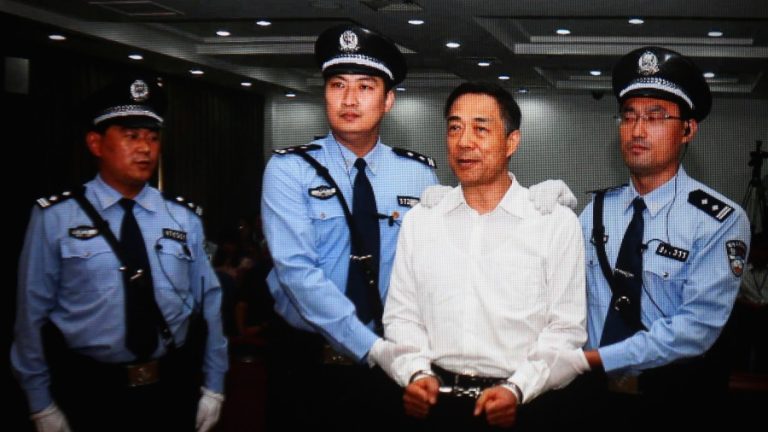
- On Oct. 25, 2013, he was sentenced to life imprisonment.
The resurfaced accounts offer a revealing window into how China’s “red second generation” views political power — not as a function of Party hierarchy, but as inherited entitlement. For Bo Xilai, Hu Jintao and Wen Jiabao were “servants,” Wu Yi was a “maid,” and diplomatic norms were obstacles to be ignored.
But Bo’s downfall, once framed as a corruption case, now appears intertwined with deeper fractures among China’s ruling elites — fractures that continue to shape Beijing’s political landscape today.
Editorial note: Views expressed in this article are the opinions of the author and do not necessarily reflect the views of Vision Times.